Bastard Foxwhelp
Apple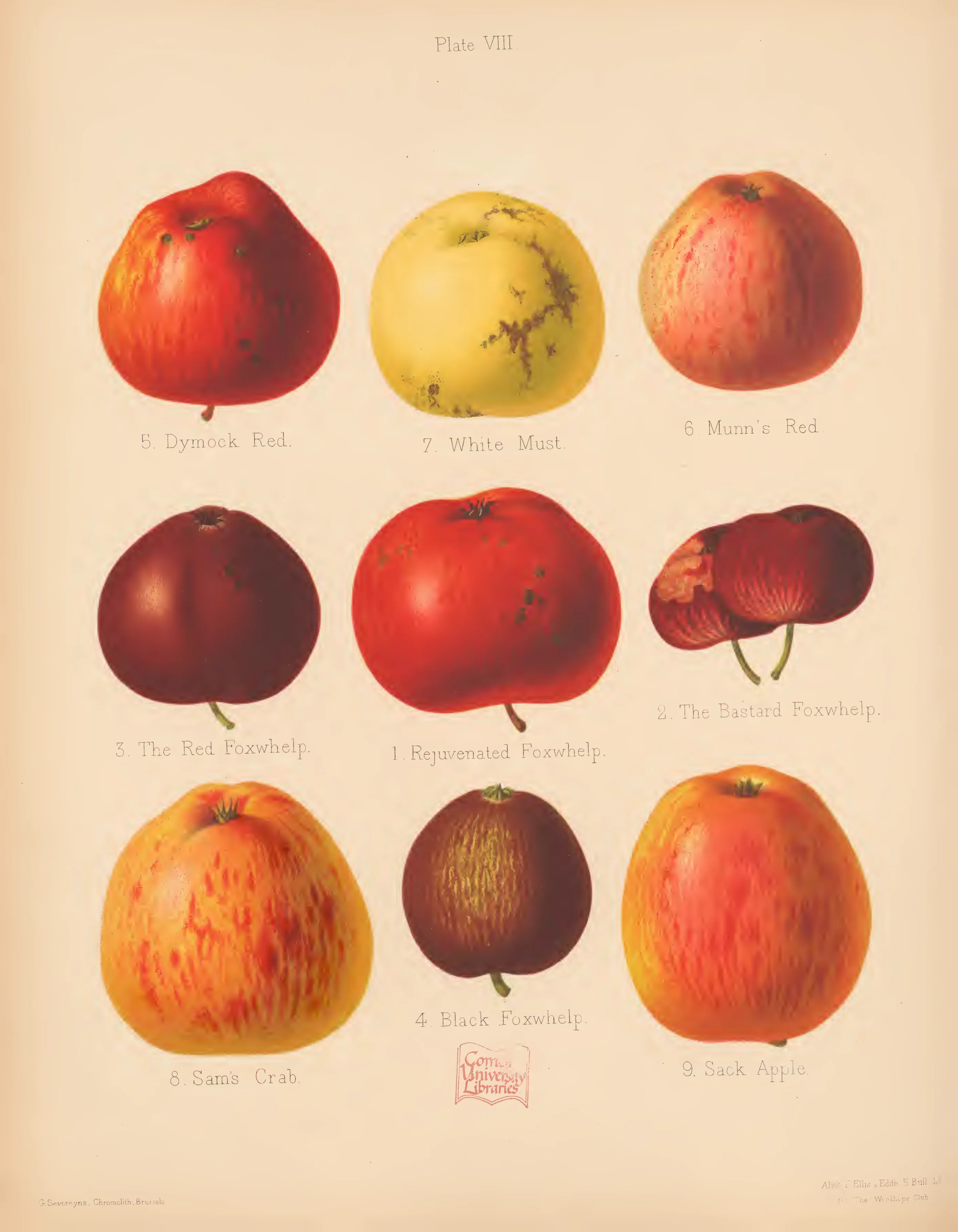
Bastard Foxwhelp
Origin / History
Two or three small apples are called by this name; the one most esteemed and grown is the one figured in the Herefordshire Pomona.
Tree
Bears well.
Fruit
Size: Small.
Form: Oblate, sometimes somewhat roundish; even and regularly formed.
Stem: Very long and slender at its insertion and throughout its length, thicker at the end; inserted in a deep cavity.
Cavity: Deep; the stalk cavity only is lined with russet.
Calyx: Eye very small and closed, with short connivent segments; tube conical; stamens marginal.
Basin: Shallow, saucer-like depression.
Skin: Smooth and shining as if varnished, entirely covered with bright crimson, striped with darker crimson on the side exposed to the sun; on the shaded side greenish yellow striped with crimson. Stalk cavity lined with russet.
Dots: Not described in source.
Flesh and flavor: Yellowish stained with red, firm, unusually acid.
Core and seeds: Cells of the core slightly open; cell-walls orbicular.
Season
Not described in source.
Uses
Cider. Much esteemed by some growers, who think they detect in the cider which it helps to make a slight Foxwhelp flavor.
Subtypes / Variants
Not described in source.
Other
Not described in source.
Book Sources
Described in 1 period pomological work
View original book sources (1)
— Woolhope Naturalists Field Club, The Herefordshire Pomona (1885)
- BASTARD FOXWHELP.
There are two or three small apples called by this name, but that which is the most esteemed and grown is figured here.
Description.—Fruit, small and oblate, sometimes somewhat roundish, even and regularly formed. Skin, smooth and shining as if varnished, entirely covered with bright crimson, and striped with darker crimson on the side exposed to the sun; but on the shaded side it is greenish yellow striped with crimson ; the stalk cavity only is lined with russet. Eye, very small and closed, with short connivent segments placed in a shallow saucer-like depression ; tube, conical; stamens, marginal. Stalk, very long and slender at its insertion and throughout its length, but thicker at the end, inserted in a deep cavity. Flesh, yellowish stained with red, firm, unusually acid. Cells of the core, slightly open ; cell-walls, orbicular.
The Bastard Foxwhelp bears well, and is much esteemed by some growers, who think they detect in the cider which it helps to make a slight Foxwhelp flavour.