Bergamotte d'Hollande
Pear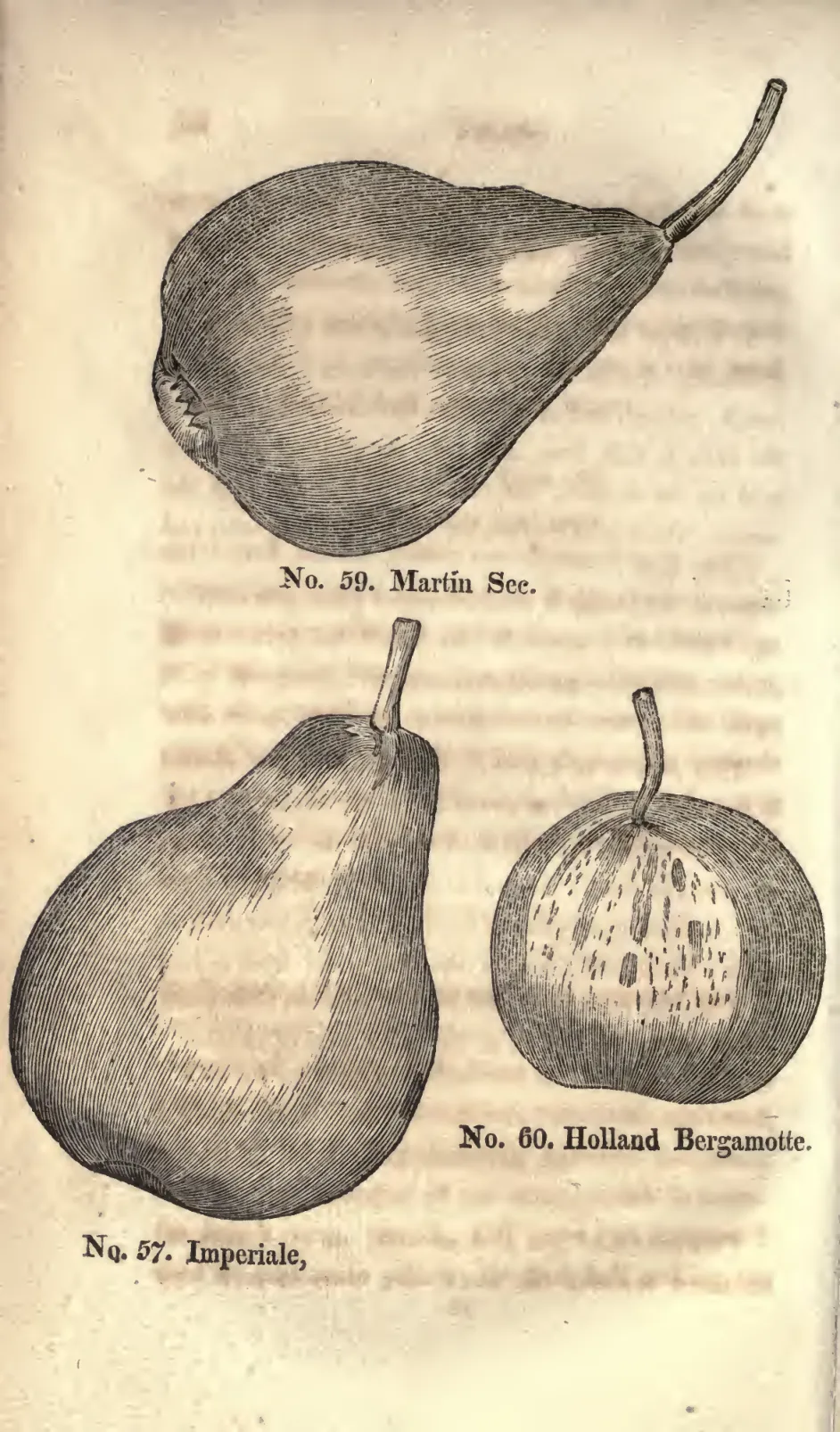
Bergamotte d'Hollande
Origin / History
An old pear of foreign origin, the origin itself unknown. Hedrick calls it "ancient and uncertain" and says that, as its first known name was Bergamote d'Alengon, "pomologists have deemed it to be French." Hedrick cites Duhamel (1768, vol. 2, p. 170) and Downing (1845, p. 430). Coxe described it in 1817 under the name Holland Bergamot.
Tree
Shoots stout, diverging, olive brown (Downing).
Fruit
Size: Middle-sized to large, most often rated rather large. Hedrick gives medium and often larger.
Form: Roundish to globular-flattened. Flat at the crown, round at the stem, of the ordinary Bergamot shape (Coxe).
Stem: Large, about an inch long (Coxe).
Cavity: Not described in source.
Calyx: Not described in source.
Basin: Deep, narrow; the eye is inserted in a deep, narrow cavity (Coxe).
Skin: Uneven. Green, olive-green, or yellowish green, partly russeted to much marbled and covered with thin brown russet, streaked with russet, and washed with brown on the side of the sun. Turns yellowish to clear yellow at maturity. Coxe says it becomes lightly shriveled in February and March as it turns clear yellow.
Dots: Brown spots cover the fruit in autumn (Coxe). Dotted with russet (Hedrick).
Flesh and flavor: White, coarse-grained, crisp, half breaking, somewhat gritty or "a little stony." Juice abundant, very juicy, sprightly, agreeable, pleasantly flavored. Coxe calls the flesh "coarse but good."
Core and seeds: Not described in source.
Season
A long keeper, holding through winter till spring and kept sound till May or June. Coxe says it "may be kept till very late in the season." Hedrick gives March to June.
Uses
Chiefly a cooking pear. Downing calls it "an excellent kitchen fruit." Hedrick rates it "second for the table but good for cooking."
Subtypes / Variants
Not described in source.
Other
Elliott's entry ends with the words "For ever."
Book Sources
Described in 5 period pomological works
- Hedrick, The Pears of New York (1921)
- Thomas, The American Fruit Culturist (1903)
- Coxe, A View of the Cultivation of Fruit Trees (1817) — listed as Holland Bergamot
- Downing, Fruits and Fruit Trees of America (1900) — listed as Hollande Bergamotte
- Elliott, The Western Fruit Book (1865) — listed as Bergamot D'Hollande
View original book sources (5)
— William Coxe, A View of the Cultivation of Fruit Trees (1817)
- HOLLAND BERGAMOT.
Is a pear of middle size, flat at the crown, round at the stem, of the ordinary Bergamot shape; the stalk is large, and about an inch in length—the eye is inserted in a deep, narrow cavity—the skin is uneven, in autumn covered with brown spots, in February and March it becomes lightly shrivelled, and turns a clear yellow—the flesh is coarse but good, half breaking, and a little stony: the juice is abundant and sprightly. It may be kept till very late in the season.
[Additional entry in this volume: "Holland Bergamotte", pp. 337–337]
- HOLLAND BERGAMOT.
Is a pear of middle size, flat at the crown, round at the stem, of the ordinary Bergamot shape; the stalk is large, and about an inch in length—the eye is inserted in a deep, narrow cavity—the skin is uneven, in autumn covered with brown spots, in February and March it becomes lightly shrivelled, and turns a clear yellow—the flesh is coarse but good, half breaking, and a little stony: the juice is abundant and sprightly. It may be kept till very late in the season.
— F.R. Elliott, The Western Fruit Book (1865)Bergamot D'Hollande.
Holland Bergamot, | Bergamot d'Alencon, | Amoselle, Beurre d'Alencon, | Bergamotte de Fougere, | Lord Cheeney's.
Foreign. Large, roundish, yellowish green, with brown russet. For ever.
— A.J. Downing, The Fruits and Fruit Trees of America (1900)HOLLANDE BERGAMOTTE.
Holland Bergamot. Hollandische Bergamotte. Beurré d'Alençon. Bergamotte d'Holland. Bergamotte d'Alençon. Sarah. Jardin de Jougers. Bergamotte d'Hiver d'Holland. Bergamotte de Fougère. Beurré Extra. Amoselle. Lord Cheney. Lord Cheeney's. Musquine de Bretagne.
An old variety, the origin unknown. An excellent kitchen fruit which will keep sound till May or June. Shoots stout, diverging, olive brown.
Fruit rather large, roundish, green, much marbled and covered with thin brown russet, but becoming yellowish at maturity. Flesh white, crisp, with an abundant, sprightly, agreeable juice.
— John J. Thomas, The American Fruit Culturist (1903)Bergamotte d'Hollande. Rather large, roundish, green and russet, becoming yellow; crisp, juicy, agreeable. Through winter till spring.
[Additional entry in this volume: "Holland Bergamot", pp. 794–794]
Holland Bergamot. Rather large, roundish, greenish-yellow, partly russeted; crisp, very juicy, sprightly, agreeable. Keeps till spring.
— U.P. Hedrick, The Pears of New York (1921)Bergamotte d'Hollande.
- Duhamel Trait. Arb. Fr. 2:170. 1768. 2. Downing Fr. Trees Am. 430. 1845. Origin ancient and uncertain, but as the first name by which it was known was Bergamote d'Alengon, pomologists have deemed it to be French. Fruit medium and often larger, globular-flattened; olive-green turning as it ripens to clear yellow, dotted and streaked with russet, washed with brown on the side of the sun; flesh white, rather gritty, coarse-grained, semi-breaking, pleasantly flavored; second for the table but good for cooking; March to June.