Besi de Saint-Waast
Pear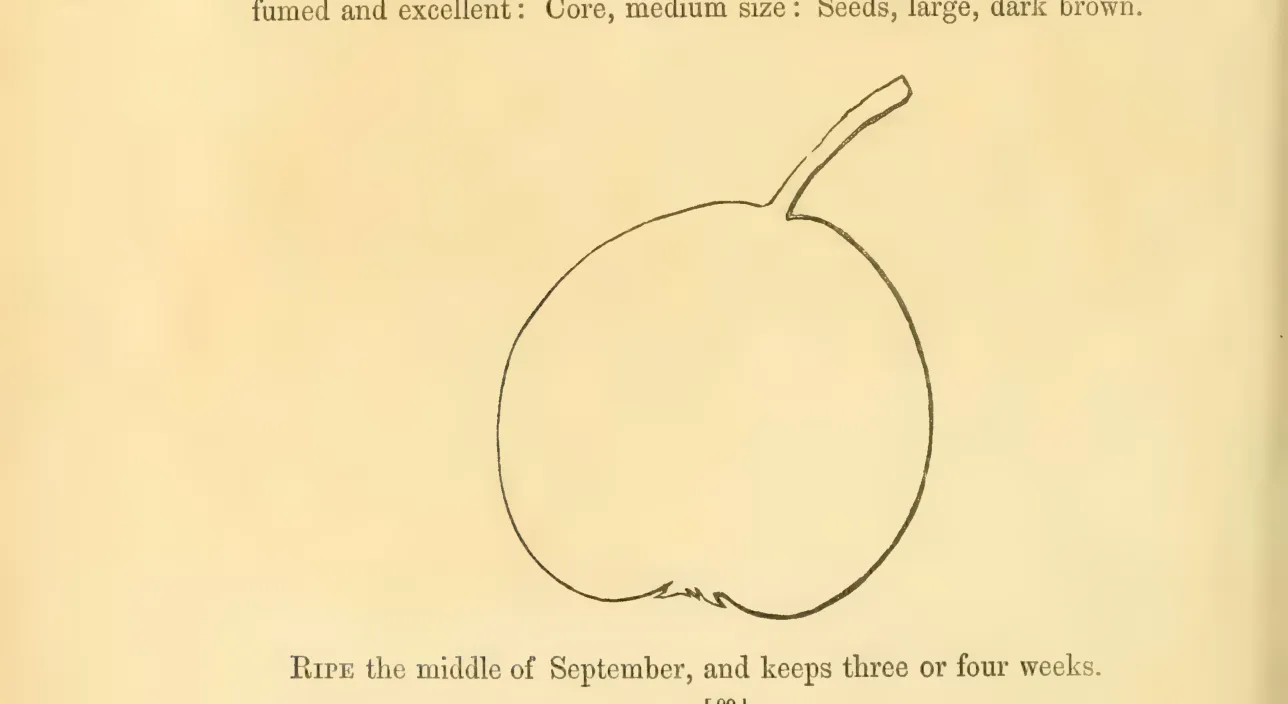
Besi de Saint-Waast
Origin/History
Van Mons was of the opinion that the Besi de Saint-Waast originated at the Benedictine Abbey of Saint-Vaast, France (Hedrick). The variety has been considerably cultivated in this country (Downing).
Tree
The young shoots are reddish olive brown (Downing).
Not otherwise described in sources.
Fruit
Size and Form: Downing describes the fruit as medium size; Hedrick describes it as above medium. Both agree on the shape: obovate, narrowing toward the stalk. Hedrick adds that the fruit is obtuse and notes the shape is variable.
Stem: The stalk is an inch or more long, inserted in a slight cavity (Downing).
Cavity: Slight (Downing).
Calyx: Set in a small basin (Downing).
Basin: Small (Downing).
Skin: The two sources give somewhat different accounts. Downing describes the skin as roughish, pale green, becoming yellowish, with many russety spots and a brownish cheek. Hedrick describes the skin as thick, yellow, dotted with fawn, and extensively washed with red-brown on the side exposed to the sun.
Flesh and Flavor: Downing describes the flesh as yellowish white, melting, and juicy, with a sweet, somewhat perfumed flavor. Hedrick describes the flesh as rather white, fine, and semi-breaking — conflicting with Downing's "melting" — very juicy, and rather gritty at the center, with a saccharine and acid flavor and a pleasant aroma suggestive of the Chaumontel. The acid note appears only in Hedrick.
Core/Seeds: Not described in sources.
Season
November to January (both sources agree).
Uses
A first-class dessert pear in Europe, but hardly more than a good second-rate fruit in this country (Hedrick; Downing concurs on the second-rate assessment).
Subtypes/Variants
Not described in sources.
Other
The Thomas (1903) source contained no entry for this variety. Page 783 of that volume covers pear entries alphabetically from Aston Town through Benoist, and includes only the cross-reference "Beaumont. See Vaet." with no main entry for Besi de Saint-Waast.
Book Sources
Described in 3 period pomological works
- Hedrick, The Pears of New York (1921)
- Downing, Fruits and Fruit Trees of America (1900) — listed as Bezi Vaet
- Thomas, The American Fruit Culturist (1903) — listed as Bezi Vaet
Nursery Catalog Sources
Found in 1 catalog (1900)
- Central Experimental Farm , Dominion Department of Agriculture, Agassiz, British Columbia (under test; Bulletin No. 3, Second Series) — 1900
View original book sources (3)
— A.J. Downing, The Fruits and Fruit Trees of America (1900)Bezi Vaet.
Beurre de Beaumont. Besi Va. De Saint Waast. Besi Vaat. Besi Vath. Besi Waet. Besi de St. Waast.
The Bezi Vaet has been considerably cultivated in this country, but is not generally considered more than a good second-rate Pear. The young shoots are reddish olive brown.
Fruit of medium size, obovate, narrowing to the stalk. Skin roughish, pale green, becoming yellowish, with many russety spots and a brownish cheek. Stalk an inch or more long, inserted in a slight cavity. Calyx set in a small basin. Flesh yellowish white, melting, juicy, with a sweet, somewhat perfumed flavor. Good. November to January.
— John J. Thomas, The American Fruit Culturist (1903)[Entry for Bezi Vaet not found on page 783. Page 783 contains pear entries from Aston Town through Benoist alphabetically. Bezi Vaet would appear on a later page, after Benoist. The page does contain a cross-reference 'Beaumont. See Vaet.' but no main 'Bezi Vaet' entry.]
— U.P. Hedrick, The Pears of New York (1921)Besi de Saint-Waast.
- Leroy Dict. Pom. 1:286, 287, fig. 1867. Bezi Vaet. 2. Downing Fr. Trees Am. 702. 1869.
Van Mons was of the opinion that the Besi de Saint-Waast originated at the Benedictine Abbey of Saint-Vaast, Fr. Fruit above medium, obovate, obtuse, narrowing toward the stalk but variable; skin thick, yellow, dotted with fawn, extensively washed with red-brown on the side exposed to the sun; flesh rather white, fine, semi-breaking, very juicy, rather gritty at the center, saccharine, acid, with a pleasant aroma suggestive of the Chaumontel; a first-class dessert pear in Europe but hardly more than a good second-rate fruit in this country; Nov. to Jan.