Beurré Colmar
Pear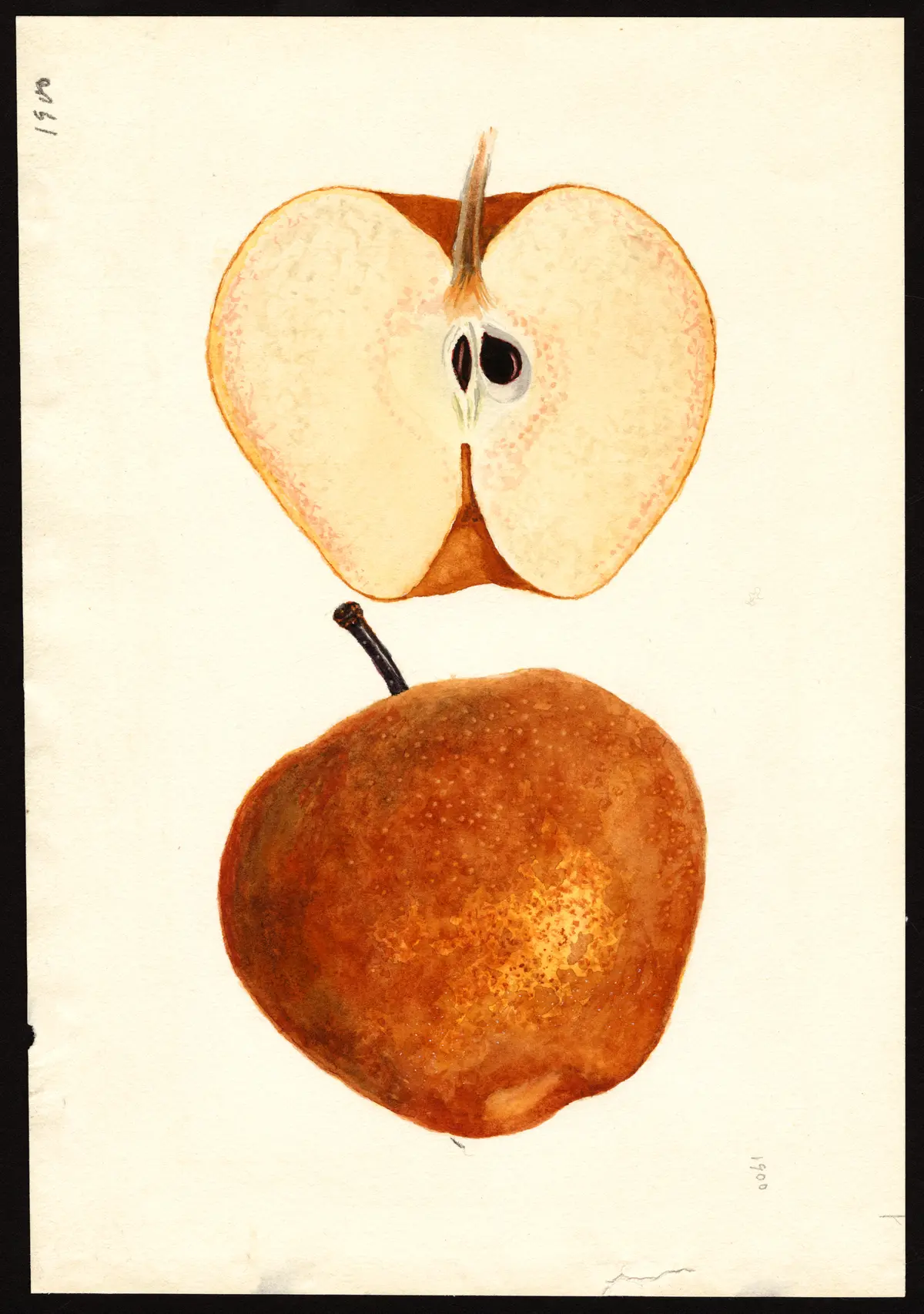
USDA Pomological Watercolor Collection
Beurré Colmar
Origin / History
One of Dr. Van Mons' seedlings, raised in Belgium before 1823 (Hedrick); "Belgian" (Thomas). Quite distinct from the Autumn Colmar (Downing).
Tree
Not described in source.
Fruit
Size: Medium (Downing, Thomas); large (Hedrick).
Form: Oval, obovate, regularly formed (Downing); oval (Thomas); ovate, bossed, irregular, obtuse at both ends (Hedrick).
Stem: An inch long (Downing).
Cavity: Not described in source.
Calyx: Expanded (Downing).
Basin: Very shallow, narrow, irregular (Downing).
Skin: Smooth. Pale green, becoming yellowish or yellow at maturity, with a blush next the sun; Hedrick gives yellow with a tinge of orange-red on the side next the sun.
Dots: Thickly sprinkled (Downing); brown and fawn (Hedrick).
Flesh and flavor: Flesh white, very white (Downing); slightly crisp at first, becoming very juicy and melting (Downing); crisp, melting, juicy, with some grit around the core (Hedrick). Juice abundant, sugary (Hedrick). Flavor slightly perfumed (Downing, Hedrick); "perfumed" (Thomas). Downing rates it "Good"; Hedrick calls it "a dessert pear of first quality."
Core and seeds: Not described in source.
Season
October (Downing, Thomas); mid-October to December (Hedrick).
Uses
A dessert pear (Hedrick).
Subtypes / Variants
Not described in source.
Other
Not described in source.
Book Sources
Described in 3 period pomological works
View original book sources (3)
— A.J. Downing, The Fruits and Fruit Trees of America (1900)Beurre Colmar.
Beurre Colmar d'Automne. Beurre d'Enghien of France.
It is one of Dr. Van Mons' seedlings, and is quite distinct from the Autumn Colmar.
Fruit of medium size, oval obovate, regularly formed. Skin smooth, pale green, becoming yellowish at maturity, with a blush next the sun, and thickly sprinkled with dots. Stalk an inch long. Calyx expanded, and set in a very shallow, narrow, irregular basin. Flesh very white, slightly crisp at first, but becoming very juicy and melting, with a slightly perfumed flavor. Good. October.
— John J. Thomas, The American Fruit Culturist (1903)Colmar, Beurré. Medium, oval, pale green, becoming yellow; flesh white; juicy, melting, perfumed. October. Belgian. See Sand.
— U.P. Hedrick, The Pears of New York (1921)Beurré Colmar.
- Ann. Pom. Belge 1:67, fig. 1853.
- Hogg Fruit Man. 517. 1884. Beurré d'Enghien.
- Mas Pom. Gen. 7:23, fig. 492. 1881.
Raised in Belgium by Van Mons before 1823. Fruit large, ovate, bossed, irregular, obtuse at both ends, smooth, yellow, dotted with brown and fawn, with a tinge of orange-red on the side next the sun; flesh white, crisp, melting, juicy, some grit around the core; juice abundant, sugary, slightly perfumed; a dessert pear of first quality; mid-Oct. to Dec.