Beurré de Brignais
Pear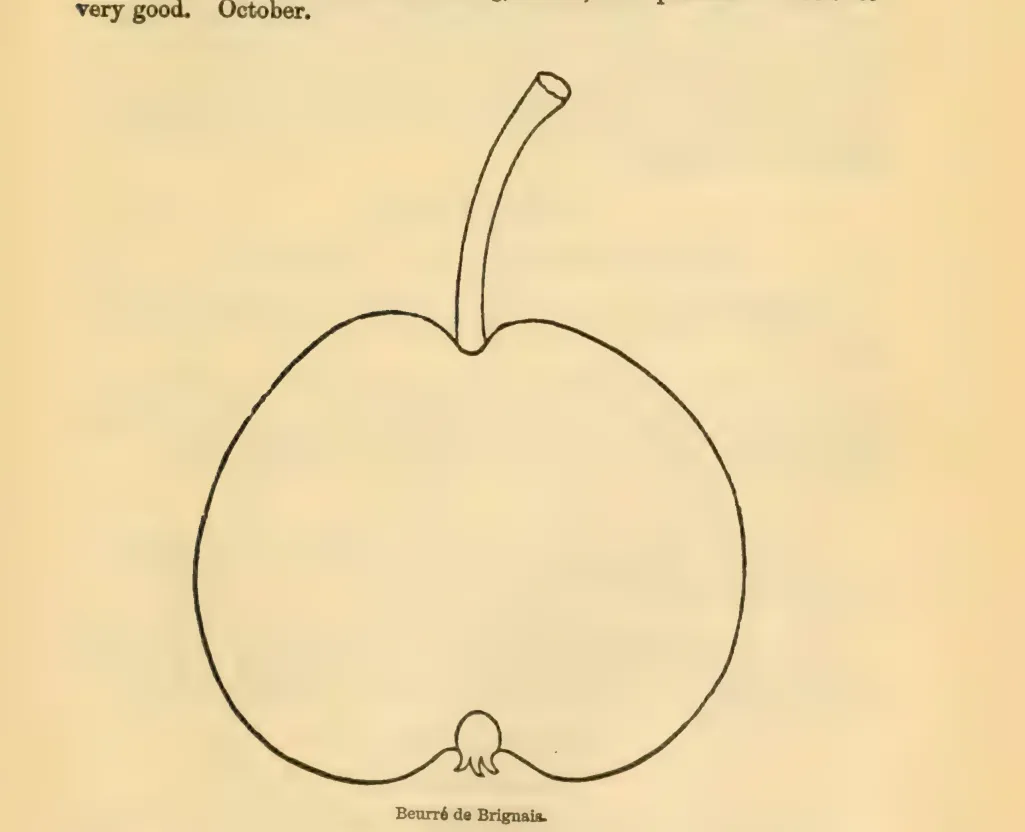
Beurré de Brignais
Origin and History A valuable variety, the origin of which we cannot learn.
Tree Vigorous, hardy, and productive. Young wood rich dark yellowish brown.
Fruit
Size and Form: Medium, roundish oblate.
Skin: Greenish, with numerous gray dots.
Stem: Long, curved, inserted in a narrow, uneven cavity.
Calyx: Closed.
Basin: Shallow, corrugated.
Flesh and Flavor: White, juicy, melting, with a brisk, perfumed, high flavor. Very good.
Core: Small; continues a long time ere it decays.
Season Ripe middle and last of September.
Uses Not described in source.
Subtypes and Variants Not described in source.
Other Period sources list this variety under several alternate names: Des Nonnes, Poire des Nonnes, Nun's Pear, and De Nonne.
Source: A.J. Downing, The Fruits and Fruit Trees of America, 1900 revised edition.
Book Sources
Described in 1 period pomological work
View original book sources (1)
— A.J. Downing, The Fruits and Fruit Trees of America (1900)Beurré de Brignais.
Beurre de Brignais.
Des Nonnes. Poire des Nonnes. Nun's Pear. De Nonne.
A valuable variety, the origin of which we cannot learn. Tree vigorous, hardy, and productive. Young wood rich dark yellowish brown.
Fruit medium, roundish oblate. Skin greenish, with numerous gray dots. Stalk long, curved, inserted in a narrow, uneven cavity. Calyx closed. Basin shallow, corrugated. Flesh white, juicy, melting, with a brisk, perfumed, high flavor. Very good. Ripe middle and last of September. Core small, continues a long time ere it decays.