Cumberland Spice
Apple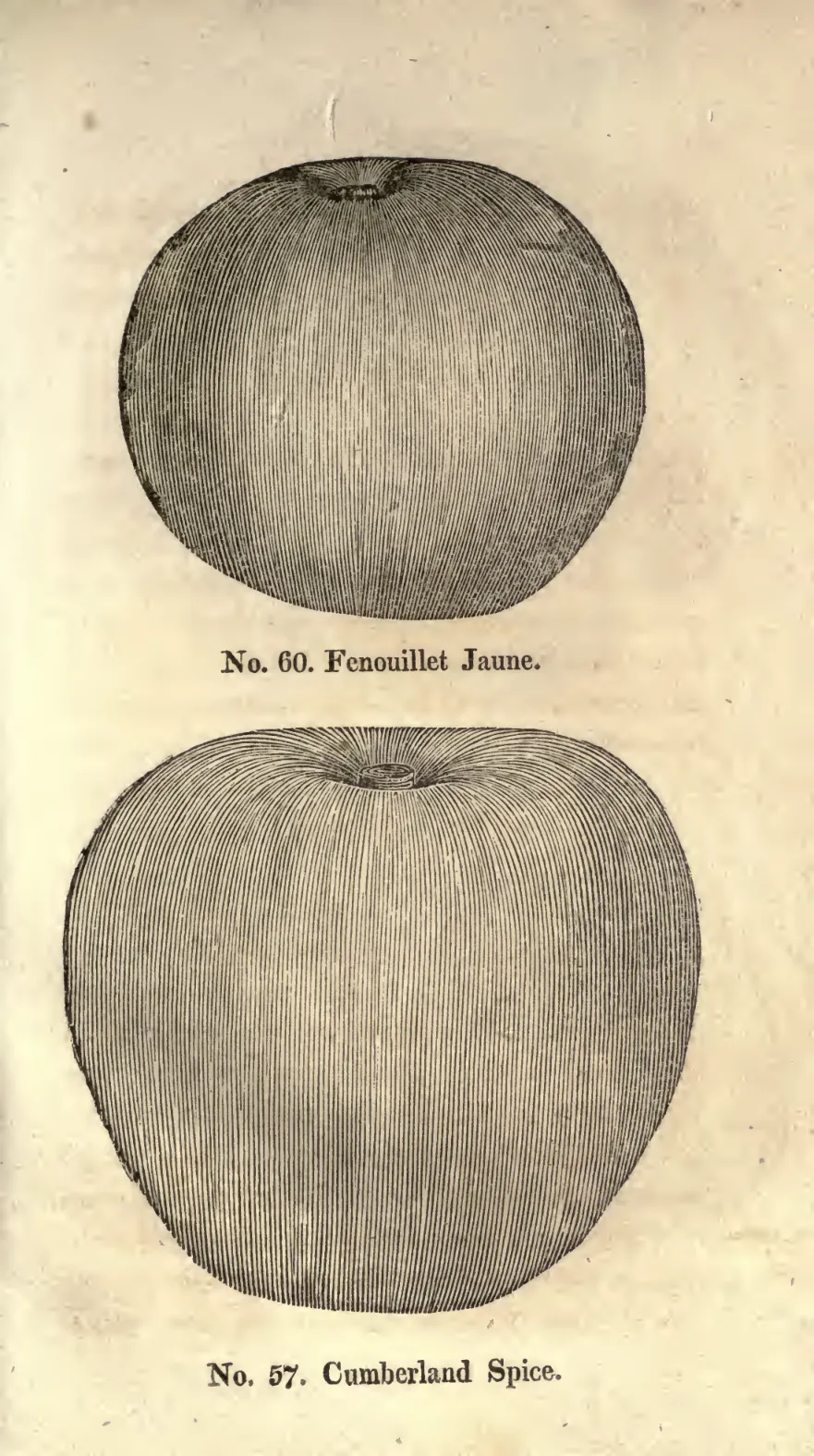
Cumberland Spice
Origin / History
Cumberland Spice was "brought from Cumberland county New-Jersey" (Coxe, 1817), and the later authors also place its origin in New Jersey. Warder (1867) wrote that it is "not very extensively cultivated, for, though sometimes excellent, it is not found to be a profitable sort." Elliott (1865) reported that the Blenheim Pippin had been received at the West as this variety. Having no fruit to examine, he copied Thomas's description.
Tree
Thrifty and fruitful or productive; upright, spreading (Downing).
Fruit
Size: Rather above medium to large. Coxe calls it large, and Thomas rather large.
Form: Roundish conic to long conic, lessening or contracted toward the eye. Thomas notes that the tapering sides are nearly straight and not rounded. Coxe calls the form "rather long." Warder calls it rather oblong or ovate and regular, with the axis sometimes inclined.
Stem: Thomas gives one-half to three-fourths of an inch long, and Warder generally long. Coxe calls the stalk short and thick.
Cavity: Thomas calls it wide and slightly russeted, and Warder deep and acute. Coxe describes only "a small cavity around" the stem.
Calyx: Thomas calls it open. Warder calls the eye large and partially closed.
Basin: Shallow, regular or folded (Warder); even (Thomas).
Skin: Pale yellow, waxen yellow in Thomas's words. Thomas notes a slight vermilion tinge near the base, and Downing a blush that appears rarely.
Dots: Warder describes large, brown, scattered dots, and Downing has the fruit sprinkled with brown dots. Thomas gives black specks on the surface. Coxe has the skin "full of clouds of black dots near the stem."
Flesh and flavor: Flesh white to yellow. Coxe calls it "remarkably white," Thomas yellowish white, and Warder yellow. It is tender, breaking, juicy, and rather light (Thomas). Coxe adds that it is "easy of digestion."
Flavor is a mild, pleasant subacid, "with a peculiar and agreeable spiciness" (Thomas). Warder gives acid to subacid, rich, and aromatic.
Coxe calls it "a fine fall and early winter fruit for the table." Downing rates it "Good," and Warder "good to best, but uncertain." Thomas's later text reads "of good quality," where his earlier description, as quoted by Elliott, reads "of good second-rate quality."
Core and seeds: Core large and hollow; Coxe calls the "pericarpium large and hollow." Warder describes the core as round, very open, and not touching the eye. Seeds numerous, large, pointed (Warder).
Season
The recorded season runs from October into February. Coxe calls it a fall and early-winter fruit, and Warder gives October to December. Downing gives December to February. The fruit is apt to shrivel after keeping some time (Coxe, Downing).
Uses
A table fruit, and a kitchen fruit as well (Warder). Warder judges it not profitable.
Subtypes / Variants
Not described in source.
Other
Not described in source.
Book Sources
Described in 5 period pomological works
Nursery Catalog Sources
Found in 1 catalog (1845) from Massachusetts
- Winship's Nursery (Brighton Nurseries , operated by the Winship family), Brighton (Boston) , Massachusetts — 1845
View original book sources (5)
— William Coxe, A View of the Cultivation of Fruit Trees (1817)NO. 57. CUMBERLAND SPICE.
This apple was brought from Cumberland county New-Jersey: It is a fine fall and early winter fruit for the table—the size is large, the form rather long, lessening towards the point; the colour a pale yellow; the stalk short and thick, with a small cavity around it; the flesh is remarkably white, tender, and easy of digestion; the pericarpium large and hollow; the skin full of clouds of black dots near the stem, apt to shrivel after keeping some time; the trees are thrifty and fruitful.
— F.R. Elliott, The Western Fruit Book (1865)Cumberland Spice. The Blenheim Pippin has been received at the West as this variety. In absence of fruit to examine, we copy Thomas's description: "Rather large, varying from roundish conical to long conical, the tapering sides being nearly straight and not rounded; color, waxen yellow, with a slight vermillion tinge near the base, and with black specks on the surface; stalk, half to three-fourths of an inch long; cavity, wide, slightly russeted; calyx, open; basin, even; flesh, yellowish white, breaking, rather light; core, hollow; flavor, mild sub-acid, with a peculiar and agreeable spiciness; of good second-rate quality."
— John A. Warder, American Pomology: Apples (1867)Cumberland Spice.
Origin New Jersey; not very extensively cultivated, for, though sometimes excellent, it is not found to be a profitable sort.
Fruit rather oblong, contracted toward the eye, or ovate, regular; sometimes the Axis is inclined; Surface pale yellow; Dots large, brown, scattered.
Basin shallow, regular or folded; Eye large, partially closed.
Cavity deep, acute; Stem generally long.
Core large, round, very open, not touching the eye; Seeds numerous, large, pointed; Flesh yellow, tender, breaking, juicy; Flavor acid to sub-acid, rich, aromatic; Quality good to best, but uncertain; Use, table, kitchen, not profitable; Season, October to December.
— A.J. Downing, The Fruits and Fruit Trees of America (1900)Cumberland Spice.
From Cumberland Co., N. J. Tree thrifty, upright, spreading, productive.
Fruit rather above medium, roundish conic, pale yellow, rarely with a blush, sprinkled with brown dots. Flesh white, tender, juicy, and pleasant subacid; apt to shrivel. Good. Core large and hollow. December to February.
— John J. Thomas, The American Fruit Culturist (1903)Cumberland Spice. Rather large, varying from roundish conical to long conical, the tapering sides being nearly straight and not rounded; color waxen yellow, with a slight vermilion tinge near the base, and with black specks on the surface; stalk half to three-fourths of an inch long; cavity wide, slightly russeted; calyx open, basin even; flesh yellowish white, breaking, rather light; core hollow; flavor mild sub-acid, with a peculiar and agreeable spiciness, of good quality.