Deane
Apple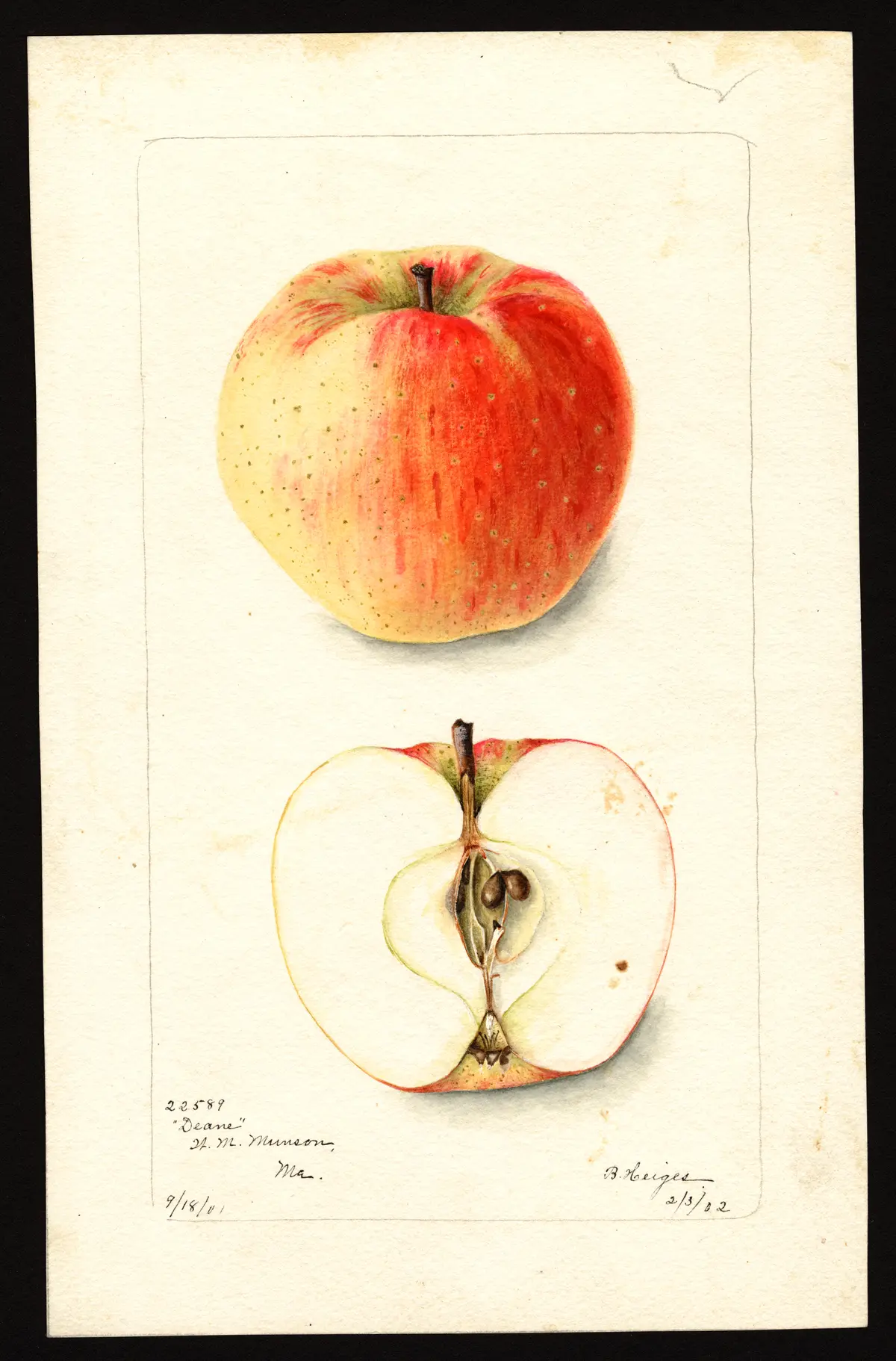
USDA Pomological Watercolor Collection
Deane
Origin / History
Origin unknown, supposed to be East Wilton, Maine, where it is considered the best apple of its season. The variety is listed in A.J. Downing's The Fruits and Fruit Trees of America (1900) under the name Deane, with "Nine Ounce" given as a second name in the same entry.
Tree
Tree vigorous and spreading. Bears abundantly in alternate years, with a light crop in the intervening years.
Fruit
Size: Medium.
Form: Oblate to roundish oblate conic, angular, slightly oblique, and flattened at the base.
Stem: Short, small.
Cavity: Rather large, a little greenish.
Calyx: Closed.
Basin: Medium, slightly corrugated.
Skin: Whitish, shaded and rather obscurely splashed and mottled with light red.
Dots: Moderately sprinkled with yellowish dots, a few being areole.
Flesh and flavor: Flesh quite white, fine, tender, and juicy. Flavor sprightly, subacid or vinous.
Core and seeds: Core medium.
Season
September, October.
Uses
Not described in source.
Subtypes / Variants
Not described in source.
Other
Not described in source.
Book Sources
Described in 1 period pomological work
View original book sources (1)
— A.J. Downing, The Fruits and Fruit Trees of America (1900)Deane.
Nine Ounce.
Origin unknown, supposed to be East Wilton, Maine, where it is considered the best apple of its season; tree vigorous, spreading, bearing abundantly alternate years, and a light crop the intervening ones.
Fruit medium, oblate to roundish oblate conic, angular, slightly oblique, and flattened at the base; skin whitish, shaded and rather obscurely splashed and mottled with light red, and moderately sprinkled with yellowish dots, a few being areole; stalk short, small; cavity rather large, a little greenish; calyx closed; basin medium, slightly corrugated; flesh quite white, fine, tender, juicy, sprightly subacid or vinous; core medium. September, October.