Doyle
Apple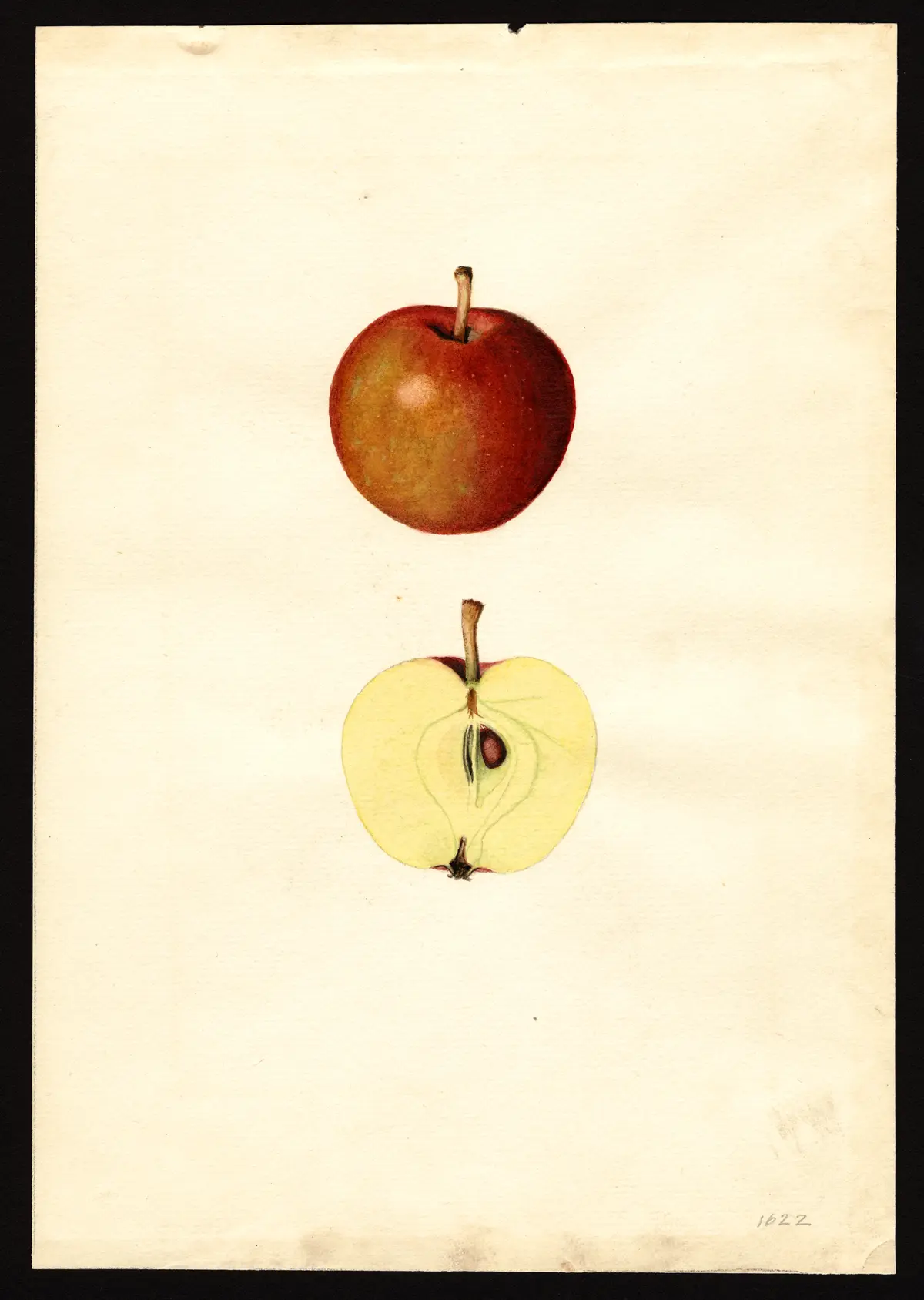
USDA Pomological Watercolor Collection
Doyle
Origin / History
Origin, Texas. The description appears in the U.S. Department of Agriculture's 1902 pomological record, as reproduced by J.L. Budd and N.E. Hansen in American Horticultural Manual, Part II: Systematic Pomology (1914).
Tree
Not described in source.
Fruit
Size: Above medium.
Form: Roundish.
Stem: Medium, slender.
Cavity: Regular, large, deep, with wide russet margins.
Calyx: Small, partially closed. Segments small, converging, slightly reflexed.
Basin: Regular, medium, gradual, with shallow furrows.
Skin: Tough. Surface moderately smooth, with numerous russet patches. Yellow, washed red, splashed and striped crimson.
Dots: Brown, erupted.
Flesh and flavor: Yellowish, fine, breaking, juicy, rich, aromatic, subacid, very good.
Core and seeds: Core large, conical, clasping. Seeds medium, plump, brown.
Season
August.
Uses
Not described in source.
Subtypes / Variants
Not described in source.
Other
Not described in source.
Book Sources
Described in 1 period pomological work
Nursery Catalog Sources
Found in 2 catalogs (1901–1913) from Illinois
- Benjamin Buckman (personal inventory) , Farmingdale , Illinois — 1901
- Benjamin Buckman (personal inventory) , Farmingdale , Illinois — 1913
View original book sources (1)
— J.L. Budd & N.E. Hansen, American Horticultural Manual, Part II: Systematic Pomology (1914)Doyle. — Origin, Texas. Fruit above medium, roundish; skin tough; surface moderately smooth, with numerous russet patches, yellow, washed red, splashed and striped crimson; dots brown, erupted; cavity regular, large, deep, wide russet margins; stem medium, slender; basin regular, medium, gradual with shallow furrows; calyx small, partially closed; segments small, converging, slightly reflexed. Core large, conical, clasping; seeds medium, plump, brown; flesh yellowish, fine, breaking, juicy, rich, aromatic, subacid, very good. August. (U. S. Dept. Agr., 1902.)