Father Abraham
Apple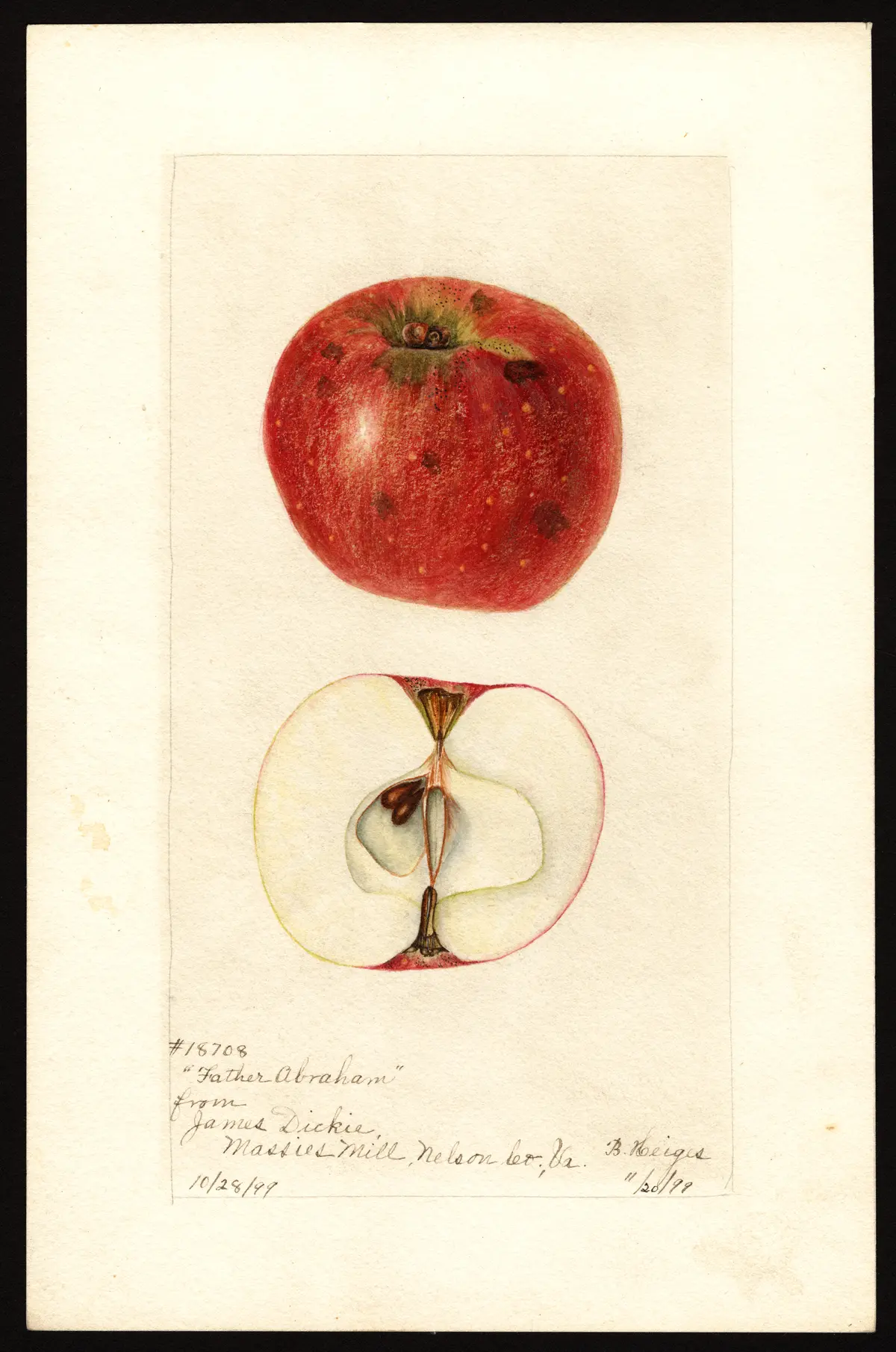
USDA Pomological Watercolor Collection
Father Abraham
Origin / History
From Virginia, whence Coxe (1817) procured it; there "much esteemed, and extensively propagated." Considerably grown in Kentucky (Elliott, 1865). Thomas (1903) gives "Va. and Ky."
Tree
Not described in source.
Fruit
Size: Small.
Form: Flat.
Stem: Not described in source.
Cavity: Not described in source.
Calyx: Not described in source.
Basin: Not described in source.
Skin: Red, with spots and blotches of red (Elliott's quotation of Coxe: "darker red") and a little yellow. Texture very thin and tender.
Dots: Not described in source.
Flesh and flavor: Flesh white, tinged with red next to the skin (Elliott's quotation of Coxe: "next the sun"); breaking, juicy. Taste agreeable, though not rich (Coxe). Thomas calls the flesh "pleasant".
Core and seeds: Not described in source.
Season
Early winter. Keeps till April (Coxe). Thomas: "Keeps well."
Uses
An early winter table apple (Coxe).
Subtypes / Variants
Not described in source.
Other
Not described in source.
Book Sources
Described in 3 period pomological works
USDA Nomenclature (1905)
From W.H. Ragan, Nomenclature of the Apple, USDA Bulletin No. 56
From Transactions Ohio Pom. Society.
View original book sources (3)
— William Coxe, A View of the Cultivation of Fruit Trees (1817)NO. 98. FATHER ABRAHAM.
This is a small apple of a flat form; the skin is red, with spots and blotches of red, with a little yellow; the texture very thin and tender—the flesh is tinged with red next to the skin—is white, breaking, and juicy; of an agreeable taste though not rich: it is an early winter table apple, and will keep till April. In Virginia, whence I procured it, it is much esteemed, and extensively propagated.
— F.R. Elliott, The Western Fruit Book (1865)Father Abraham.
From Virginia; considerably grown in Kentucky. We copy Coxe's description: "Small, flat, red, little yellow, spots and blotches of darker red; texture, thin, tender; flesh, white, tinged with red next the sun, juicy, agreeable. Early Winter. Keeps till April."
— John J. Thomas, The American Fruit Culturist (1903)Father Abraham. Small, flat, red; flesh white, pleasant. Keeps well. Va. and Ky.