French Crab
Apple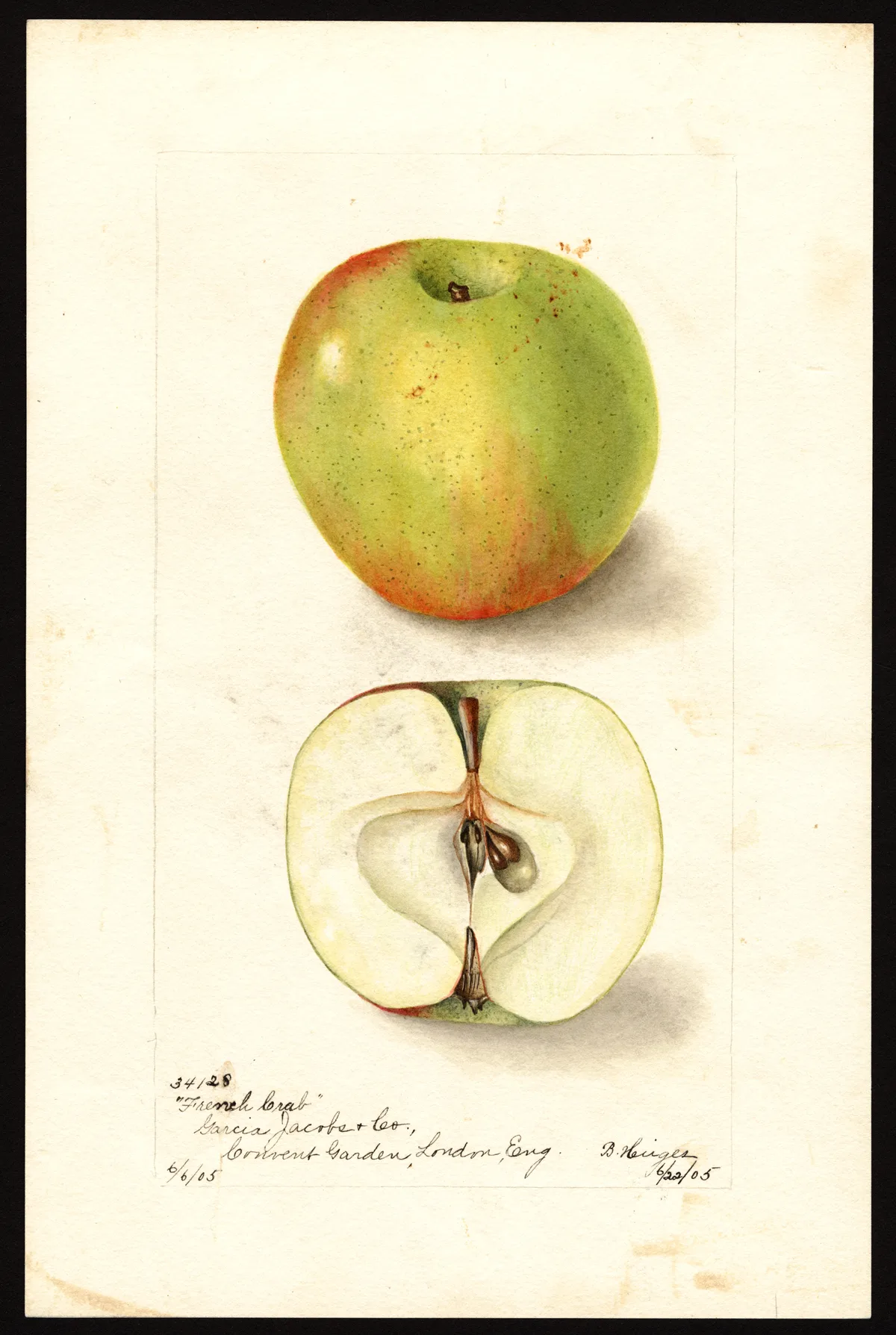
USDA Pomological Watercolor Collection
French Crab
Origin/History
Origin unknown. French Crab was probably imported into England at the end of the eighteenth century. It is described in Ronalds (p. 42). The proposal by Hogg to substitute the name Winter Greening for this variety has not been adopted; it remains best known as French Crab.
Tree
Very hardy. Growth vigorous and somewhat pendent in habit. Fertile and bears well. Leaves large, round-oval, upfolded, and coarsely serrate.
Fruit
Size and Form: Downing describes the fruit as above medium in size; Bunyard gives it as medium, measuring 3½ inches by 2½ inches. Form round (globular), fairly regular.
Stem: Rather short, set in a russet cavity.
Cavity: Russet.
Calyx: Closed.
Basin: Shallow, wrinkled, with five prominent ribs at the top.
Skin: Pea green, becoming yellow at maturity (Downing).
Flesh/Flavor: Flesh greenish, firm, and crisp. Flavor brisk and acid (Downing describes it as pleasant and brisk; Bunyard as crisp and acid).
Core/Seeds: Not described in source.
Season
A long keeper. Bunyard notes the fruit keeps a year or more, making it a valuable late-season fruit.
Uses
Culinary. Cooks excellently (Bunyard).
Subtypes/Variants
Not described in source.
Other
Not described in source.
Book Sources
Described in 2 period pomological works
View original book sources (2)
— A.J. Downing, The Fruits and Fruit Trees of America (1900)French Crab. Ronalds describes this as follows : Tree very hardy, somewhat pendent in its growth, and bears well. A long keeper. Fruit above medium, globular, green, becoming yellow at maturity. Flesh firm, pleasant, brisk.
— E.A. Bunyard, A Handbook of Hardy Fruits (1920)FRENCH CRAB. Ronalds, p. 42. G., Gruener Oster. (Easter Pippin, Ironstone Pippin, Iron King, John Apple, Winter Greening (Hogg).) Culinary, keeps a year or more, medium, 3½ by 2½, round, fairly regular. Colour, pea green. Flesh, greenish, crisp, acid. Eye, closed in a shallow wrinkled basin with five prominent ribs at top. Stem, rather short in a russet cavity. Growth, vigorous; fertile. Leaf, large, round oval, upfolded, coarsely serrate. Origin unknown. Probably imported into England at the end of the eighteenth century. A valuable late season fruit, cooking excellently. The desire of Hogg to substitute the name Winter Greening has not been adopted. I therefore retain the name by which it is best known.