French Violet
Apple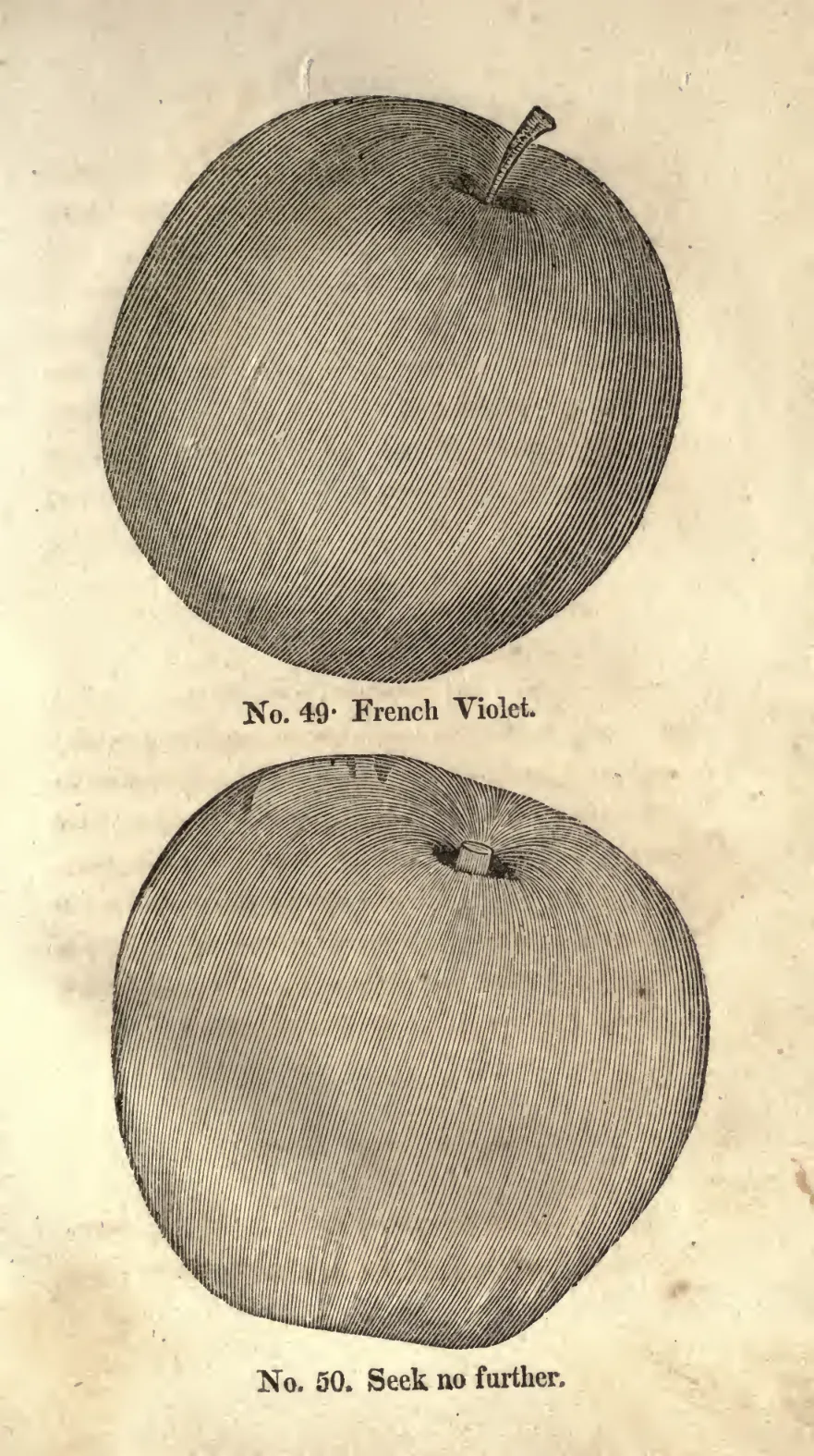
French Violet
Origin / History
Coxe describes the French Violet as "a much admired apple in France," listed as No. 49 in his A View of the Cultivation of Fruit Trees (1817). He records that "in this country, its merit does not appear equal to many others ripening at the same time." No originator, place of origin, or date of introduction is given. Spread and later history are not recorded beyond this account.
Tree
The tree is handsome and vigorous. It bears at an early age and very abundantly. The fruit grows at the extremities of the branches.
Fruit
Size: Rather above the middling size.
Form: Regular oblong. Coxe calls it "a beautiful fruit."
Stem: Very small footstalks.
Cavity: Not described in source.
Calyx: Not described in source.
Basin: Not described in source.
Skin: Very smooth and faintly streaked. Ground color is a dark brilliant red, overlaid with large blotches of fawn color.
Dots: Not described in source.
Flesh and flavor: White, juicy, tender, and delicate. The flavor is "not highly flavoured."
Core and seeds: Not described in source.
Season
The fruit ripens in the autumn and will keep well through the early part of winter.
Uses
Not described in source.
Subtypes / Variants
Not described in source.
Other
The entry is numbered 49 in Coxe's work.
Book Sources
Described in 1 period pomological work
View original book sources (1)
— William Coxe, A View of the Cultivation of Fruit Trees (1817)NO. 49. FRENCH VIOLET.
This is a much admired apple in France; in this country, its merit does not appear equal to many others ripening at the same time. It is a beautiful fruit, of a regular oblong form, rather above the middling size—the skin a dark brilliant red, very smooth and faintly streaked, with large blotches of fawn colour—the flesh is white, juicy, tender, and delicate, but not highly flavoured; it ripens in the autumn, and will keep well through the early part of winter. The tree is handsome and vigorous, bears at an early age very abundantly; the fruit grows at the extremities of the branches, with very small footstalks.