Holland Green, Sometimes Called The Holland Table Pear
Pear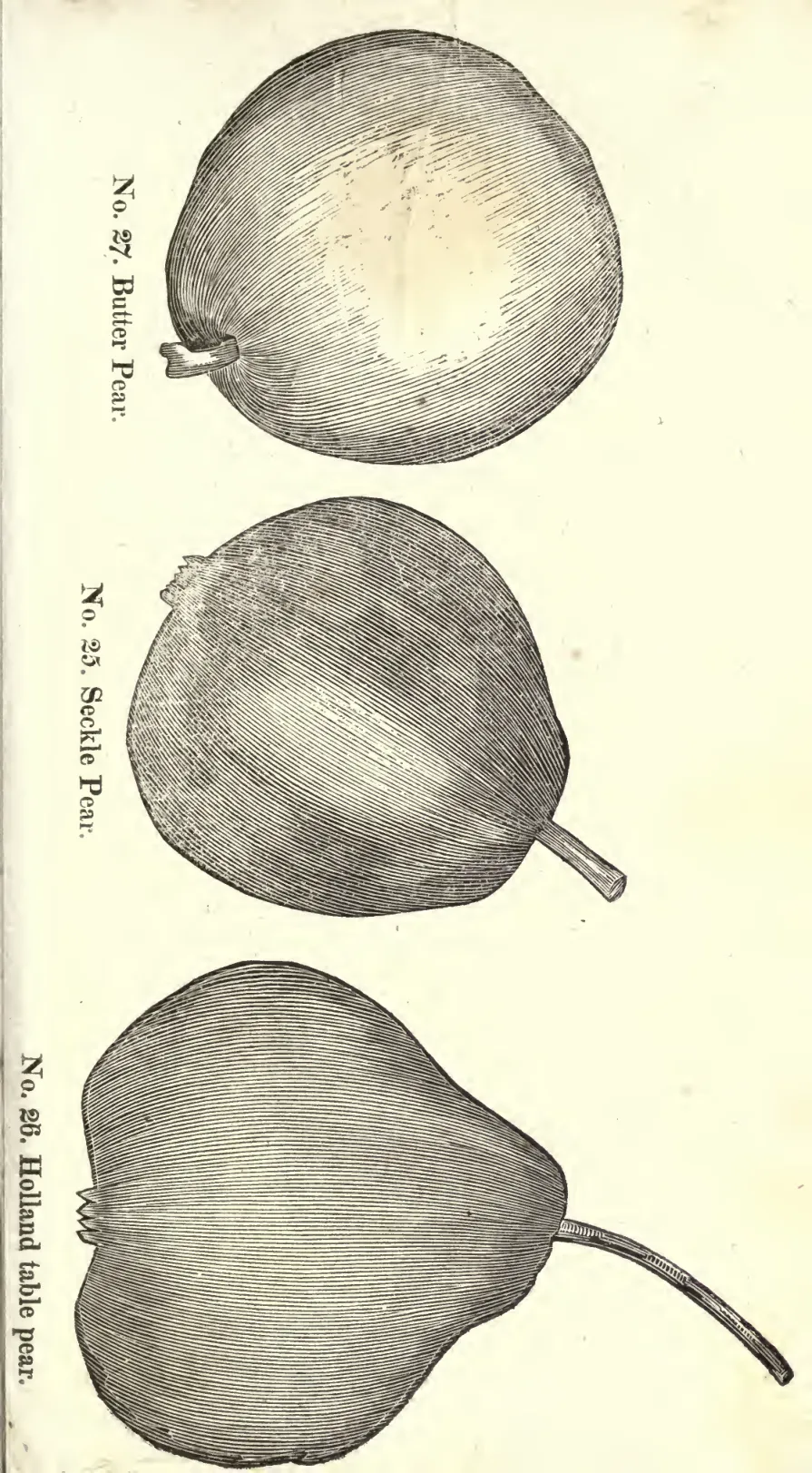
Holland Green, Sometimes Called The Holland Table Pear
Origin and History
Imported from Holland by William Clifton of Philadelphia.
Tree
Strong and vigorous growth with long branches. Foliage is luxuriant. A great and uniform bearer.
Fruit
Size and Form Rather large; very irregular form. Very wide at the blossom end, lessening suddenly to an obtuse point at the stem.
Skin Green with a number of indistinct spots and small russet clouds. Uneven though smooth.
Stem Very long.
Flesh and Flavor Remarkably juicy, delicate and luscious, melting and sprightly, with a greenish white cast.
Season
Ripens in September and October.
Uses
Few pears are more admired at a season when fine pears are common.
Subtypes and Variants
Not described in source.
Book Sources
Described in 1 period pomological work
View original book sources (1)
— William Coxe, A View of the Cultivation of Fruit Trees (1817)
- HOLLAND GREEN, SOMETIMES CALLED THE HOLLAND TABLE PEAR.
This is rather a large pear, of very irregular form, the skin is green, with a number of indistinct spots, and small russet clouds—the flesh is remarkably juicy, delicate and luscious, melting and sprightly, of a greenish white cast—it is very wide at the blossom end, lessens suddenly to an obtuse point at the stem, with an uneven though smooth skin—the stalk is very long; Few pears are more admired at a season when fine pears are common—it ripens in September and October—the tree is of strong and vigorous growth, with long branches, the foliage luxuriant—it is a great and uniform bearer; it was imported from Holland by the late William Clifton of Philadelphia.