Joyce
Apple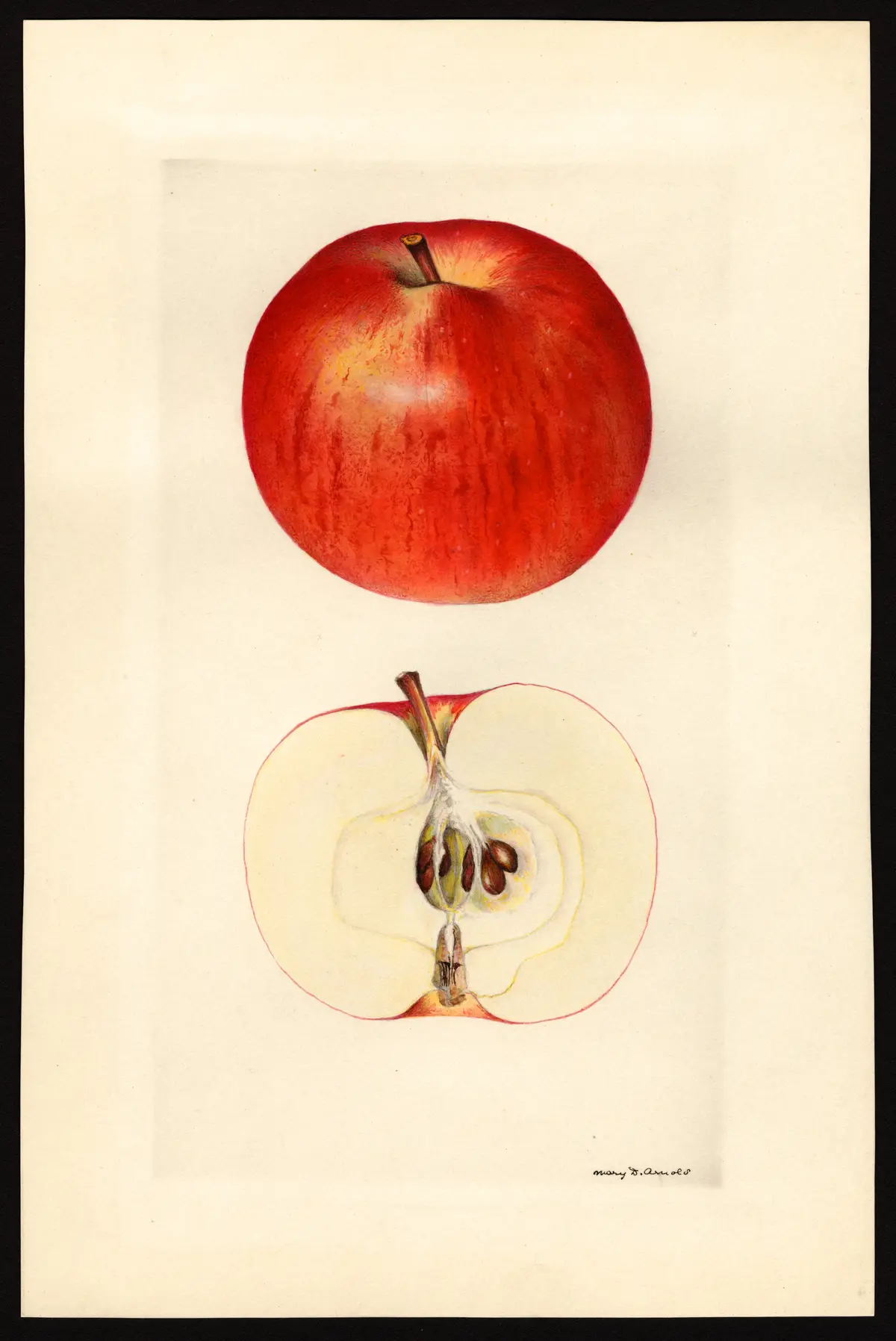
USDA Pomological Watercolor Collection
Joyce
Origin and History
Joyce was reported by multiple agricultural experiment stations in the United States during the mid-20th century, with origins traced to Canada. The Agricultural Experiment Station at the University of Maine, Orono, Maine received Joyce from an unknown Canadian source in 1941. The Agricultural Experiment Station at Pennsylvania State University, University Park, Pennsylvania received scions from the Agricultural Experiment Station at Geneva, New York (station number N39). The Agricultural Experiment Station at the University of Minnesota, St. Paul Campus, St. Paul, Minnesota received Joyce from the Central Experimental Farm, Ottawa, Canada (accession number N38142), where it is documented as a McIntosh open pollinated selection. The Agricultural Experiment Station, Department of Pomology, at Geneva, New York received it from E. D. Smith & Sons, Ltd., Winona, Ontario, Canada in 1927. The Northern Great Plains Field Station, Mandan, North Dakota received it from the Horticultural Station, Cheyenne, Wyoming. The Department of Pomology at Geneva, New York also received it from Greening Nursery Company, Monroe, Michigan.
Fruit
Size and Form: Medium.
Surface and Color: Almost entirely splashed with red.
Flesh: Whitish, semi-firm, subacid, astringent, and of poor quality.
Season
Middle September.
Tree Characteristics
Not described in source.
Uses
Not described in source.
Other
One source (Greening Nursery Company, Monroe, Michigan) reported Joyce as very productive, of good quality, and hardy. This assessment differs markedly from the description of poor quality flesh recorded by other stations, suggesting possible variation in growing conditions, handling, or clone identity among the distributed scions.
Book Sources
Described in 1 period pomological work
View original book sources (1)
— H.H. Fisher (USDA ARS), A Survey of Apple Clones in the United States (1963)Joyce was reported by multiple stations from several sources. The Agricultural Experiment Station, University of Maine, Orono, Maine received it from an unknown Canadian source in 1941. The Agricultural Experiment Station, College Station, South Dakota and the Agricultural Experiment Station, Pennsylvania State University, University Park, Pennsylvania received scions from AES, Geneva, N.Y., under station number N39. The Agricultural Experiment Station, University of Minnesota, St. Paul Campus, St. Paul, Minnesota received it from Cent. Exp. Farm, Ottawa, Canada, accession number N38142; it is a McIntosh open pollinated selection. Fruit is medium, almost entirely splashed with red. Flesh is whitish, semi-firm, subacid, astringent, and of poor quality. Season: middle September. The Agricultural Experiment Station, Department of Pomology, Geneva, New York received it from E. D. Smith & Sons, Ltd., Winona, Ont., Canada in 1927. The Northern Great Plains Field Station, Box 203, Mandan, North Dakota received it from Hort. Sta., Cheyenne, Wyo. The Agricultural Experiment Station, Department of Pomology, Geneva, New York also received it from Greening Nurs. Co., Monroe, Mich.; that source reported the variety as very productive, of good quality, and hardy.