Kane
Apple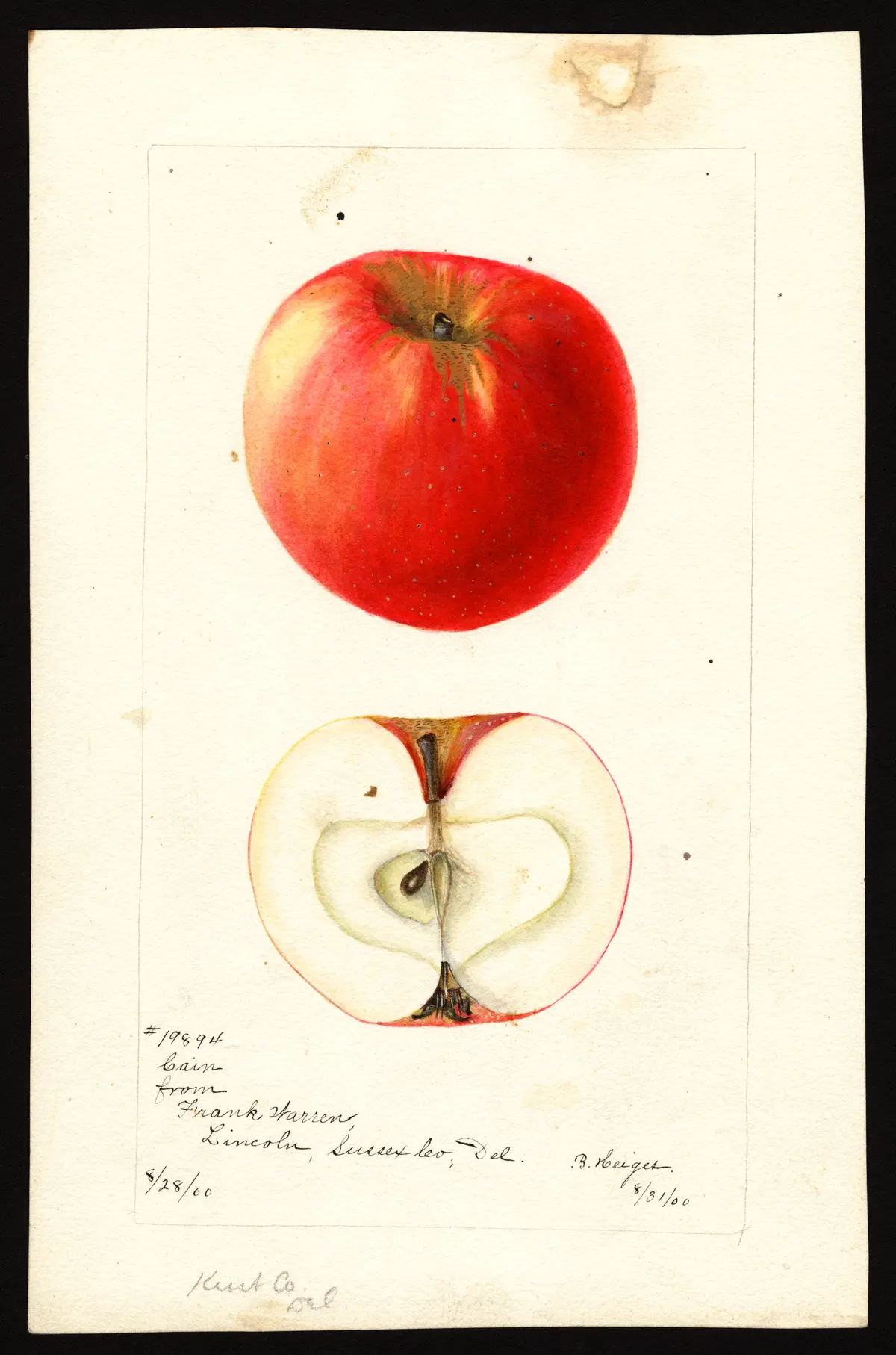
USDA Pomological Watercolor Collection
Origin and History
A native of Kent County, Delaware. Warder notes it has been confounded with the Bohanon, but is distinct.
Tree
Upright, moderately vigorous. Warder describes the vigor as "sufficiently vigorous"; Downing specifies "moderately vigorous."
Fruit
Size: Warder and Downing describe the fruit as small; Elliott and Thomas describe it as medium.
Form: Roundish-oblate, often obscurely conical, regular. Downing describes it as "oblate, slightly conical, regular." Warder similarly gives "regular, oblate, somewhat conic."
Stem: Stalk often very short (Thomas).
Cavity: Acute, narrow (Thomas).
Calyx: Not described in sources.
Basin: Regular (Thomas).
Skin: Very smooth, highly polished, fair and beautiful. Ground color waxen whitish yellow. Beautifully shaded and indistinctly striped with brilliant light crimson, gradually merging into delicate blush color on the shaded part (Thomas). Warder describes it as "blushed with bright crimson"; Downing as "beautifully shaded and lightly striped with fine crimson." All sources remark on its exceptional beauty of appearance.
Flesh and Flavor: Whitish to yellowish white, juicy, crisp, with a pleasant flavor. Warder specifically notes the flavor as "acid and pleasant." Downing rates it "Good." Thomas writes it is "hardly of the highest quality, but much admired for its beauty." Downing calls it "a beautiful little Apple, of pleasant flavor." Warder describes it as "beautiful for the dessert."
Core and Seeds: Not described in sources.
Season
October and November. Thomas specifies "late autumn."
Uses
Described as a dessert apple by Warder. All sources emphasize its ornamental beauty, suggesting particular value as a table fruit.
Book Sources
Described in 4 period pomological works
View original book sources (4)
— John A. Warder, American Pomology: Apples (1867)Kane.
CAIN.
Origin, Delaware. Tree upright, sufficiently vigorous. Has been confounded with the Bohanon, but is distinct.
Fruit small, regular, oblate, somewhat conic; Beautiful for the dessert; Surface very smooth, waxen yellow, blushed with bright crimson; Flesh whitish, crisp, juicy, acid and pleasant; October and November.
— A.J. Downing, The Fruits and Fruit Trees of America (1900)Kane.
Cane. Cain.
Origin, Kent Co., Delaware. Tree moderately vigorous, upright.
A beautiful little Apple, of pleasant flavor.
Fruit small, oblate, slightly conical, regular, whitish yellow, waxen, beautifully shaded and lightly striped with fine crimson. Flesh whitish, juicy, crisp, with a pleasant flavor. Good. October, November.
— F.R. Elliott, The Western Fruit Book (1865)Kane.
Cane, | Cain.
American. Medium, roundish, striped crimson ; flesh, yellowish ; beautiful to look at. Autumn.
— John J. Thomas, The American Fruit Culturist (1903)Kane. (Cane, Cain.) Size medium, roundish-oblate, often obscurely conical, regular; surface fair and beautiful, highly polished, indistinctly striped with brilliant light crimson, gradually merging into delicate blush color on the shaded part; stalk often very short; cavity acute, narrow; basin regular; flesh yellowish white, with a pleasant, good flavor. Hardly of the highest quality, but much admired for its beauty. Late autumn. A native of Kent County, Delaware.