New Northern Greening
Apple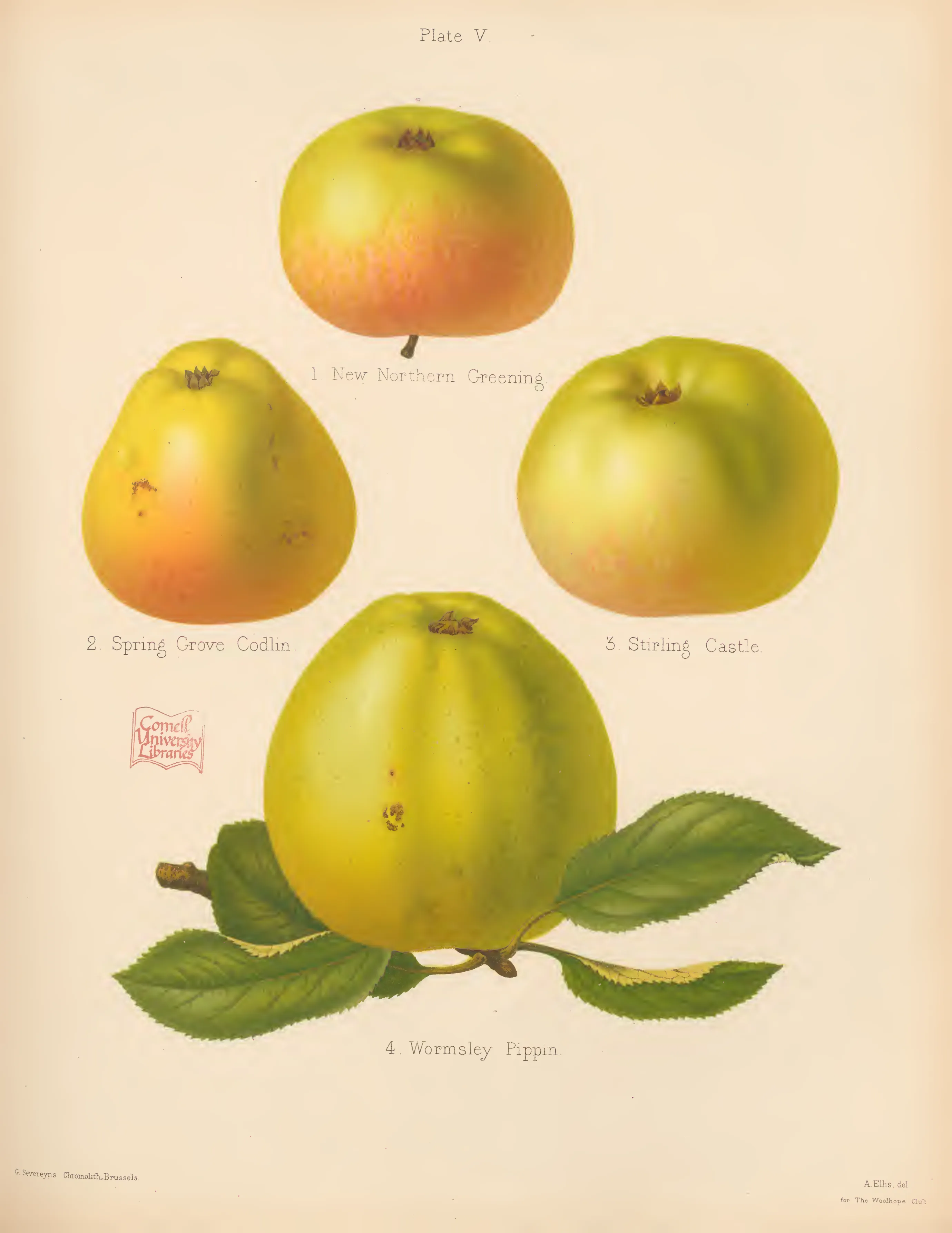
New Northern Greening
Origin and History
A seedling from the Northern Greening. Superior to its parent in size, flavor, and keeping quality.
Tree
Grows freely and bears well. Succeeds as both a bush and pyramid form. Requires only summer pinching of the ends of shoots for pruning.
Fruit
Size and Form Rather above middle size, approximately two inches and a half broad and two inches and one quarter high. Roundish in form but more flattened than its parent.
Skin Smooth. Ground color dullish green with brownish red on the sunny side. This color frequently spreads over the greater part of the fruit surface and often presents streaks of a darker color.
Eye and Basin Eye small and neat, closed with long segments. Set in a broad, round, and even basin.
Stalk and Cavity Stalk short and stout. Inserted in a deep, narrow cavity.
Flesh and Flavor Greenish white flesh, firm in texture, crisp, and very juicy. Excellent in flavor with a brisk vinous acidity. Superior for tarts to all others of its season.
Core and Seeds Not described in source.
Season and Storage
Best in flavor during December, January, and February. If allowed to remain late on the tree before gathering, will be good in March.
Uses
Superior for tarts.
Subtypes and Variants
Not described in source.
Book Sources
Described in 1 period pomological work
View original book sources (1)
— Woolhope Naturalists Field Club, The Herefordshire Pomona (1885)NEW NORTHERN GREENING.
A seedling from the Northern Greening, but superior to it in size, in flavour, and as a keeping apple.
Description.—Fruit; rather above middle size, about two inches and a half broad, and two inches and one quarter high, roundish but more flattened than its parent. Skin; smooth, of a dullish green and brownish red on the sunny side; this colour frequently spreads over the greater part of the surface of the fruit, and often presents streaks of a darker colour. Eye; small and neat, closed with long segments and set in a broad round and even basin. Stalk; short and stout, inserted in a deep narrow cavity. Flesh; greenish white, firm in texture, crisp, and very juicy. It is excellent in flavour, with a brisk vinous acidity, and is superior for tarts to all others of its season. The fruit is in best flavour in December, January, and February, and if allowed to remain late on the tree before it is gathered, it will be good in March.
The tree grows freely and bears well. It succeeds well as a bush or pyramid, and only requires for pruning, the summer pinching of the ends of the shoots.