No. 1. Juneting
Apple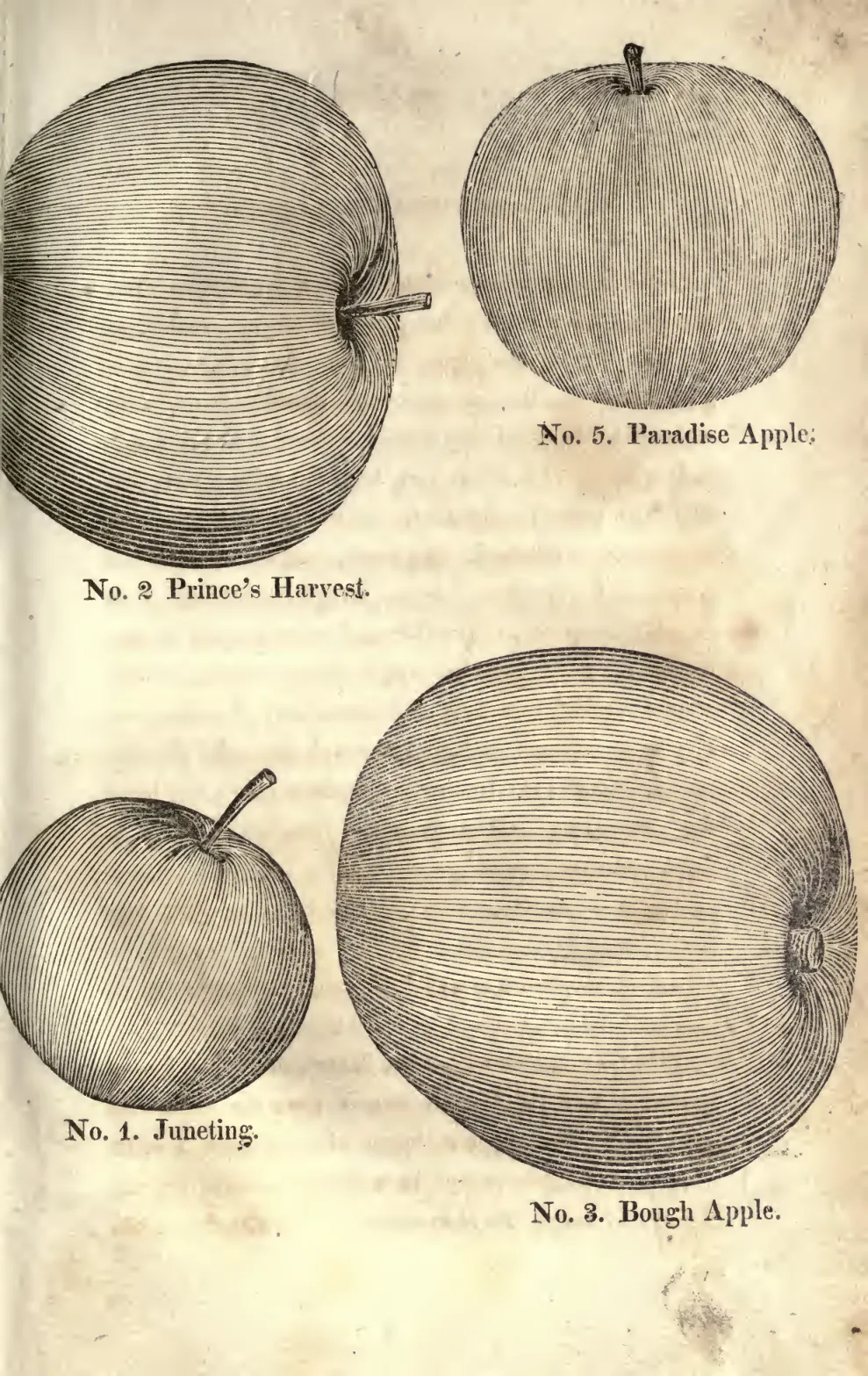
No. 1. Juneting
Origin / History
William Coxe describes No. 1. Juneting in A View of the Cultivation of Fruit Trees (1817), where the variety is headed "No. 1. Juneting, or Jenneting." Coxe calls it "the earliest table apple of our country."
Tree
The growth of the tree is straight and the form handsome, what Orchardists call beesom-headed. The tree is small in size. It is a great and constant bearer in good ground.
Fruit
Size: Small.
Form: Flat.
Stem: Long and thin.
Cavity: Not described in source.
Calyx: Not described in source.
Basin: Not described in source.
Skin: The skin has an oily feel. The ground color is a pale green, turning to a light yellow when fully ripe, with sometimes a faint blush toward the Sun.
Dots: Not described in source.
Flesh and flavor: The taste is pleasant, though neither very juicy nor highly flavored.
Core and seeds: Not described in source.
Season
No. 1. Juneting ripens from the twentieth of June to the middle of July, according to the soil, aspect, and age of the tree.
Uses
Not described in source.
Subtypes / Variants
Not described in source.
Other
Not described in source.
Book Sources
Described in 1 period pomological work
- Coxe, A View of the Cultivation of Fruit Trees (1817) — listed as NO. 1. JUNETING, OR JENNETING
View original book sources (1)
— William Coxe, A View of the Cultivation of Fruit Trees (1817)NO. 1. JUNETING, OR JENNETING.
This is the earliest table apple of our country: the size is small, the form flat, the stalk long and thin; the colour a pale green, turning to a light yellow when fully ripe, with sometimes a faint blush towards the Sun; the skin has an oily feel, the taste is pleasant, though neither very juicy or highly flavoured. It is a great and constant bearer in good ground: it ripens from the twentieth of June to the middle of July, according to the soil, aspect, and age of the tree. The growth of the tree is straight, the form handsome, what Orchardists call beesom-headed; the size small.