No. 12. Roseau D'Automne
Apple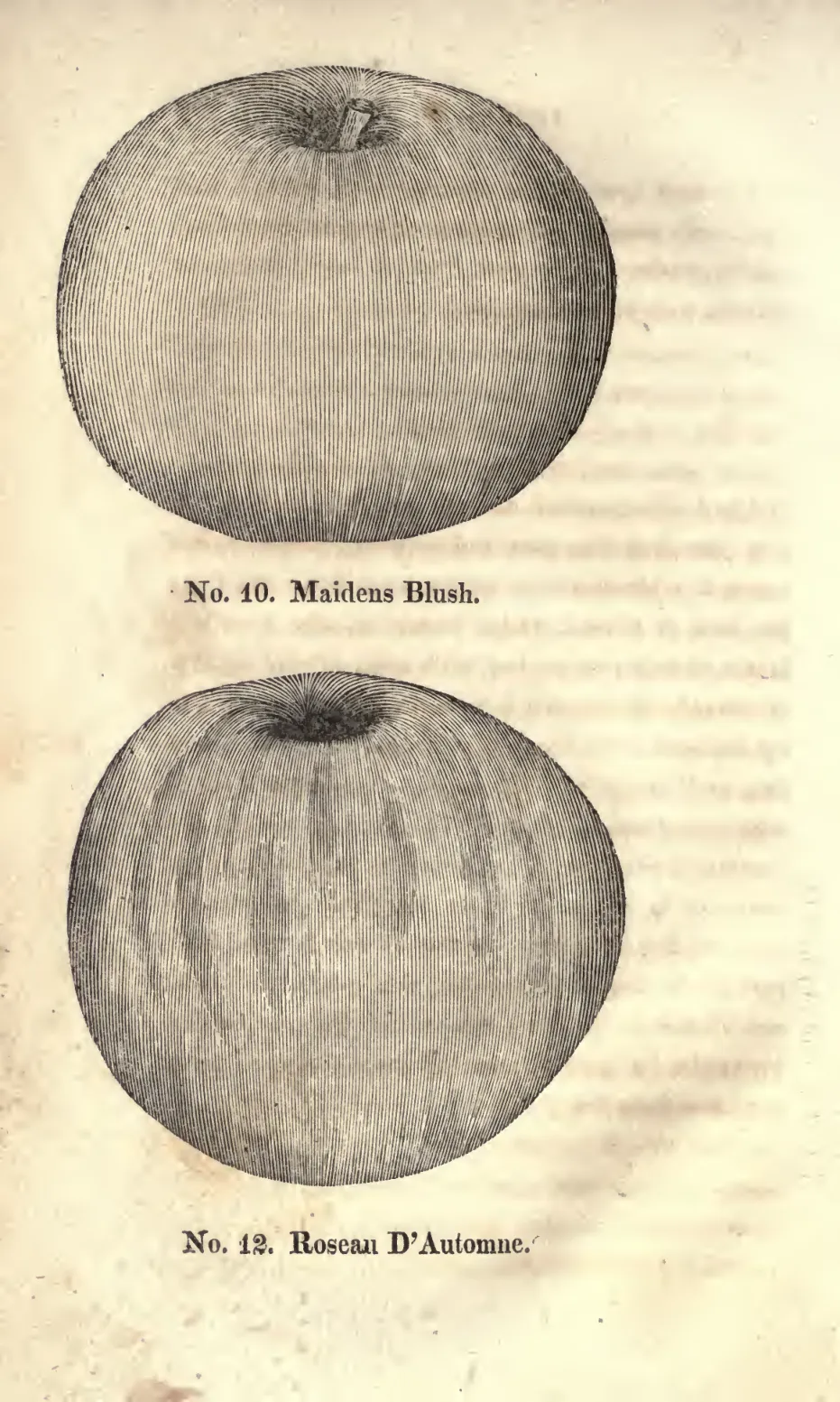
No. 12. Roseau D'Automne
Origin / History
No. 12. Roseau D'Automne is described by William Coxe in A View of the Cultivation of Fruit Trees (1817). Coxe states that he imported it from England.
Tree
The tree is of a large and vigorous growth, and spreads much.
Fruit
Size: Middling size, of great beauty.
Form: Not described in source.
Stem: Short, deeply planted.
Cavity: A hollow, in which the stem is deeply planted.
Calyx: The crown is deeply planted in a hollow, as is the stem.
Basin: Not described in source.
Skin: Red, intermingled with bright rich yellow, and russet about the stem.
Dots: Not described in source.
Flesh and flavor: Rich, yellow, juicy, tender, highly flavored, and very firm. It contains much of the transparency "vulgarly called, fever and ague," which renders it heavy and solid.
Core and seeds: Not described in source.
Season
No. 12. Roseau D'Automne ripens in September.
Uses
Not described in source.
Subtypes / Variants
Not described in source.
Other
Not described in source.
Book Sources
Described in 1 period pomological work
View original book sources (1)
— William Coxe, A View of the Cultivation of Fruit Trees (1817)NO. 12. ROSEAU D'AUTOMNE.
This is an apple of middling size, and of great beauty. The skin is red, intermingled with bright rich yellow, and russet about the stem, which is short and deeply planted in a hollow, as is the crown: the flesh is rich, yellow, juicy, tender, highly flavoured, and very firm; containing much of that transparency vulgarly called, fever and ague, which renders it heavy and solid: it ripens in September—the tree is of a large and vigorous growth, and spreads much. I imported it from England.