Orange Bergamot
Pear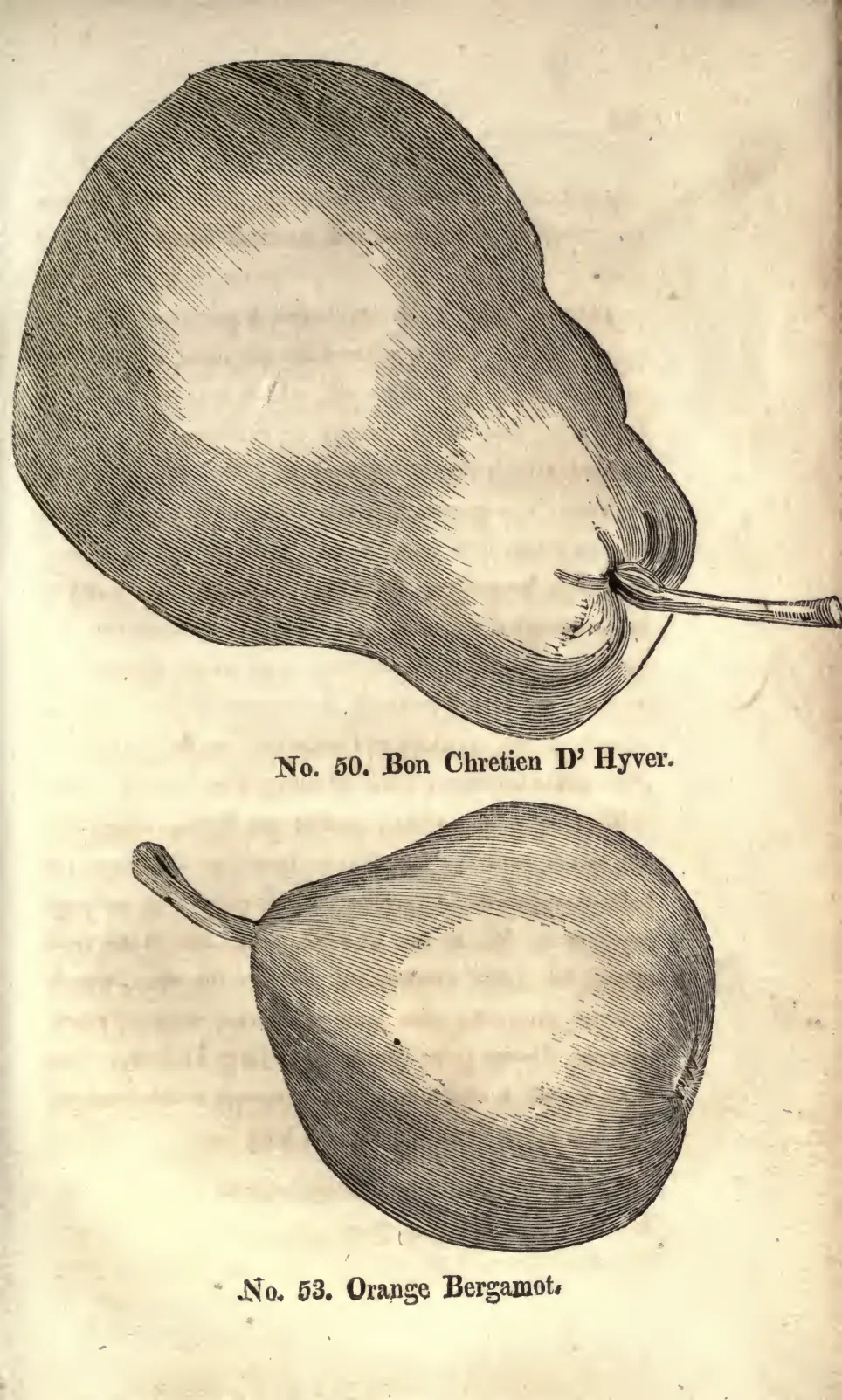
Orange Bergamot
Origin / History
Not described in source.
Tree
Hardy tree; a great bearer (Coxe).
Fruit
Size: Large, a "large handsome pear" (Coxe); medium (Thomas).
Form: Broad, turbinate; flat at the blossom end, gradually diminished toward the stem.
Stem: Not described in source.
Cavity: Not described in source.
Calyx: Not described in source.
Basin: Not described in source.
Skin: Rough, yellow, with bright russet toward the sun.
Dots: Not described in source.
Flesh and flavor: Flesh firm, acid; rich and very sprightly (Coxe), rather too acid for the dessert.
Core and seeds: Not described in source.
Season
September.
Uses
Culinary: baking. Coxe calls it "the best baking pear of the season," rather too acid for the dessert.
Subtypes / Variants
Not described in source.
Other
Not described in source.
Book Sources
Described in 2 period pomological works
View original book sources (2)
— William Coxe, A View of the Cultivation of Fruit Trees (1817)
- ORANGE BERGAMOT.
Is a large handsome pear, flat at the blossom end, gradually diminished towards the stem; the skin is rough, yellow, and of a bright russet towards the Sun; the flesh is rich, firm, and very sprightly, rather too acid for the dessert, but the best baking pear of the season, which is in September: it is a great bearer, and a hardy tree.
— John J. Thomas, The American Fruit Culturist (1903)Orange Bergamot. Medium, broad, turbinate, yellow, rough; firm; acid—baking. September.