Russian Gravenstein
Apple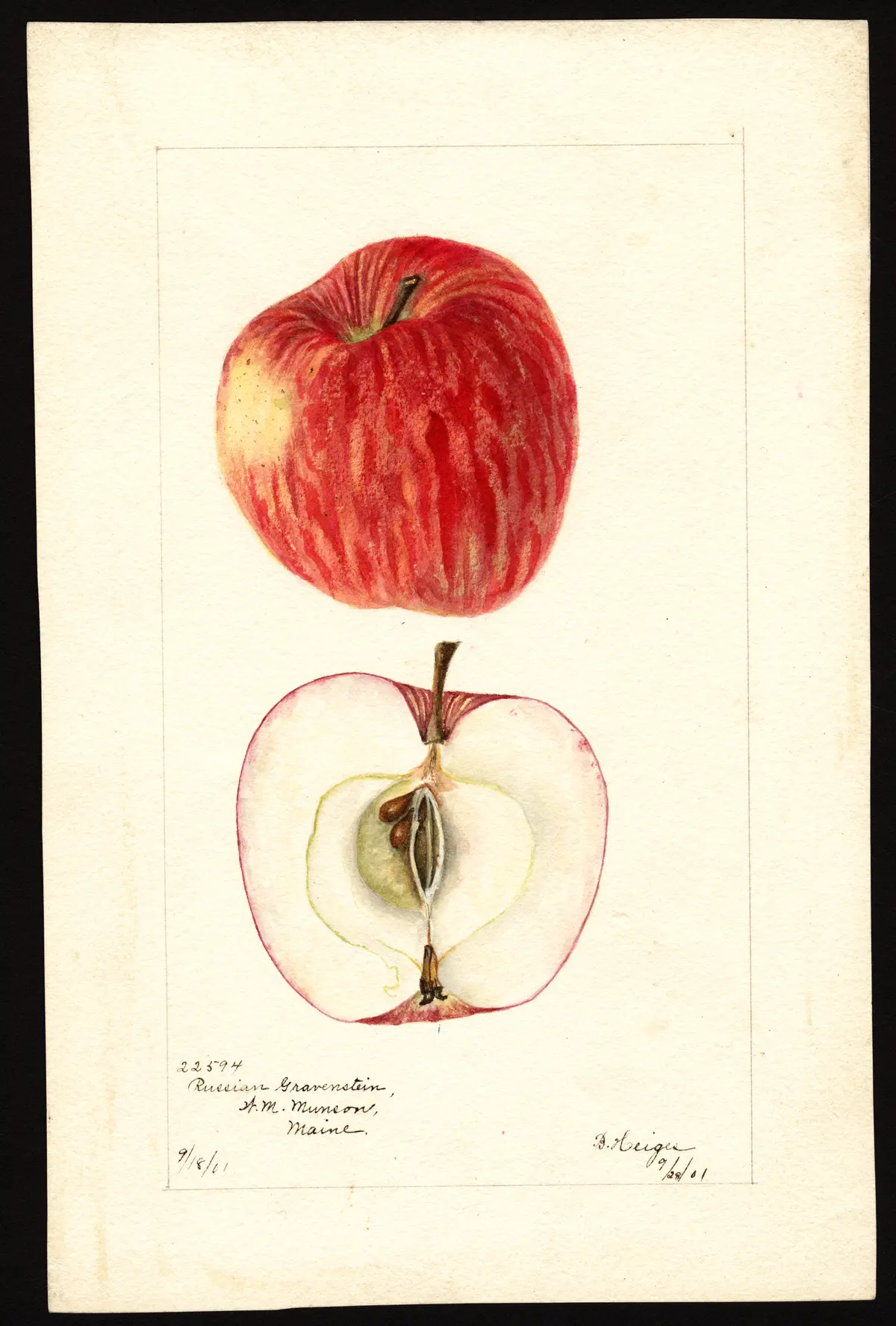
USDA Pomological Watercolor Collection
Russian Gravenstein
Origin / History
Origin, Russia. Two varieties were imported under the name Russian Gravenstein. The variety described here was recorded by N.E. Hansen in A Study of Northwestern Apples (1902), where it is listed as spurious No. 105.
Tree
Not described in source.
Fruit
Size: Fruit medium.
Form: Regular, oblate.
Stem: Short to medium.
Cavity: Regular, wide, slightly russeted.
Calyx: Closed, segments long, acute. Tube very broad, long, as in Serinkia, funnel-shaped. Stamens marginal.
Basin: Medium, abrupt, regular, or slightly wavy.
Skin: Surface polished, light yellow, mostly covered with lively red and crimson stripes and splashes.
Dots: Few, obscure, white, minute.
Flesh and flavor: Snow white, firm, fine grained, juicy, very pleasant, mild subacid; almost sweet, with agreeable after-taste, very good.
Core and seeds: Core regular, closed.
Season
August.
Uses
Not described in source.
Subtypes / Variants
Of the two varieties imported under the name Russian Gravenstein, one appears to be Antonovka. The other is the variety described above.
Other
Listed as spurious No. 105 in Hansen's A Study of Northwestern Apples (1902).
Book Sources
Described in 1 period pomological work
View original book sources (1)
— N.E. Hansen, A Study of Northwestern Apples (1902)Russian Gravenstein (spurious No. 105)—Origin, Russia; two varieties were imported under the above name, one of which appears to be Antonovka and the other is as follows—Fruit medium, regular, oblate; surface polished, light yellow, mostly covered with lively red and crimson stripes and splashes; dots few, obscure, white, minute; cavity regular, wide, slightly russeted; stem short to medium; basin medium, abrupt, regular, or slightly wavy; calyx closed, segments long, acute. Core regular, closed; tube very broad, long, as in Serinkia, funnel-shaped; stamens marginal; flesh snow white, firm, fine grained, juicy, very pleasant, mild subacid; almost sweet, with agreeable after-taste, very good. August.