Rymer
Apple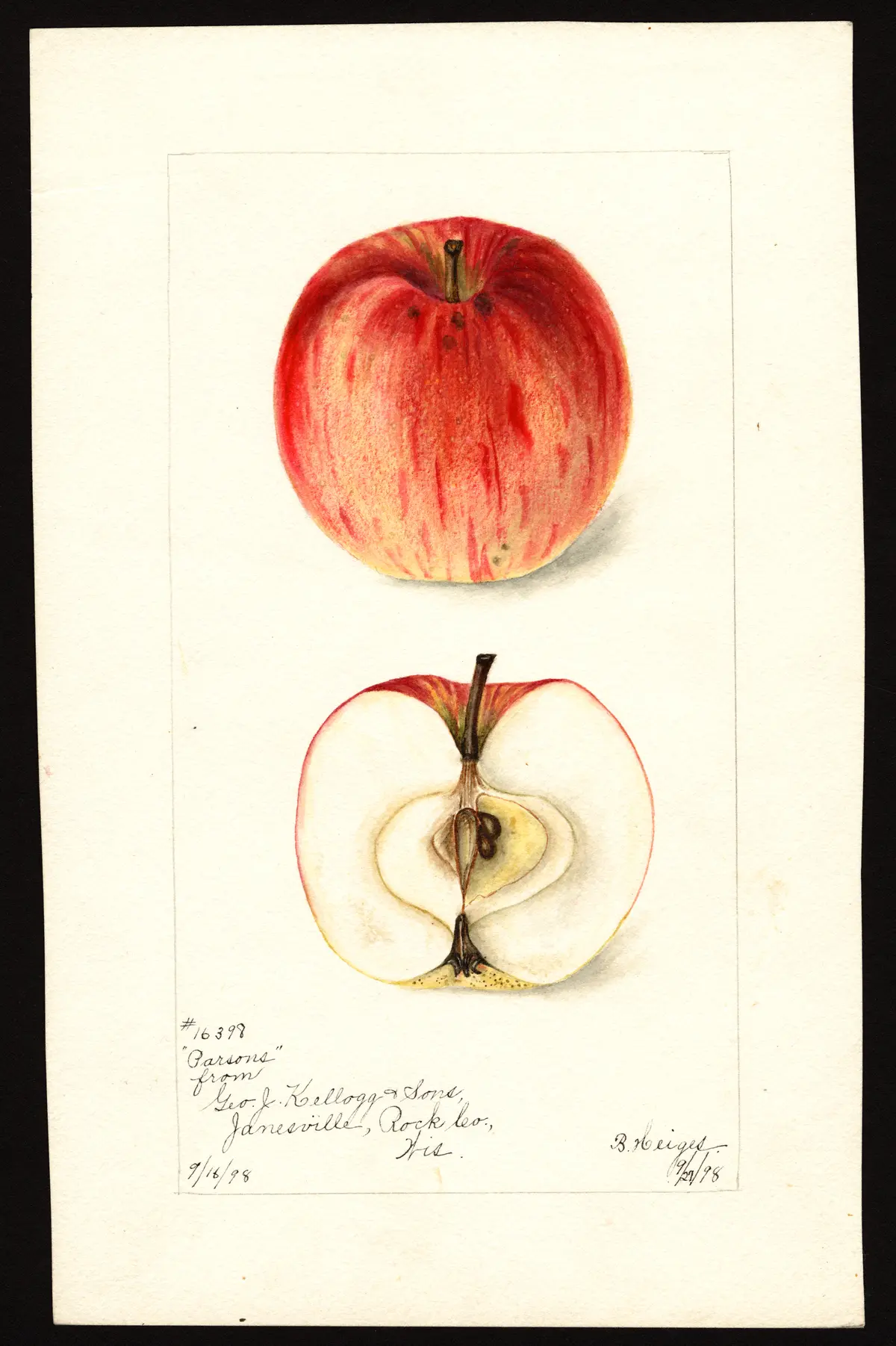
USDA Pomological Watercolor Collection
Origin/History
Of foreign origin. Named after its raiser, Mr. Rymer of Thirsk, Yorkshire, about 1750 (Bunyard). Now almost out of cultivation, but a good fruit (Bunyard).
Tree
Vigorous and productive (Downing). Growth strong; fertility moderate (Bunyard). Leaf large, flat, down curved, round oval, doubly shallow serrate (Bunyard).
Fruit
Size: Medium (Downing); above medium (Elliott); large (Thomas); fairly large, 3¼ by 2⅜ inches (Bunyard).
Form: Roundish oblate (Downing); roundish flattened (Elliott); oblate conic (Thomas); flattened conical, slightly irregular (Bunyard).
Stem: Extra short, often only three-eighths of an inch, in a small, shallow cavity, or often level with the surface, or often raised (Bunyard). This apple has probably the shortest stem of any (Bunyard).
Cavity: Small and shallow, or often absent — stem level with or raised above the surface (Bunyard). Not described in the other sources.
Calyx/Eye: Closed, or a little open (Bunyard).
Basin: Deep, wide, ribbed (Bunyard).
Skin: Pale yellow, shaded with deep red, light dots (Downing); clear red, glossy (Elliott); yellow, shaded crimson (Thomas); covered with deep crimson red flush and faint stripes (Bunyard).
Flesh/Flavor: Yellowish, rather firm, tender, subacid, good (Downing); white, sharp acid (Elliott); subacid (Thomas); tender, yellow, acid (Bunyard). Sources disagree on flesh color — yellow/yellowish (Downing, Bunyard) vs. white (Elliott) — and on acidity, ranging from subacid (Downing, Thomas) to sharp acid / acid (Elliott, Bunyard).
Core/Seeds: Not described in source.
Season
December to April (Downing); October to December (Elliott); December (Thomas); keeps till March, classified culinary (Bunyard).
Uses
Culinary (Bunyard).
Subtypes/Variants
Not described in source.
Other
Downing lists additional associated names (Caldwell, Green Cossings, Newbold's Duke of York, Cordwall, Newbold's Admiral Duncan); Bunyard cites Ronalds, p. 41, and associates Caldwell's Keeper and Green Cossings with this variety.
Book Sources
Described in 4 period pomological works
Nursery Catalog Sources
Found in 4 catalogs (1900–1913) from England, Illinois
- Central Experimental Farm , Dominion Department of Agriculture, Agassiz, British Columbia (under test; Bulletin No. 3, Second Series) — 1900
- Benjamin Buckman (personal inventory) , Farmingdale , Illinois — 1901
- James Veitch & Sons , Ltd., Royal Exotic Nursery, Chelsea, London (also Coombe Wood, Langley, and Feltham) , England — 1911
- Benjamin Buckman (personal inventory) , Farmingdale , Illinois — 1913
View original book sources (4)
— A.J. Downing, The Fruits and Fruit Trees of America (1900)Rymer.
Caldwell. Green Cossings. Newbold's Duke of York. Cordwall. Newbold's Admiral Duncan.
Of foreign origin. Tree vigorous, productive.
Fruit medium, roundish oblate, pale yellow, shaded with deep red, light dots. Flesh yellowish, rather firm, tender, subacid. Good. December to April.
— F.R. Elliott, The Western Fruit Book (1865)Rymer. Foreign. Above medium, roundish flattened, clear red, glossy ; flesh, white, sharp acid. October, December.
— John J. Thomas, The American Fruit Culturist (1903)Rymer. Large, oblate conic, yellow, shaded crimson; sub-acid. December. Foreign.
— E.A. Bunyard, A Handbook of Hardy Fruits (1920)RYMER. Ronalds, P. 41. (Caldwell's Keeper, Green Cossings.) Culinary, till March, fairly large, 3¼ by 2⅜, flattened conical, slightly irregular. Colour, covered with deep crimson red flush and faint stripes. Flesh, tender, yellow, acid. Eye, closed, or a little open, in a deep wide ribbed basin. Stem, extra short, often only three-eights-of-an-inch, in a small, shallow cavity, or often level with the surface, or often raised. Growth, strong; fertility moderate. Leaf, large, flat, down curved, round oval, doubly shallow serrate. Origin, named after its raiser, Mr. Rymer of Thirsk, Yorkshire, about 1750. Now almost out of cultivation, but a good fruit. This apple has probably the shortest stem of any.