Summer Strawberry
Apple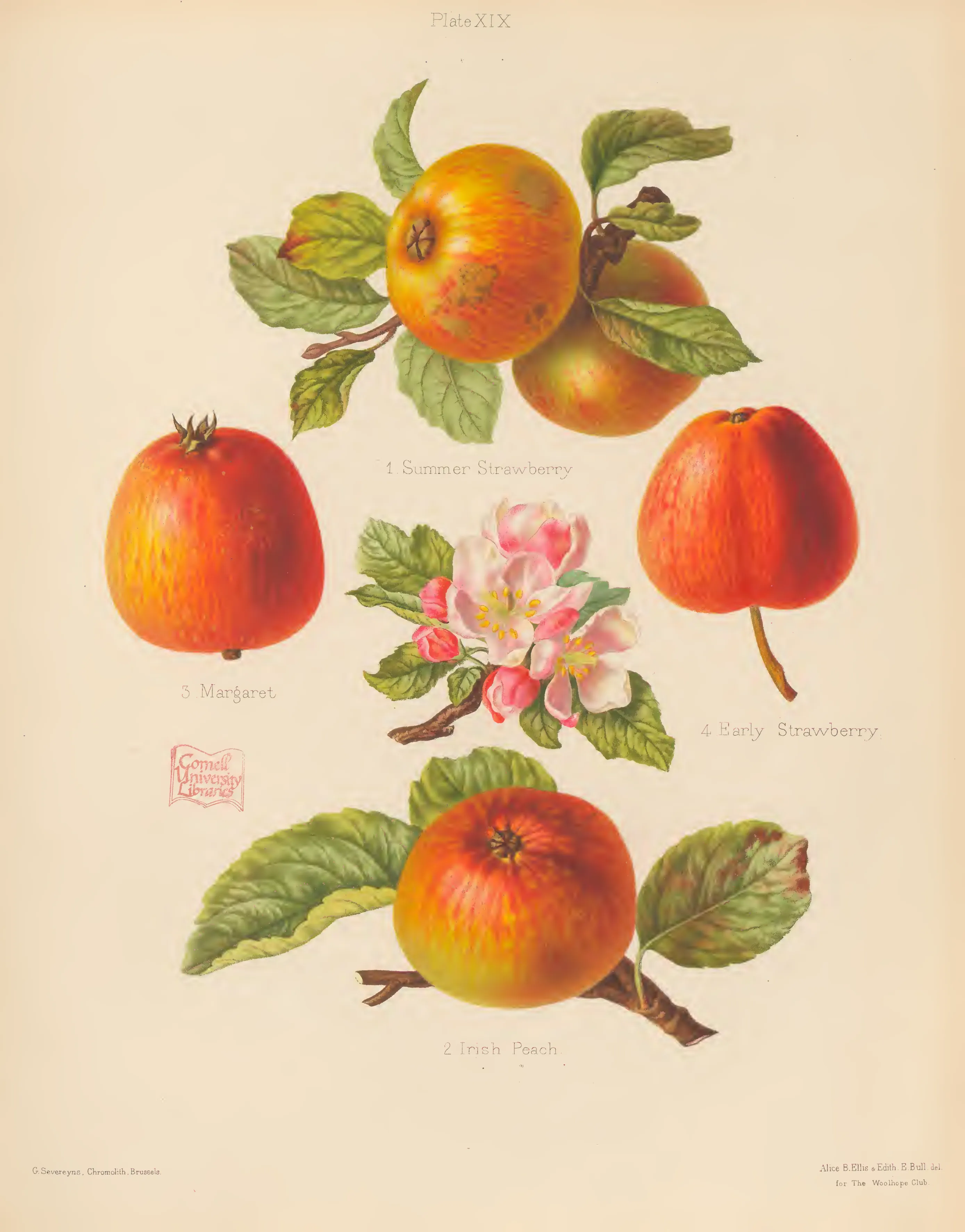
Summer Strawberry
Origin / History
The origin of this apple is not known. It is much cultivated in all the Lancashire and Northern Orchards of England, and is gradually extending into the special apple districts. The description was published in The Herefordshire Pomona (1885) by the Woolhope Naturalists Field Club.
Tree
Not described in source.
Fruit
Size: Rather below medium size, two and a half inches broad and one and three quarters inches high.
Form: Oblate, even and regularly formed.
Stem: Three quarters of an inch long, inserted in a round narrow cavity.
Cavity: Round and narrow, lined with russet.
Calyx: Eye prominent, not at all depressed, closed with long flat segments and surrounded with prominent plaits. Calyx tube and stamens not described.
Basin: Not described in source.
Skin: Smooth and shining, striped all over with yellow and blood-red stripes, except on any portion that is shaded, which is red. Thickness, texture and bloom not described. Scarf-skin not described.
Dots: Not described in source.
Flesh and flavor: White, tinged with yellow, soft, tender and juicy. Brisk and pleasantly flavored.
Core and seeds: Not described in source.
Season
Ripe in September and October. When kept long it becomes dry and mealy.
Uses
A good dessert apple.
Subtypes / Variants
Not described in source.
Other
Not described in source.
Book Sources
Described in 1 period pomological work
View original book sources (1)
— Woolhope Naturalists Field Club, The Herefordshire Pomona (1885)
- SUMMER STRAWBERRY.
The origin of this apple is not known. It is much cultivated in all the Lancashire and Northern Orchards of England, and is gradually extending into the special apple districts.
Description.—Fruit: rather below medium size, two and a half inches broad, and an inch and three quarters high; oblate, even and regularly formed. Skin: smooth and shining, striped all over with yellow and blood-red stripes, except on any portion that is shaded, and then it is red. Eye: prominent, not at all depressed, closed with long flat segments, and surrounded with prominent plaits. Stalk: three quarters of an inch long, inserted in a round narrow cavity, which is lined with russet. Flesh: white, tinged with yellow, soft, tender, juicy, brisk and pleasantly flavoured.
A good dessert apple, ripe in September and October, but when long kept it becomes dry and mealy.