Tuscaloosa
Apple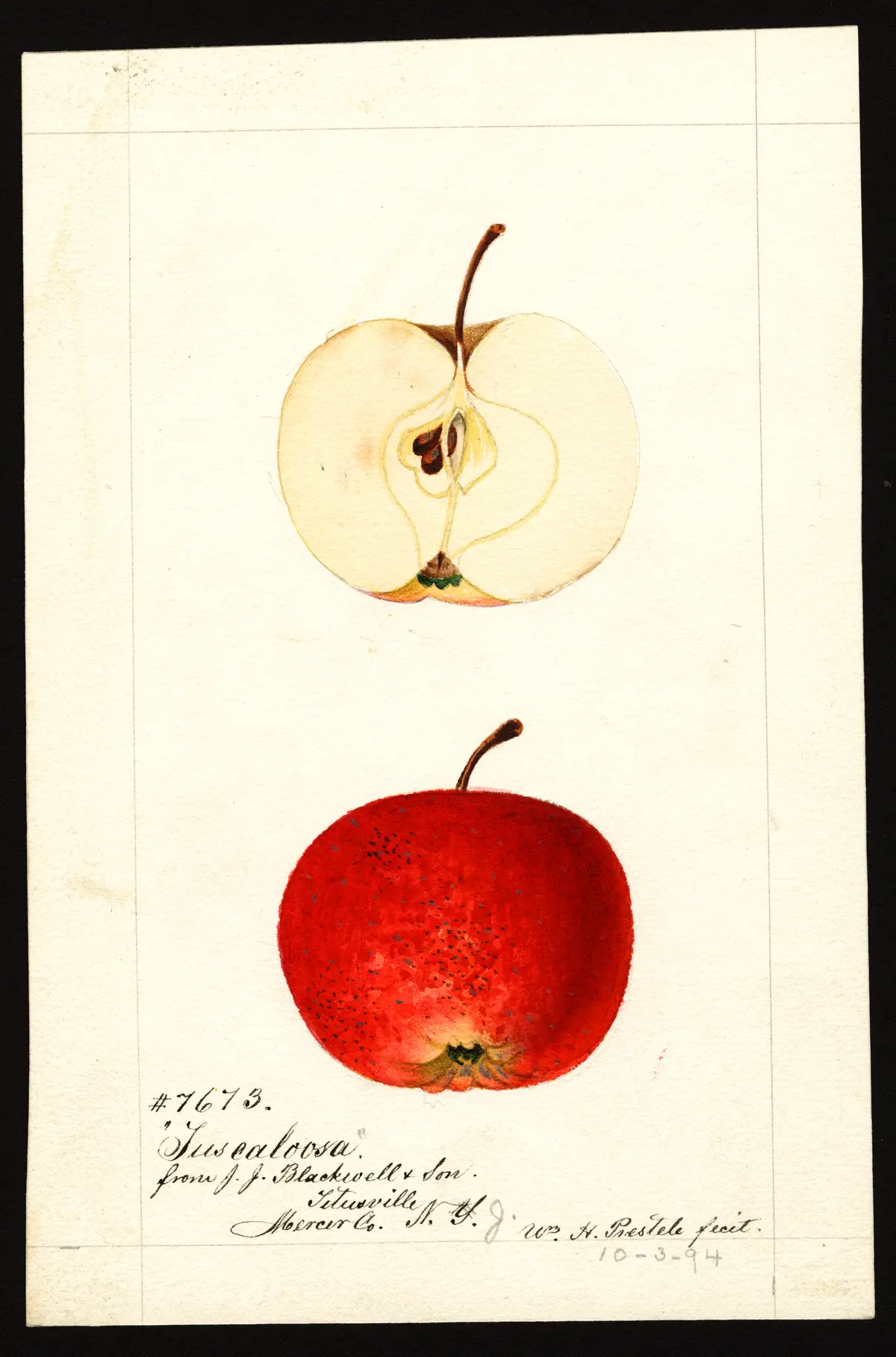
USDA Pomological Watercolor Collection
Tuscaloosa
Origin/History
A seedling variety originated by Andrew Clements of Tuscaloosa County, Alabama. Described in 1900 by Downing as "a new seedling of good promise as a market sort for the South."
Tree
Moderately vigorous and spreading in habit. Productive.
Fruit
Size and form: Medium to large; roundish oblate, slightly conic.
Skin: Yellow, shaded, striped, and marbled with red russet near the stalk. Few gray dots.
Stem: Slender.
Cavity: Slightly russeted.
Calyx: Closed.
Basin: Corrugated.
Flesh: Yellowish, firm, juicy, mild subacid. Quality rated good to very good.
Core: Small.
Season
October to February.
Uses
Intended as a market variety for the South.
Subtypes/Variants
Also referred to in period literature as Tuscaloosa Seedling.
Other
Not described in source.
Book Sources
Described in 1 period pomological work
View original book sources (1)
— A.J. Downing, The Fruits and Fruit Trees of America (1900)Tuscaloosa.
Tuscaloosa Seedling.
A variety originated by Andrew Clements, of Tuscaloosa Co., Ala. A new seedling of good promise as a market sort for the South. Tree moderately vigorous, spreading, productive.
Fruit medium to large, roundish oblate, slightly conic, yellow, shaded, striped, and marbled with red russet near the stalk, few gray dots. Stalk slender. Cavity slightly russeted. Calyx closed. Basin corrugated. Flesh yellowish, firm, juicy, mild subacid. Good to very good. Core small. October to February.