Winesap
| Winesap | |
|---|---|
| Species | Apple |
| Trees Found | 2 |
| Orchards | McCoin Upper |
| Preserved | Clarno Arboretum(2025) |

We can scarcely find words sufficiently strong to express the high opinion we have for this fruit, possessing, as it does, a combination of so many excellent qualities. For cider it has no equals; for the table it stands among the best; for keeping it is justly esteemed; and for bearing it scarcely has a rival. Considering all this, we most earnestly recommend it to the consideration of orchardists. Fruit medium size, rather oblong; skin smooth, of a fine dark red, with a few streaks and a little yellow ground appearing on the shady side; flesh yellow, firm, crisp, with a rich, high flavor. December to April. Read the full entry: Winesap on the Variety Finder for deeper history, every book quote, and all nursery catalog references.
Quick Facts
| Type | Apple |
| Season | Late (Late fall (late October)) |
| Flavor | sweet tart, spicy, vinous, subacid, rich, brisk |
| Flavor notes | Distinctive wine-like and spicy flavor; balanced sweet-tart with tangy, savory nuances; crisp yellow flesh |
| Uses | fresh eating, cooking, cider, baking |
| Keeping quality | Excellent |
| Size | Medium |
| Shape | Round |
| Skin color | striped red, red, yellow, dark, striped, russet, crimson, blushed |
| Flesh | Yellow fine |
| Origin | New Jersey, USA, c. 1750. New Jersey, USA; Colonial era (before 1804), exact origin unknown |
Synonyms
Holland's Red Winter, Pot Pie Apple, Potpie Apple, Royal Red, Royal Red of Kentucky, Texan Red, Wine Sap, Wine Sop
Fruit
Size
Medium (Coxe, Warder, Downing, Hansen, Thomas, Budd-Hansen). Hedrick says "medium to large." Beach notes that in New York Winesap "seldom reaches good medium size" and averages even smaller than fruit grown farther south; Lowther confirms "the difficulty with the Winesap is its tendency to grow small," but notes this may be obviated by fertilizing or heavy pruning, and that in the Piedmont region in Virginia and the Pacific Northwest it reaches good size. Beach and Lowther agree the fruit is pretty uniform in size and shape. Hedrick calls it "uniform in size and shape."
Form
Round, lessening a little towards the crown (Coxe); roundish oblong (Downing); conical, often obscurely angular or slightly ribbed (Warder); roundish conical, often obscurely angular and slightly ribbed (Hansen, Budd-Hansen); round-ovate, slightly conical, sometimes obscurely flattened (Thomas); usually conical, sometimes roundish, nearly truncate at base, nearly regular or obscurely ribbed, symmetrical (Beach); roundish conical, nearly truncate at the base (Lowther); usually conical, sometimes round, truncate at base, regular or obscurely ribbed, symmetrical (Hedrick). Hedrick emphasizes the "rotund shape, usually somewhat truncate, and always uniform and regular."
Stem
Medium (Warder, Hansen, Budd-Hansen); short, rather slender (Hedrick); medium to short, rather slender (Beach); slender, three-fourths of an inch long (Thomas); nearly an inch long, slender (Downing).
Cavity
Wide, reddish brown (Warder); wide, regular, acute, lined with reddish stellate russet, sometimes extending out a little over base (Hansen, Budd-Hansen); irregular (Downing); acute (Thomas); medium to rather small, acute to acuminate, narrow to rather broad, deep, symmetrical or somewhat furrowed, often more or less lipped, often russeted or with outspreading russet rays (Beach); small, acute, narrow, deep, symmetrical or furrowed, often lipped, often russeted or with outspreading russet rays (Hedrick).
Calyx
Small, closed (Warder); small, placed in a regular basin with fine plaits (Downing); small, in a finely plaited basin (Thomas); closed, segments flat convergent (Hansen, Budd-Hansen); medium to large, closed; lobes long, narrow, acuminate (Beach); large, closed; lobes long, narrow, acuminate (Hedrick).
Basin
Narrow, shallow, plaited (Warder, Hansen, Budd-Hansen); rather small to medium, often oblique, shallow to rather deep and abrupt, narrow to moderately wide, distinctly furrowed, somewhat wrinkled (Beach); small, often oblique, shallow, narrow, distinctly furrowed, wrinkled (Hedrick); finely plaited (Thomas).
Skin
Smooth (Coxe, Downing, Thomas); medium in thickness, tough, smooth, glossy (Beach, Lowther, Hedrick); moderately thick, very tough; surface smooth (Hansen, Budd-Hansen). Color: dark red with a small portion of yellow, sometimes a few streaks (Coxe); fine dark red, with a few streaks, and a little yellow ground, appearing on the shady side (Downing); lively deep red (Thomas); bright or dark red, mixed and obscurely striped on yellow, which is mostly covered, often veined russet (Warder); rich dark yellow, mostly covered with fine lively dark red, sometimes obscurely striped, often with russet net-veining, especially toward the base (Hansen, Budd-Hansen); bright deep red indistinctly striped and blotched with very dark purplish-red over a distinctly yellow ground color or green if not fully mature, overspread with faint bloom (Beach); bright deep red (Lowther); bright red indistinctly striped and blotched with dark red over a yellow ground-color, overspread with faint bloom (Hedrick). Hedrick summarizes: "prevailing color… bright deep red, striped and blotched with dark purple, the ground color being golden yellow, which, with the smooth glossy texture and soft bloom, make this a very handsome fruit." Prevailing effect: bright deep red (Beach) / deep red (Hedrick). Stark Bros. (1910) simply: "a dark red color."
Dots
Few, minute, indented (Warder); few, minute, indented toward the apex, distinctly elongated toward the base (Hansen, Budd-Hansen); rather small, scattering, whitish, sometimes in conspicuous contrast with the deep red skin especially toward the cavity (Beach); small, scattering, white (Hedrick).
Flesh / Flavor
Rich, yellow, and tolerably juicy, pleasant, and sweet (Coxe); firm, yellow; flavor rich, acid to sub-acid (Warder); yellow, firm, crisp, with a rich, high flavor; "Very good" (Downing); yellowish, firm, crisp, with a rich sub-acid or rather acid flavor (Thomas); yellow, firm, crisp, fine-grained, rich, sprightly subacid, very good (Hansen, Budd-Hansen); tinged with yellow, veins sometimes red, very firm, rather coarse, moderately crisp, very juicy, sprightly subacid, good to very good (Beach, Lowther); yellow, veins sometimes red, firm, coarse, crisp, juicy, sprightly subacid; good to very good (Hedrick). Hedrick further notes "the coarse yellow flesh, with veins tinged with red, is distinctive, as is, also, the sprightly, subacid flavor."
Core / Seeds
Core regular, somewhat open (Warder); slightly open, clasping, turbinate; cells ovate, slit; tube funnel-shaped; stamens marginal (Hansen, Budd-Hansen); medium to small, abaxile with a hollow cylinder in the axis, narrowing toward the apex; cells pretty uniformly developed, symmetrical, open or slightly closed; core lines clasping; carpels broadly roundish, much concave, slightly emarginate if at all, mucronate (Beach); small, abaxile with a hollow cylinder in the axis, narrowing toward the apex; cells uniformly developed, symmetrical, open or nearly closed; core-lines clasping; carpels broadly round, concave, slightly emarginate if at all, mucronate (Hedrick). Calyx tube quite variable, conical or funnel-shape (Beach); variable, conical (Hedrick); stamens marginal (Beach, Hedrick, Hansen, Budd-Hansen). Seeds large, rather light (Warder); few, medium, short, plump, rather short, brown (Hansen, Budd-Hansen); below medium to above, wide, plump, obtuse (Beach); wide, plump, obtuse (Hedrick).
Season
Coxe notes the apples hang late on the tree and can make good cider without housing, though they will repay complete maturation in an airy loft by the increased flavor of the liquor. Warder: January to March. Downing: November to May. Hansen and Budd-Hansen: December to May. Thomas: "Keeps through winter." Beach: at his Station in season from January to June with April as the ordinary commercial limit; in more southern latitudes the season extends to February in ordinary storage and to April in cold storage. Hedrick: October to March. Beach and Hedrick both note the fruit is a good shipper and stands heat well before going into storage, but late in the season it often scalds, particularly when not well colored (Beach) / often scalds in cold storage (Hedrick). Stark Bros. (1910) calls it "the best of all late varieties."
Uses
Market, kitchen, cider (Warder). One of the best cider fruits, the cider produced from it is "vinous, clear, and strong; equal to any fruit liquor of our country for bottling" (Coxe); Downing likewise calls it "one of the very finest cider fruits" as well as "a good Apple for the table." Thomas: "One of the best apples for baking." A good eating apple (Coxe). One of the leading apples for export (Hansen, Budd-Hansen). A major commercial / market variety (Beach, Stark Bros., Hedrick).
Illustrations
-
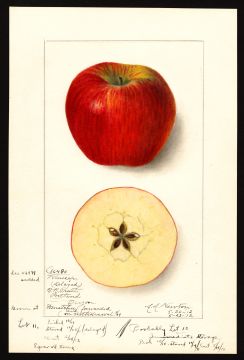 USDA Pomological Watercolor by Newton, Amanda Almira (Wenatchee, Chelan, Washington)
 -
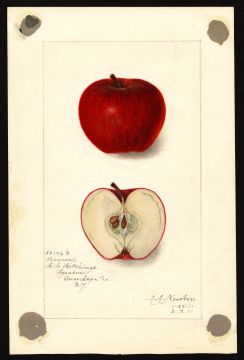 USDA Pomological Watercolor by Newton, Amanda Almira (Syracuse, Onondaga, New York)
 -
 USDA Pomological Watercolor by Newton, Amanda Almira (Yakima, Yakima, Washington)
 -
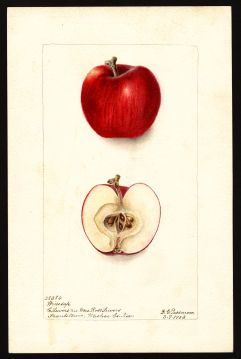 USDA Pomological Watercolor by Passmore, Deborah Griscom (Franktown, Washoe, Nevada)
 -
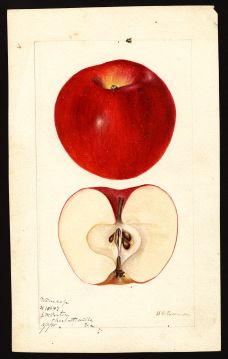 USDA Pomological Watercolor by Passmore, Deborah Griscom (Charlottesville, Virginia)
 -
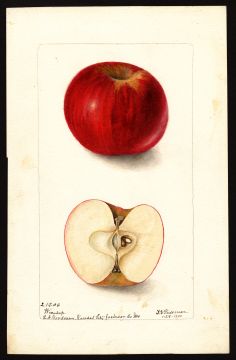 USDA Pomological Watercolor by Passmore, Deborah Griscom (Kansas City, Jackson, Missouri)
 -
 USDA Pomological Watercolor by Passmore, Deborah Griscom (Woodside, Kent, Delaware)
 -
 USDA Pomological Watercolor by Passmore, Deborah Griscom (San Luis Obispo, San Luis Obispo, California)
 -
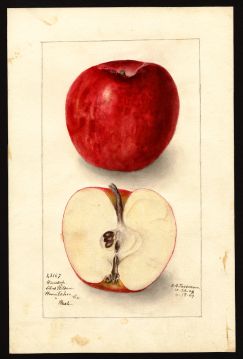 USDA Pomological Watercolor by Passmore, Deborah Griscom (Wenatchee, Chelan, Washington)
 -
 USDA Pomological Watercolor by Schutt, Ellen Isham (Medford, Jackson, Oregon)
 -
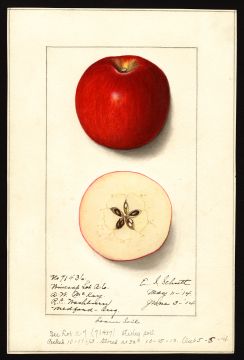 USDA Pomological Watercolor by Schutt, Ellen Isham (Medford, Jackson, Oregon)
 -
 USDA Pomological Watercolor by Schutt, Ellen Isham (Goode, Bedford, Virginia)
 -
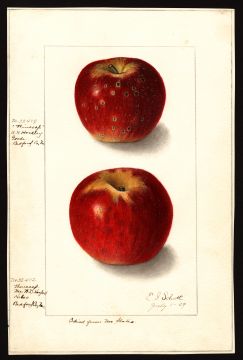 USDA Pomological Watercolor by Schutt, Ellen Isham (Goode, Bedford, Virginia)
 -
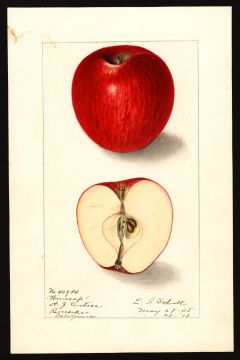 USDA Pomological Watercolor by Schutt, Ellen Isham (Riverside, Riverside, California)
 -
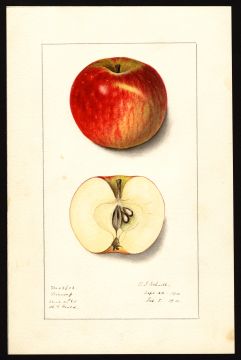 USDA Pomological Watercolor by Schutt, Ellen Isham
 -
 USDA Pomological Watercolor by Schutt, Ellen Isham (Magnolia, Kent, Delaware)
 -
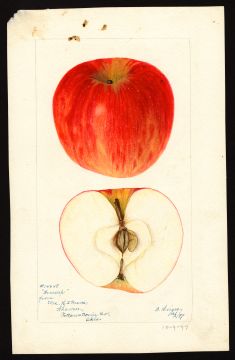 USDA Pomological Watercolor by Heiges, Bertha (Shawnee, Pottawatomie, Oklahoma)
 -
 USDA Pomological Watercolor by Heiges, Bertha (Coleman Falls, Bedford, Virginia)
 -
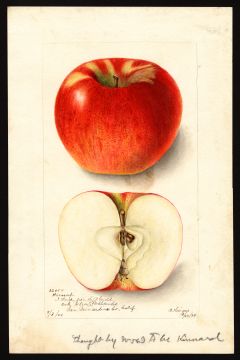 USDA Pomological Watercolor by Heiges, Bertha (Redlands, San Bernardino, California)
 -
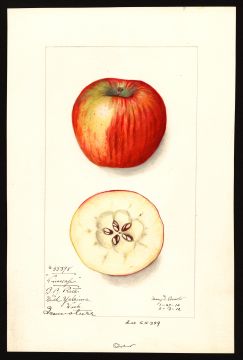 USDA Pomological Watercolor by Arnold, Mary Daisy (Yakima, Yakima, Washington)
 -
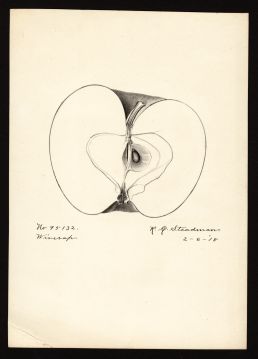 USDA Pomological Watercolor by Steadman, Royal Charles
 -
 USDA Pomological Watercolor by Lower, Elsie E. (Pleasant Valley, El Dorado, California)
 -
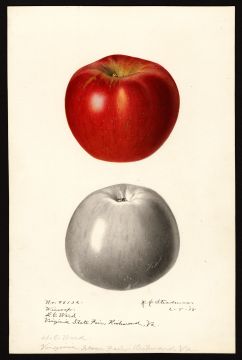 USDA Pomological Watercolor by Steadman, Royal Charles (Richmond, Virginia)
 -
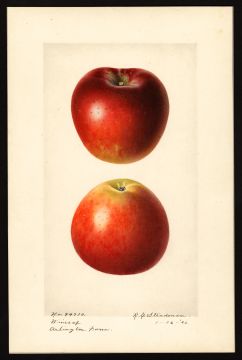 USDA Pomological Watercolor by Steadman, Royal Charles (Arlington, Virginia)
 -
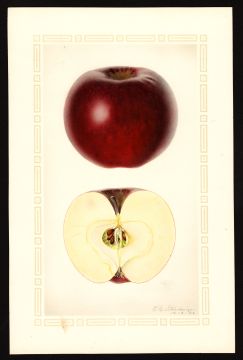 USDA Pomological Watercolor by Steadman, Royal Charles (Flint Hill, Virginia)
 -
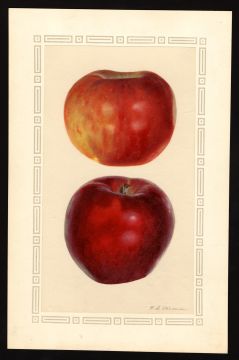 USDA Pomological Watercolor by Steadman, Royal Charles
 -
 USDA Pomological Watercolor by Steadman, Royal Charles (Wenatchee, Chelan, Washington)


U.S. Department of Agriculture Pomological Watercolor Collection. Rare and Special Collections, National Agricultural Library, Beltsville, MD 20705
Sources
- Coxe, A View of the Cultivation of Fruit Trees (1817). Public domain.
- Granville Lowther (ed.), Encyclopedia of Practical Horticulture (1914). Public domain.
- John A. Warder, American Pomology: Apples (1867). Public domain.
- J.L. Budd & N.E. Hansen, American Horticultural Manual, Part II: Systematic Pomology (1914). Public domain.
- A.J. Downing, Fruits and Fruit Trees of America (1869). Public domain.
- N.E. Hansen, A Study of Northwestern Apples (South Dakota Ag. Exp. Station Bulletin 76, 1902). Public domain.
- U.P. Hedrick, Cyclopedia of Hardy Fruits (1922). Public domain.
- John J. Thomas, The American Fruit Culturist (1903). Public domain.
- S.A. Beach, The Apples of New York Vol. 1 (1905). Public domain.
- USDA Pomological Watercolor Collection, U.S. National Agricultural Library.
- 72 historical nursery catalog references (see Variety Finder for the full list).
- Full entry with all citations: Winesap on the Variety Finder
Trees of this Variety in Our Collection
| Orchard | Tag | Condition | |
|---|---|---|---|
| McCoin Upper Tree 65 | McCoin Upper | 65 | fair |
| McCoin Upper Tree 66 | McCoin Upper | 66 | good |