Black Lady Apple
Apple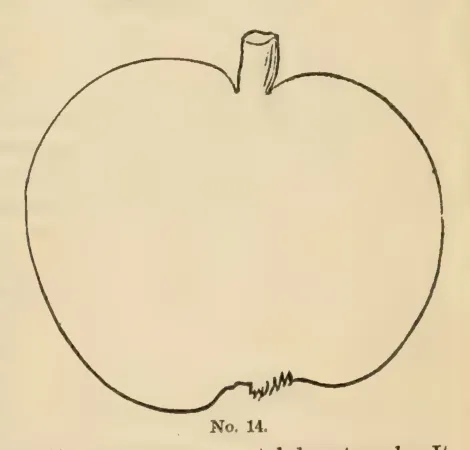
Black Lady Apple
Origin/History
Of foreign origin. Elliott identifies this variety as the Api Noir.
Tree
Not described in source.
Fruit
Size and Form: Small. Desportes gives precise measurements of one and one-third inches high and one and three-fourth inches in diameter. Form is roundish; Desportes notes it is irregular.
Stem: Short, inserted in a shallow cavity (Desportes).
Cavity: Shallow (Desportes).
Calyx: Small, closed (Desportes).
Basin: Profound (Desportes).
Skin: The two sources conflict on color. Desportes describes the skin as deep black everywhere, speckled with some gray dots towards the stem. Elliott describes the color as blackish red.
Flesh and Flavor: Tender, breaking, and acidulous; rated first rate (Desportes). Elliott adds that the flesh is white stained.
Core/Seeds: Not described in source.
Season
Ripens from November to March (both sources agree).
Uses
Very suitable as a dessert fruit. Desportes notes it is "very curious" — presumably a reference to its remarkable black coloring.
Subtypes/Variants
Not described in source.
Other
Not described in source.
Book Sources
Described in 2 period pomological works
Nursery Catalog Sources
Found in 3 catalogs (1900–1913) from Illinois
- Central Experimental Farm , Dominion Department of Agriculture, Agassiz, British Columbia (under test; Bulletin No. 3, Second Series) — 1900 — listed as Api Noir
- Benjamin Buckman (personal inventory) , Farmingdale , Illinois — 1901
- Benjamin Buckman (personal inventory) , Farmingdale , Illinois — 1913 — listed as Api Noir
View original book sources (2)
— B. Desportes, The Horticulturist (1856)No. 14. Black Lady Apple. — Fruit, one and one-third inches high, and one and three-fourth inches in diameter; form, roundish, irregular; stalk, short, inserted in a shallow cavity; eye, small, closed, set in a profound cavity; color, deep black everywhere, speckled with some gray dots towards the stem; flesh, tender, breaking, acidulous, first rate; ripens from November to March. It is very curious, and very suitable as a desert fruit.
— F.R. Elliott, The Western Fruit Book (1865)Black Lady Apple. Api Noir. Foreign. Small, roundish, blackish red ; flesh, white stained. November to March.