Bon-Chretien d'Hiver
Pear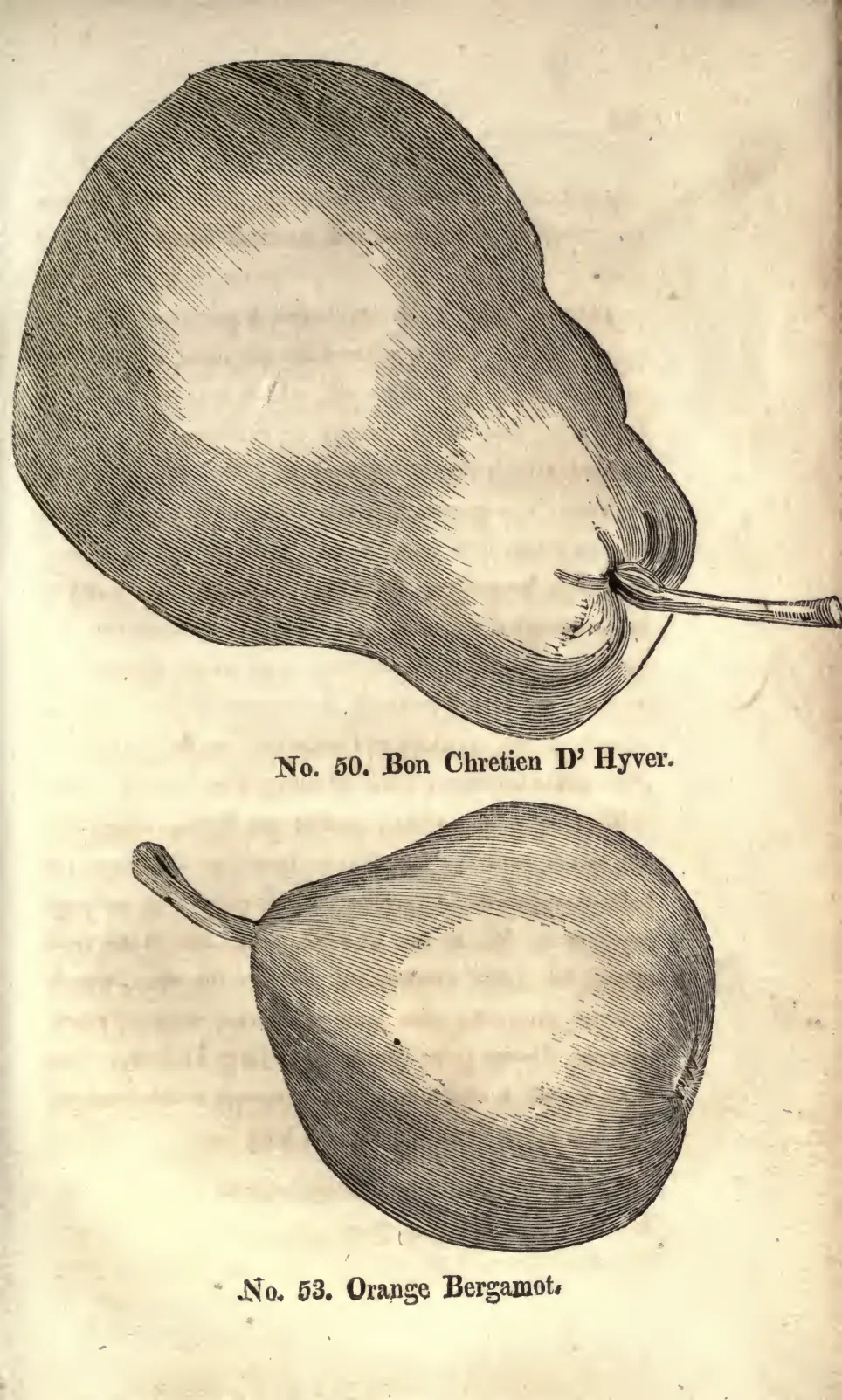
Bon-Chretien d'Hiver
Origin / History
Of great antiquity; Hedrick says all are agreed on this, and Downing calls it "perhaps one of the oldest Pears known," having been described in 1485. Hedrick records that it was imported into France from Italy in 1495 by Charles VIII on his conquest of the kingdom of Naples. Whether it was the Crustuminum of the Romans, or received its name at the beginning of Christianity, remains uncertain. One explanation of the name holds that Francois de Paul, founder of a monkish order, called to the court of Louis XI for the recovery of his health, was styled by that monarch "le bon Chrétien," and brought with him from Calabria some of this fruit, which henceforth acquired the name it bears. Hedrick pronounces this evidently erroneous, since de Paul's visit to the King at Tours took place in 1483 and the pear was introduced to France in 1495. Hedrick thinks it not improbable that the name derives from the Greek panchresta, meaning "all good," of which the Latin Crustuminum may also be a derivation. He adds that "a volume might be filled with a record of the endeavors to determine the origin of this pear." Hedrick cites Duhamel (Traité des Arbres Fruitiers, 1768), Mas (Le Verger, 1866-73, under the name Bon-Chrétien d'Auch) and Hogg (Fruit Manual, 1884).
Tree
Leaves of moderate size, the foot stalks of great length (Coxe).
Fruit
Size: Large to very large. Downing gives large; Hedrick large and sometimes very large; Coxe very large, sometimes six inches in length and four in width.
Form: Variable; obovate, obtuse pyriform, irregularly pyriform or obovate-turbinate. Coxe describes the form as that of a truncated pyramid, the blossom end much swelled, the end towards the stalk much diminished without being pointed, terminating obliquely.
Stem: Medium (Downing); about an inch long and fleshy (Coxe).
Cavity: Small (Downing).
Calyx: Open (Downing).
Basin: Deep (Downing). Coxe: eye deeply sunk in a furrowed cavity, which forms angular ridges extending to the body of the pear.
Skin: Dull yellow with a tinge of brown in the sun (Downing); dull greenish-yellow, some brown next the sun, rather rough to the touch (Hedrick). Coxe describes it as finely grained, clear yellow, approaching green on the shady side, with a bright red toward the sun.
Dots: Small, russet, sprinkled or strewed over the surface.
Flesh and flavor: Flesh white or whitish, crisp, juicy, sweet, perfumed, aromatic and vinous. Coxe: fine and tender, though breaking, very juicy, mild and sugary; sometimes odoriferous and vinous.
Core and seeds: Not described in source.
Season
December to March by Downing and Hedrick. Coxe alone puts ripening in January, lasting till spring.
Uses
Downing: "value is only for cooking." Hedrick: a dessert pear of merit, first class for cooking.
Subtypes / Variants
Not described in source.
Other
Not described in source.
Book Sources
Described in 3 period pomological works
- Coxe, A View of the Cultivation of Fruit Trees (1817) — listed as Bon Chretien d'Hyver, Or Good Christian Of Winter
- Hedrick, The Pears of New York (1921)
- Downing, Fruits and Fruit Trees of America (1900) — listed as Winter Bonchretien
Nursery Catalog Sources
Found in 1 catalog (1900)
- Central Experimental Farm , Dominion Department of Agriculture, Agassiz, British Columbia (under test; Bulletin No. 3, Second Series) — 1900
View original book sources (3)
— William Coxe, A View of the Cultivation of Fruit Trees (1817)
- BON CHRETIEN D'HYVER, OR GOOD CHRISTIAN OF WINTER.
This is a very large pear, of the form of a truncated pyramid---the blossom end is much swelled, the eye deeply sunk in a furrowed cavity, which forms angular ridges extending themselves to the body of the pear; the end towards the stalk is much diminished, without being pointed; it terminates obliquely: the stalk is about an inch long, and fleshy---this pear is sometimes six inches in length and four in width; the skin is a finely grained clear yellow, approaching to green on the shady side, with a bright red towards the sun---the flesh is fine and tender, though breaking, very juicy, mild and sugary; sometimes odoriferous and vinous---it is ripe in January and lasts till Spring; the leaves are of moderate size, the foot stalks of great length.
— A.J. Downing, The Fruits and Fruit Trees of America (1900)Winter Bonchretien.
Bon Chretien d'Hiver. De Dos. Poire d'Angoise. De Fesses. Good Christian of Winter. De Bon Crustemenien. Winter Good Christian. De Chretien. Bon Chretien de Constantinople. Bon Chretien de Tours. Panchresta. Bon Chretien de Vernon. Poire d'Apothecaire. Bon Chretien. Crustemenie. Bon Chretien d'Auch. A Tetine. De Saint-Martin.
This is perhaps one of the oldest Pears known, having been described in 1485. Its value is only for cooking.
Fruit large, obovate obtuse pyriform. Skin dull yellow, tinge of brown in the sun, and sprinkled with russet dots. Stalk medium. Cavity small. Calyx open. Basin deep. Flesh white, crisp, juicy, sweet, perfumed. December to March.
— U.P. Hedrick, The Pears of New York (1921)Bon-Chrétien d'Hiver.
- Duhamel Trait. Arb. Fr. 2:212, Pl. XLV. 1768.
- Mas Le Verger 1:23 bis, fig. 18. 1866-73. Bon-Chrétien d'Auch.
- Hogg Fruit Man. 533. 1884.
A volume might be filled with a record of the endeavors to determine the origin of this pear. As to its great antiquity all are agreed. It is established that it was imported into France from Italy in 1495 by Charles VIII on his conquest of the kingdom of Naples, but whether it was the Crustuminum of the Romans or whether it received its name at the beginning of Christianity remains uncertain. One explanation of the name was that Francois de Paul, the founder of a monkish order, being called to the court of Louis XI for the recovery of his health, was styled by that monarch "le bon Chrétien," and that he brought with him from Calabria some of this fruit which henceforth acquired the name it bears. That suggestion, however, is evidently erroneous as Saint Francois de Paul's visit to the King at Tours took place in 1483 whereas this pear was introduced to France in 1495. It is thought not improbable that the name is derived from the Greek panchresta, meaning "all good," of which the Latin Crustuminum of the Romans may also be a derivation.
Fruit large and sometimes very large, variable in form, irregularly pyriform or obovate-turbinate, rather rough to the touch, dull greenish-yellow, some brown next the sun, and strewed with small, russet dots; flesh whitish, crisp, juicy, sweet, aromatic and vinous; a dessert pear of merit, first class for cooking; Dec. to Mar.