Carpentin
Apple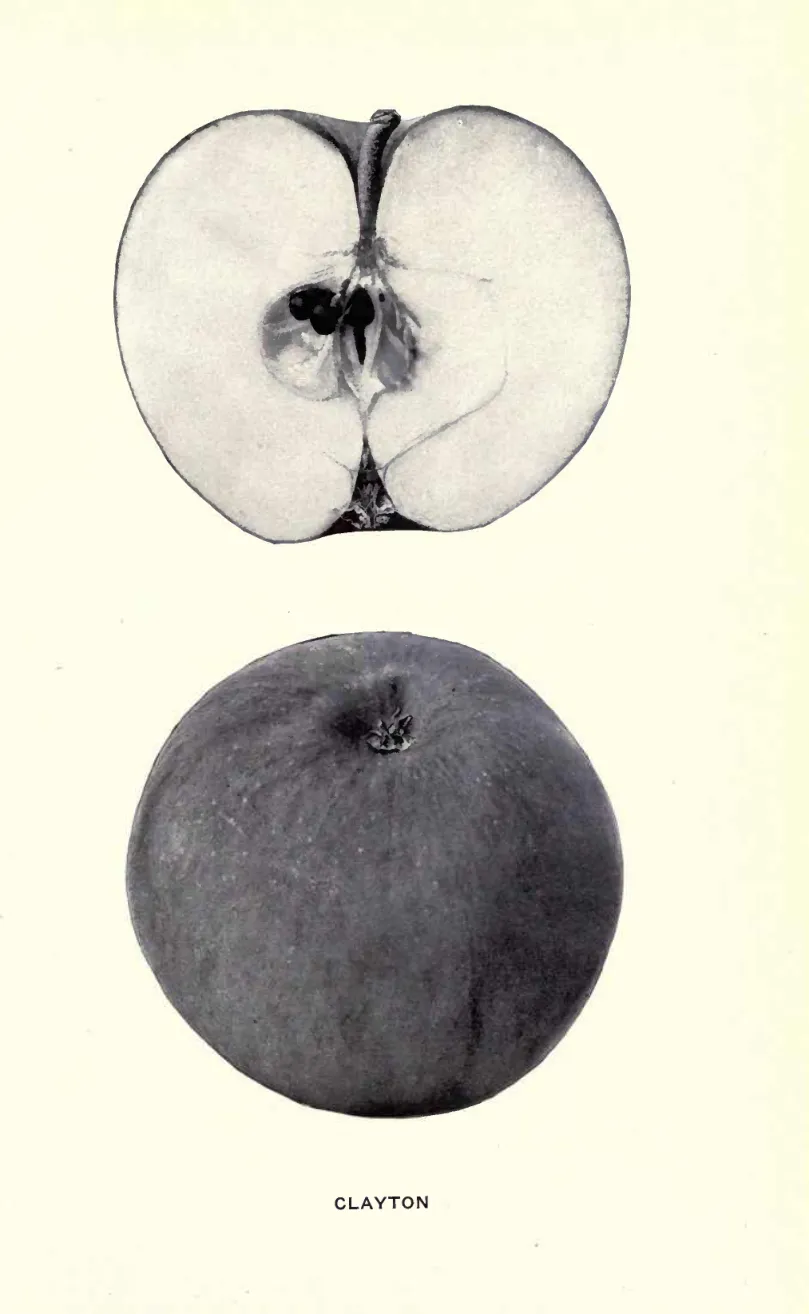
Carpentin
Origin/History
Carpentin is of German origin according to Downing, who lists it under the synonyms Carpentin Reinette, Reine Graue Reinette, Der Carpentin, Petite Reinette Grise, and Klein Graue Reinette. Hedrick, however, states the origin is unknown and notes that the variety was first described in America by Downing in 1872. It is little grown, though Hedrick considered it deserving of wider recognition in home orchards. The fruit has been marketed locally in the Buffalo, New York area under the name Carnation apple, based on fruit supplied to Beach by C. D. Zimmerman of Buffalo. Downing's more detailed entry characterizes it as a variety of small size but regular, handsome appearance and fine quality, valuable as an amateur fruit and likely to find market demand when more widely known.
Tree
Sources disagree on tree vigor. Downing's briefer entry (citing Hogg) describes the tree as a free grower and good bearer. Downing's longer entry describes it as a moderate grower, forming a round, open head and producing moderate crops annually, with fruit often growing in clusters. Beach and Hedrick both describe the tree as vigorous, with long, slender shoots.
Fruit
Size
Small to very small (Beach); small (Downing, Hedrick). Uniform in size and shape. Described by Beach and Hedrick as being about the size of the well-known Lady apple.
Form
Sources vary slightly. Downing's briefer entry (via Hogg) describes the fruit as roundish oblong. Downing's detailed entry describes it as oblate, slightly angular, and nearly regular. Beach describes the form as roundish conic to somewhat oblate, regular and symmetrical, with sides occasionally unequal. Hedrick describes it as round-conic to oblate, regular and symmetrical, occasionally with sides unequal.
Stem
Sources disagree. Downing's detailed entry describes the stalk as short to medium and slender. Beach and Hedrick both describe the stem as very long and slender.
Cavity
Downing's detailed entry describes the cavity as medium, or rather large, and regular. Beach describes it as large, acute to acuminate, deep, broad, and symmetrical, often with concentric broken russet lines. Hedrick describes it as large, acuminate, deep, broad, and symmetrical, often with concentric broken russet lines.
Calyx
Calyx small, closed (Beach, Hedrick; Downing's detailed entry also notes calyx closed). Lobes short, broad, and nearly obtuse (Beach); short, broad, and obtuse (Hedrick).
Basin
Sources disagree. Downing's detailed entry describes the basin as round, rather deep, and slightly plaited. Beach describes it as abrupt, shallow to moderately deep, narrow to moderately wide, nearly smooth or sometimes very lightly furrowed, symmetrical, and marked with concentric broken lines of russet. Hedrick describes it as abrupt, shallow, narrow, smooth or sometimes furrowed, symmetrical, and marked with concentric broken lines of russet.
Skin
Sources vary. Downing's briefer entry (citing Hogg) describes the skin as yellowish green, striped and washed with red, and dark red in the sun. Downing's detailed entry describes the fruit as entirely covered with a peculiar light red russet, more or less mixed with crimson and russet where exposed. Beach describes the skin as thick, rather tough, dull yellow or with a bright red blush, partly smooth but more or less netted or covered with cinnamon-russet. Hedrick describes it as thick, tough, dull yellow or with a bright blush, partly smooth but more or less netted with cinnamon-russet.
Dots: Downing's detailed entry notes a few brown dots. Beach and Hedrick both describe the dots as scattering and gray.
Calyx Tube and Stamens
Calyx tube small, short, narrow to rather wide, conical or funnel-shape; stamens nearly basal (Beach). Calyx tube small, short, narrow to wide, conical; stamens basal (Hedrick).
Flesh and Flavor
Sources are largely in agreement with minor variation. Downing's briefer entry (via Hogg) describes the flesh as yellowish white, tender, juicy, vinous, and aromatic. Downing's detailed entry describes the flesh as white, fine, crisp, tender, and juicy, with a rich, sprightly subacid flavor; rated very good. Beach describes the flesh as nearly white, sometimes with a reddish tinge next to the skin, very firm, fine, crisp, tender, and very juicy; acid until fully ripe, when it becomes subacid, brisk, and strongly aromatic, with high flavor; quality very good. Hedrick describes the flesh as white, sometimes with a red tinge next to the skin, very firm, fine, crisp, tender, and very juicy; subacid, brisk, and strongly aromatic, high in flavor; very good.
Core and Seeds
Downing's detailed entry notes the core is small. Beach describes the core as axile, medium, and often closed; core lines meeting or slightly clasping; carpels elliptic to round or broadly obovate, emarginate; seeds dark, medium to below, moderately wide, rather short, obtuse to broadly acute. Hedrick describes the core as axile, medium, and often closed; core lines meeting and clasping; carpels elliptic to round or broadly ovate, emarginate; seeds dark, wide, short, obtuse to broadly acute.
Season
December to April (Downing's briefer entry, Beach, Hedrick). Downing's detailed entry gives the season as November to February.
Uses
Dessert. Suitable for the market when well known (Downing's detailed entry). Hedrick considers it most suitable for dessert and recommends it for home orchards.
Subtypes/Variants
Not described in source.
Other
Not described in source.
Book Sources
Described in 3 period pomological works
USDA Nomenclature (1905)
From W.H. Ragan, Nomenclature of the Apple, USDA Bulletin No. 56
Downing considers these as distinct varieties.
Nursery Catalog Sources
Found in 1 catalog (1913) from Illinois
- Benjamin Buckman (personal inventory) , Farmingdale , Illinois — 1913
View original book sources (3)
— A.J. Downing, The Fruits and Fruit Trees of America (1900)Carpentin Reinette.
Reine Graue Reinette. Der Carpentin.
A German Apple. Tree a free grower and good bearer.
Fruit small, roundish oblong, yellowish green, striped and washed with red, dark red in the sun. Flesh yellowish white, tender, juicy, vinous, aromatic. December to April. (Hogg.)
[Additional entry in this volume: "Carpentin", pp. 1214–1215]
Carpentin.
Carpentin Reinette. Petite Reinette Grise.
Of German origin. Tree a moderate grower, forming a round, open head, producing moderate crops annually, often growing in clusters; fruit of small size, but regular, handsome, and of fine quality; valuable as an amateur fruit, and when well known will, no doubt, be in demand for the market.
Fruit small, oblate, slightly angular, nearly regular, entirely covered with a peculiar light red russet, more or less mixed with crimson and russet where exposed, and a few brown dots; stalk short to medium, slender; cavity medium, or rather large, regular; calyx closed; basin round, rather deep, slightly plaited; flesh white, fine, crisp, tender, juicy, with a rich, sprightly subacid flavor; very good; core small. November, February.
— S.A. Beach, The Apples of New York, Vol. 1 (1905)CARPENTIN
REFERENCES. 1. Downing, 1872:120. 2. Leroy, 1873:205. fig. 3. Hogg, 1884:190.
SYNONYMS. Carnation Apple. CARPENTIN REINETTE (1). Der Carpentin (1). Klein Graue Reinette (1). Petite-Reinette Grise (2). REINETTE CARPENTIN (3). Reinette Carpentin (2).
A little dessert fruit of about the size of the Lady apple, with red-russet skin and highly aromatic flavor. The following description is made from fruit furnished by C. D. Zimmerman, Buffalo, N. Y., who states that the variety has been marketed locally under the name Carnation apple.
TREE.
Tree vigorous, with long, slender shoots (3).
FRUIT.
Fruit small to very small; uniform in size and shape. Form roundish conic to somewhat oblate, regular and symmetrical; occasionally sides unequal. Stem very long, slender. Cavity large, acute to acuminate, deep, broad, symmetrical, often with concentric broken russet lines. Calyx small, closed; lobes short, broad, nearly obtuse. Basin abrupt, shallow to moderately deep, narrow to moderately wide, nearly smooth or sometimes very lightly furrowed, symmetrical, marked with concentric broken lines of russet.
Skin thick, rather tough, dull yellow or with bright red blush, partly smooth but more or less netted or covered with cinnamon-russet. Dots scattering, gray.
Calyx tube small, short, narrow to rather wide, conical or funnel-shape. Stamens nearly basal.
Core axile, medium, often closed; core lines meeting or slightly clasping. Carpels elliptic to round or broadly obovate, emarginate. Seeds dark, medium to below, moderately wide, rather short, obtuse to broadly acute.
Flesh nearly white, sometimes with reddish tinge next the skin, very firm, fine, crisp, tender, very juicy, acid until fully ripe when it becomes subacid, brisk, strongly aromatic, with high flavor and very good quality.
Season December to April (3).
— U.P. Hedrick, Cyclopedia of Hardy Fruits (1922)CARPENTIN. Carnation. Gray Reinette. The fruit of Carpentin is handsome, pleasantly flavored, red-russet, not larger than the wellknown Lady, and most suitable for dessert. The origin of the variety is unknown, but it was first described in America by Downing in 1872. It is little grown and deserves wider recognition in home orchards. Tree vigorous, with long slender shoots. Fruit small, uniform in size and shape, round-conic to oblate, regular and symmetrical, occasionally with sides unequal; stem very long, slender; cavity large, acuminate, deep, broad, symmetrical, often with concentric broken russet lines; calyx small, closed; lobes short, broad, obtuse; basin, abrupt, shallow, narrow, smooth or sometimes furrowed, symmetrical, marked with concentric broken lines of russet; skin thick, tough, dull yellow or with bright blush, partly smooth but more or less netted with cinnamon-russet; dots scattering, gray; calyx-tube small, short, narrow to wide, conical; stamens basal; core axile, medium, often closed; core-lines meeting, clasping; carpels elliptic to round or broadly ovate, emarginate; seeds dark, wide, short, obtuse to broadly acute; flesh white, sometimes with red tinge next the skin, very firm, fine, crisp, tender, very juicy, subacid, brisk, strongly aromatic, high in flavor; very good; December to April.