Codling
Apple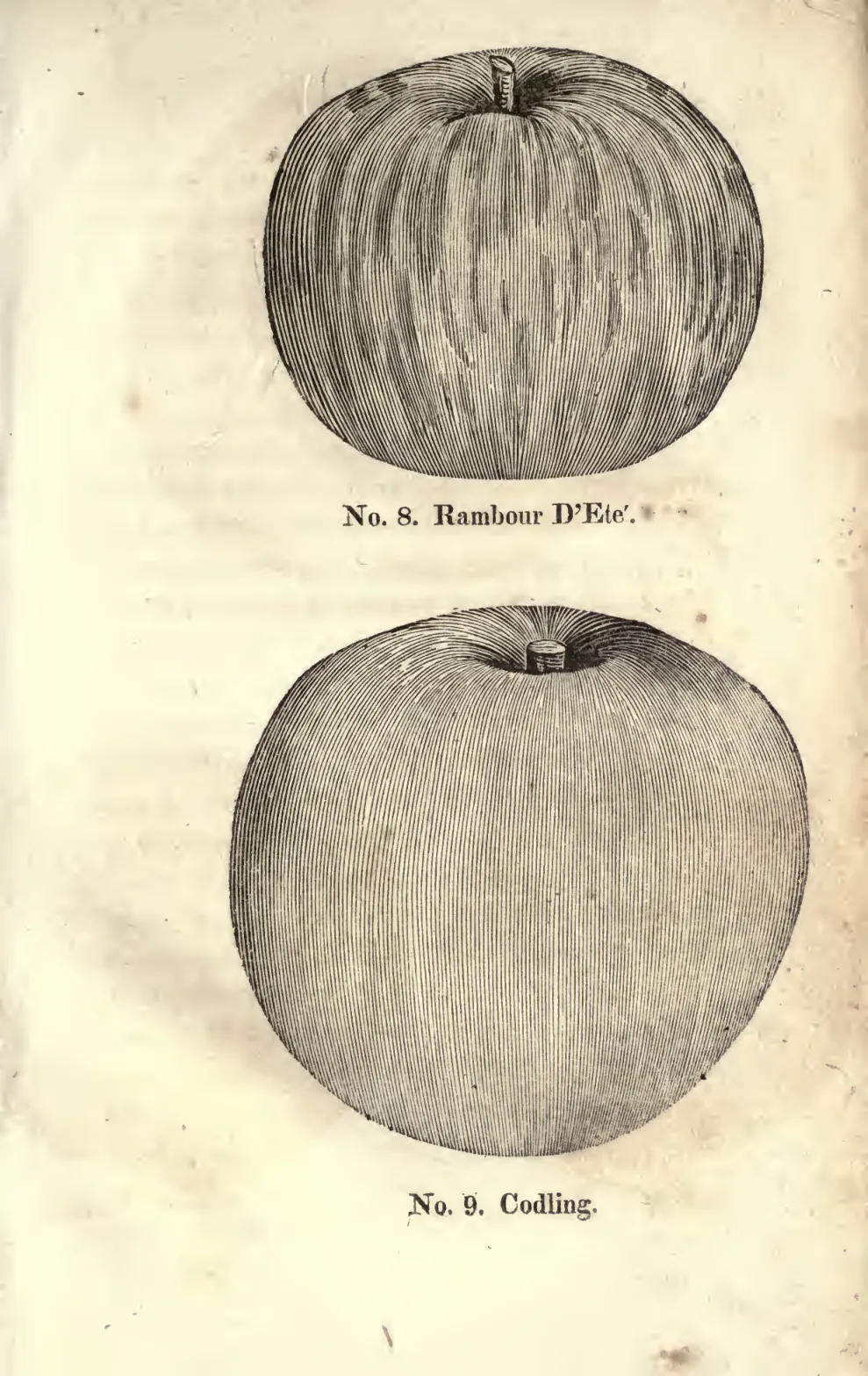
Codling
Origin & History
Known also as the English Codling, this variety is documented in William Coxe's A View of the Cultivation of Fruit Trees (1817) as one of the most profitable apples for market in the early nineteenth century.
Tree
The tree is uncommonly handsome, vigorous, and fruitful. It bears very young and constantly produces fruit. The leaves are large and contribute to a fine appearance in the orchard.
Fruit
Size and Form: The fruit grows very large and fair, with an oblong form that is somewhat irregular. It is pointed toward the blossom end.
Stem: The stalk is short.
Skin: Bright, though pale yellow, with a fine blush frequently present toward the sun side.
Flesh: White, tender, and sprightly.
Season & Uses
The fruit is fit for stewing from the first of August, but does not become fully ripe until the end of that month. It continues in season until late in October. The variety is a very fine fruit for pies and stewing and is also a pleasant table apple. It ripens gradually and is very free from rot, making it exceptionally durable and reliable for market sale.
Book Sources
Described in 1 period pomological work
View original book sources (1)
— William Coxe, A View of the Cultivation of Fruit Trees (1817)NO. 9. CODLING.
The Codling, called also the English Codling, is a very fine fruit for pies and stewing, and is also a pleasant table apple: it grows very large and fair; the form is oblong, rather irregular; the skin is a bright, though pale yellow, with a fine blush frequently towards the sun; it is somewhat pointed towards the blossom end; the stalk short, the flesh white, tender, and sprightly.
The tree is uncommonly handsome, vigorous, and fruitful; bearing very young, and constantly; the leaves are large; it makes a fine appearance in an orchard: the fruit is fit for stewing from the first of August, but does not become fully ripe till the end of that month, and continues in season till late in October: it is one of the most profitable apples for market, ripening gradually, and being very free from rot.