Court of Wick Pippin
Apple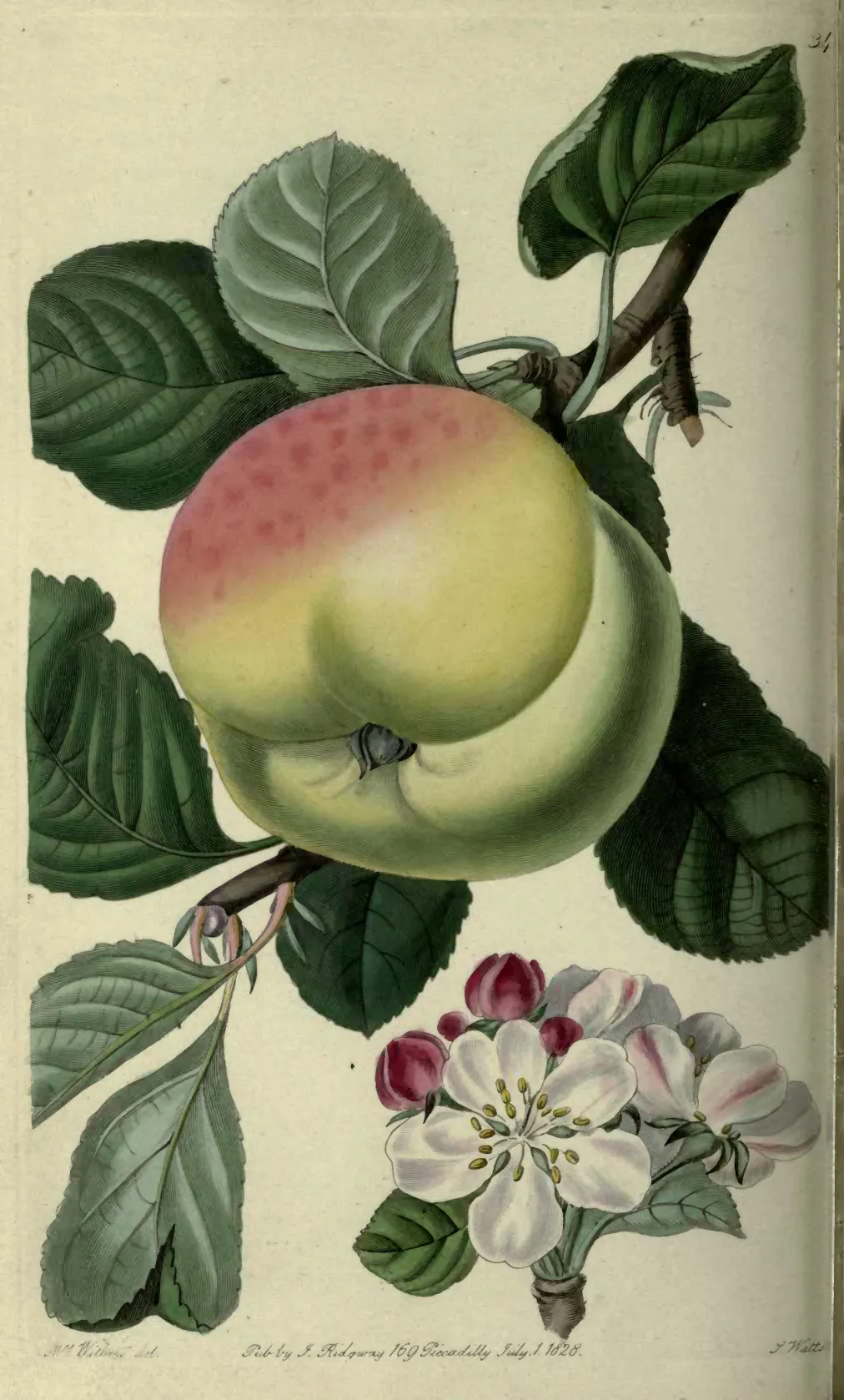
COURT OF WICK PIPPIN
Origin / History
A Somersetshire apple of the highest merit. Originally raised in a village in that county, from the seed of the Golden Pippin, to which it is little inferior either as a cider or table fruit. Like most other fruits of much excellence, it has received a number of different names among various nurseries. The drawing was made in Mr. Kirke's Nursery, in October.
Tree
Tree very healthy and vigorous, a great bearer. Wood weak, grayish brown, with a thin coating of slate-colored epidermis, very slightly pubescent. Leaves flattish, ovate, obtuse, regularly serrated, with downy petiole and underside; stipules as long as the petiole. Flowers open in the beginning of May, middle-sized, pale red, tinged with yellow; petals oblong, slightly imbricated at the base, not concave as in many varieties.
Fruit
Size: Below the middle size, about twice as large as a Golden Pippin.
Form: Ovate, flat at either end, with no trace of angles or of plaits at the eye.
Stem: Not described in source.
Cavity: Not described in source.
Calyx: Eye large, open.
Basin: Shallow depression.
Skin: Greenish yellow in the shade; bright orange, with small russet-brown spots, when exposed; sometimes slightly tinged with red next the sun.
Dots: Small russet-brown spots on the exposed side.
Flesh and flavor: Whitish yellow mixed with green when first gathered; becoming deep yellow, crisp, tender, juicy, and high-flavored when fully ripe.
Core and seeds: Not described in source.
Season
Ripens in the middle of October, is in perfection in January, and will keep, with good management, till the middle of March.
Uses
Little inferior to the Golden Pippin as a cider or table fruit.
Subtypes / Variants
Not described in source.
Other
Not described in source.
Book Sources
Described in 1 period pomological work
- Lindley, Pomologia Britannica Vol. 1 (1841) — listed as THE COURT OF WICK PIPPIN.
View original book sources (1)
— John Lindley, Pomologia Britannica, Vol. 1 (1841)THE COURT OF WICK PIPPIN.
Court of Wick. Hooker's Pomona Londinensis, t. 32. Forsyth's Treatise, ed. 7. p. 98. Hort. Soc. Fruit Cat. no. 219. Wood's Huntingdon ... } Golden Drop ......... } Knightwick Pippin .... } of various Nurseries. Fry's Pippin ......... } Phillips's Reinette ..... }
A Somersetshire Apple of the highest merit. It was originally raised in a village in that county, from the seed of the Golden Pippin, to which it is little inferior either as a cider or table fruit. The tree is very healthy and vigorous, and a great bearer.
Ripens in the middle of October, is in perfection in January, and will keep, with good management, till the middle of March.
Like most other fruits of much excellence, it has received a number of different names, which are enumerated above.
The WOOD is weak, grayish brown, with a thin coating of slate-coloured epidermis, very slightly pubescent.
LEAVES flattish, ovate, obtuse, regularly serrated, with a downy petiole and underside. STIPULES as long as the petiole.
FLOWERS open in the beginning of May, middle-sized, pale red, tinged with yellow. PETALS oblong, slightly imbricated at the base; not concave, as in many varieties.
FRUIT below the middle size, about twice as large as a Golden Pippin, ovate, flat at either end, with no trace of angles or of plaits at the eye. EYE large, open, in a shallow depression. SKIN greenish yellow in the shade; bright orange, with small russet-brown spots, when exposed; sometimes slightly tinged with red next the sun. FLESH whitish yellow mixed with green, when first gathered; becoming deep yellow, crisp, tender, juicy, and high-flavoured, when fully ripe.
The accompanying drawing was made in Mr. Kirke's Nursery, in October last.