Curtis Greening
Apple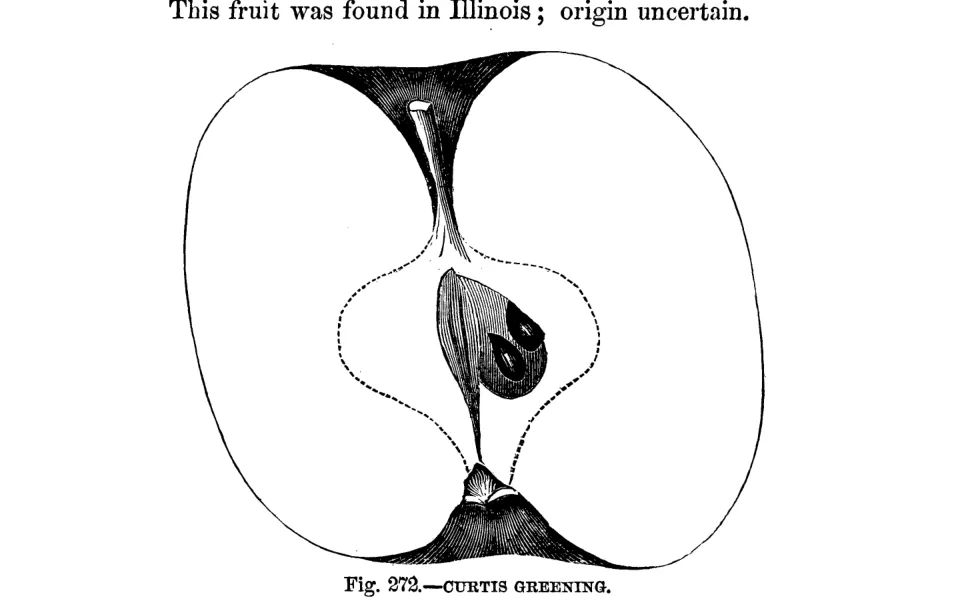
Curtis Greening
Origin/History
Found in Illinois; origin uncertain. Both Warder (1867) and Downing (1900) record the same provenance; Downing's entry cites Warder directly and adds no independent information.
Tree
Not described in source.
Fruit
Size and Form: Medium to large, cylindrical, oblong, truncated. Axis inclined.
Stem: Short.
Cavity: Deep, acute, regular.
Calyx: Eye large, open.
Basin: Abrupt, wide, regular.
Skin: Yellow, bronzy. Dots numerous, dark, indented.
Flesh and Flavor: Flesh yellow, breaking. Flavor sub-acid, rich. Quality good.
Core and Seeds: Core small, fig-shaped, closed, clasping. Seeds numerous, small, plump.
Season
January to February.
Uses
Table and kitchen.
Subtypes/Variants
Not described in source.
Other
Illustrated in Warder as Fig. 273.
Book Sources
Described in 2 period pomological works
USDA Nomenclature (1905)
From W.H. Ragan, Nomenclature of the Apple, USDA Bulletin No. 56
Identical with Illinois Greening.
View original book sources (2)
— John A. Warder, American Pomology: Apples (1867)Curtis Greening.
This fruit was found in Illinois; origin uncertain.
Fig. 273. — CURTIS GREENING.
Fruit medium to large, cylindrical, oblong, truncated; Axis inclined; Surface yellow, bronzy; Dots numerous, dark, indented.
Basin abrupt, wide, regular; Eye large, open.
Cavity deep, acute, regular; Stem short.
Core small, fig-shaped, closed, clasping; Seeds numerous, small, plump; Flesh yellow, breaking; Flavor sub-acid, rich; Quality good; Use, table and kitchen; Season, January and February.
— A.J. Downing, The Fruits and Fruit Trees of America (1900)Curtis Greening.
Origin uncertain, found in Illinois.
Fruit medium to large, oblong, truncated, axis inclined, yellow-bronzy. Flesh yellow, breaking, subacid. Good. January to February. (Warder.)