Ernst's Pippin
Apple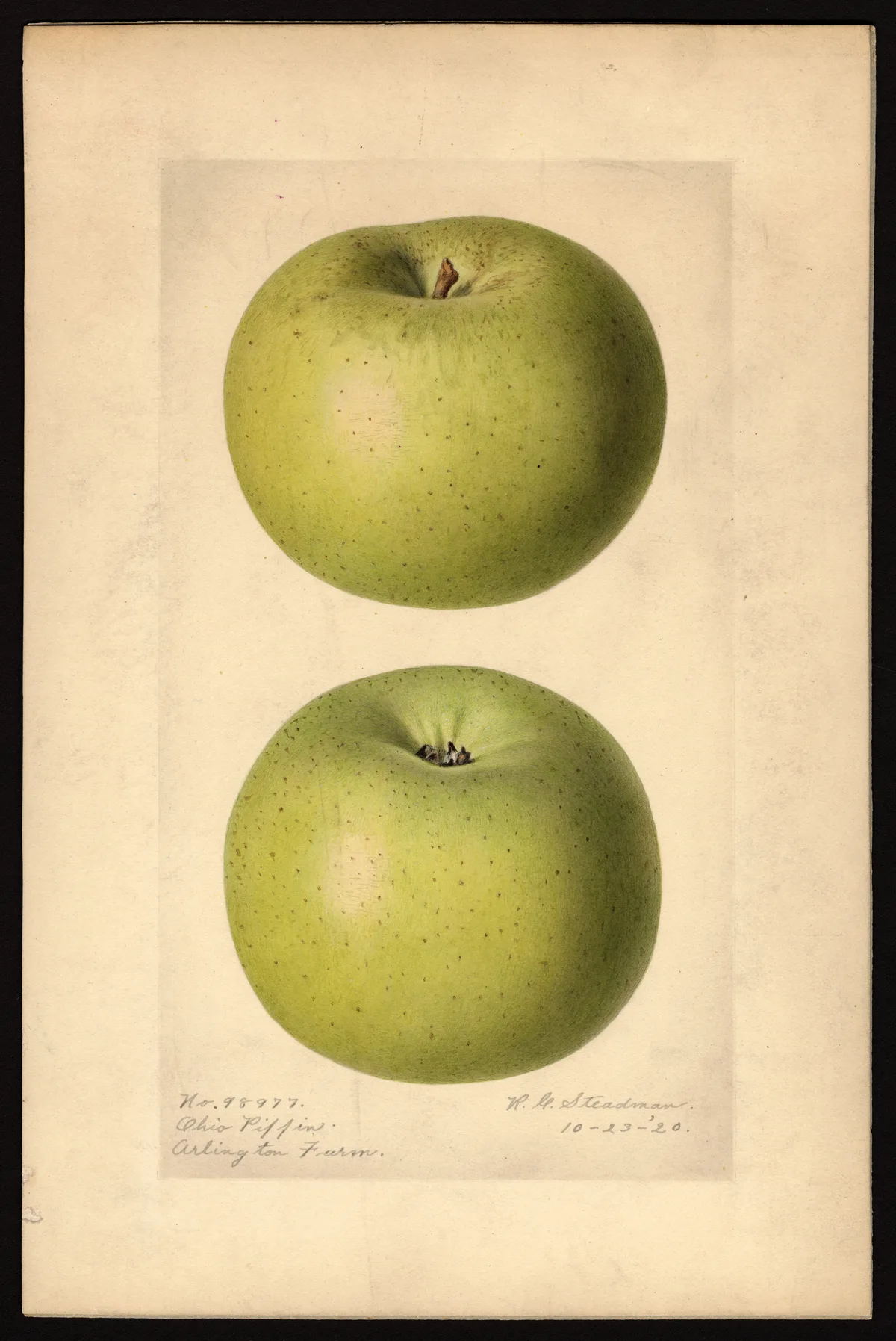
USDA Pomological Watercolor Collection
Ernst's Pippin
Origin/History
Originated with A. H. Ernst, Esq., of Cincinnati, Ohio. American in origin. Elliott (1865) notes that the general appearance of the fruit closely resembles the Canada Reinette, from a seed of which it probably originated. A specimen was planted at the Central Experimental Farm in Agassiz, BC in spring 1890.
Tree
Strong, vigorous grower, productive and hardy (Elliott). The Central Experimental Farm trial confirms vigorous growth, with the tree proving an early and regular bearer.
Fruit
Size and Form: Large, roundish flattened, sometimes slightly oblong (Elliott). Thomas describes it as large, oblate, and smooth. The Central Experimental Farm notes fruit above medium size, roundish and oblate.
Stem: Short (Elliott).
Cavity: Narrow and deep (Elliott). Thomas describes the cavity as wide — a conflicting detail between sources.
Calyx: Large (Elliott); open (Thomas).
Basin: Deep (Elliott); wrinkled (Thomas).
Skin: Light greenish yellow, with a faint blush when exposed to the sun; small dark green specks surrounded with light green, suffused beneath the skin (Elliott). Thomas describes it as pale greenish yellow with a brownish cheek. The Central Experimental Farm notes skin yellow, with sometimes a faint blush. The dark green specking beneath the skin is noted only by Elliott.
Flesh and Flavor: Yellowish white, crisp, tender, juicy, sprightly, sub-acid (Elliott). Thomas describes the flesh as tender, sub-acid, and very agreeable. The Central Experimental Farm notes the flesh as yellowish, juicy, a little coarse, but of a pleasant, sprightly acid character, quality good.
Core: Small, situated nearest the stem end (Elliott).
Seeds: Dark (Elliott).
Season
December to February (Elliott). November and December (Central Experimental Farm). Mid-autumn (Thomas). Elliott's later season may reflect storage extension; Thomas's mid-autumn dating suggests the fruit is ready earlier and may not keep as long as Elliott's usage indicates.
Uses
Not described in source.
Subtypes/Variants
Not described in source.
Other
Not described in source.
Book Sources
Described in 2 period pomological works
View original book sources (3)
— F.R. Elliott, The Western Fruit Book (1865)Ernst's Pippin. Ohio Pippin. American. Originated with A. H. Ernst, Esq., of Cincinnati, Ohio. Tree, strong, vigorous grower, productive and hardy. Fruit, large, roundish flattened, sometimes slightly oblong ; color, light greenish yellow, faint blush when exposed to sun, small dark green specks, surrounded with light green, suffused beneath the skin ; stem, short ; cavity, narrow, deep ; calyx, large ; basin, deep ; flesh, yellowish white, crisp, tender, juicy, sprightly, sub-acid; core, small, laying nearest the stem end; seeds, dark. December to February. The general appearance of this apple closely resembles the Canada Reinette, from a seed of which it probably originated.
— Central Experimental Farm, Central Experimental Farm, Agassiz BC — Catalogue of Fruit Trees under Test (Bulletin No. 3, 1900) (1900)Planted Spring 1890. Tree a vigorous grower, and an early and regular bearer. Fruit above medium size, roundish, oblate, skin yellow, with sometimes a faint blush. Flesh yellowish, juicy, a little coarse, but of a pleasant, sprightly acid character, quality good. Season November and December.
— John J. Thomas, The American Fruit Culturist (1903)Ernst's Pippin. Large, oblate, smooth; pale greenish yellow, with a brownish cheek; cavity wide, basin wrinkled, calyx open; flesh tender, sub-acid, very agreeable. Mid-autumn. Cincinnati.