Fourth of July
AppleOrigin/History
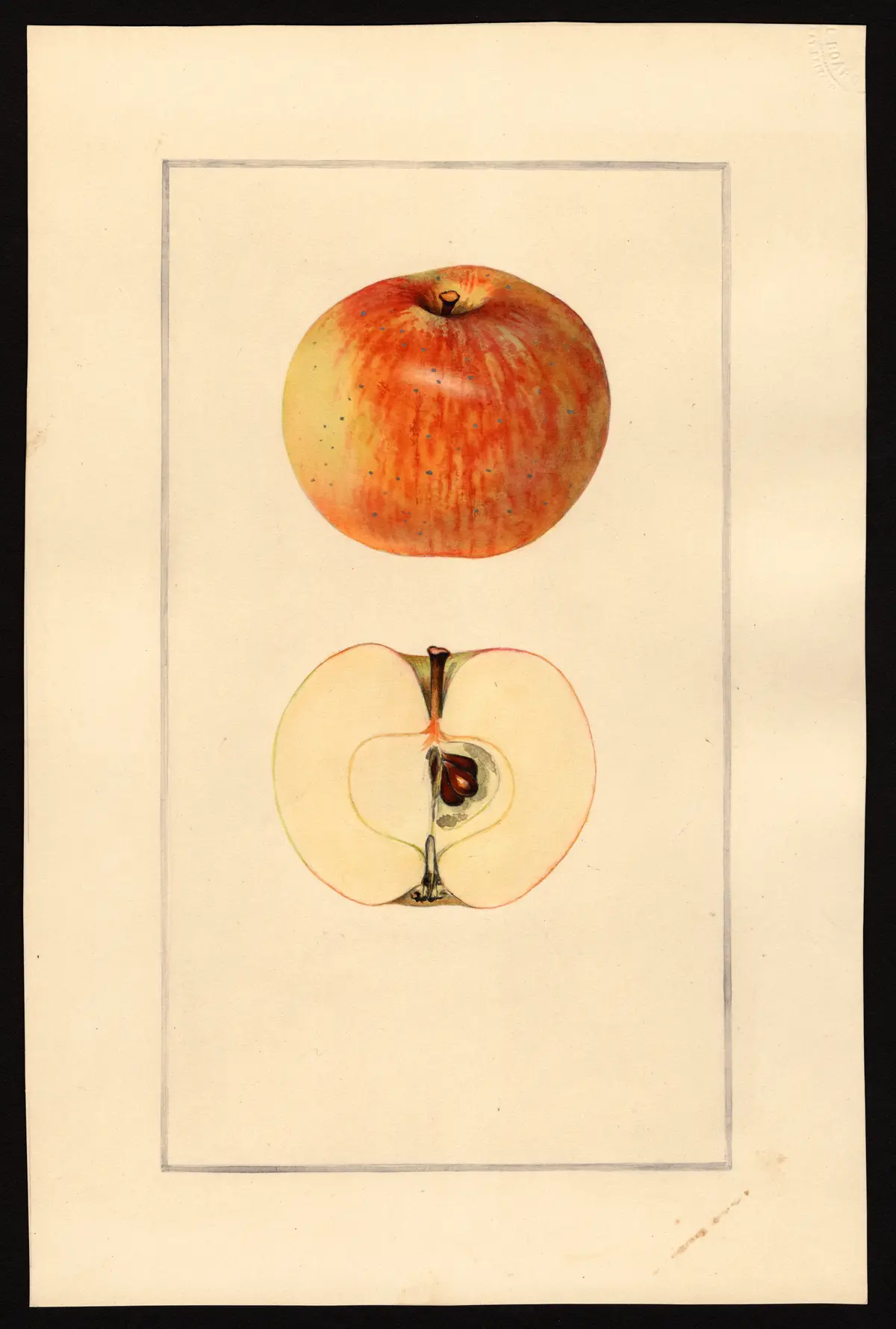
A German apple introduced to American cultivation by C. F. Jaeger of Columbus, Ohio. (Downing; Thomas notes only "of foreign origin.") Cultivated chiefly in the West. (Thomas) In fruit, the variety closely resembles the Tetofsky, but the color of the wood, habit of growth, and foliage of old trees make its distinctiveness plain. (Downing)
Tree
A strong, upright grower forming a fine head. Young shoots long, dark reddish brown. (Downing) Productive. (Thomas)
Fruit
Size: Sources conflict. Downing describes the fruit as medium or below; Thomas describes it as above medium. The Encyclopedia of Practical Horticulture table indicates M (medium).
Form: Roundish oblate, often slightly conic (Thomas; Downing concurs: "roundish oblate conical"), slightly ribbed. (Downing)
Stem: Rather short and slender, often with bracts. (Downing)
Cavity: Medium, regular. (Downing)
Calyx: Closed. Segments rather long, generally recurved. (Downing)
Basin: Small, slightly uneven. (Downing)
Skin: Whitish yellow ground (Downing; Thomas: pale yellow), covered with a thin whitish bloom, and striped and splashed with bright red, with large light dots. (Downing; Thomas confirms: "striped red on pale yellow, with a white bloom.")
Flesh/Flavor: Sources conflict. Downing describes the flesh as white, juicy, sprightly, and brisk subacid, rating the quality as Good. Thomas describes the flesh as yellowish and tender, rather acid, and of only moderate quality.
Core/Seeds: Core small. (Downing)
Season
Ripens in July (Downing); described as ripening very early (Thomas). The Encyclopedia table abbreviation indicates summer (S).
Uses
Valued primarily for its hardiness and early maturity as a cooking or market variety. (Downing; Thomas confirms: "Valuable for cooking and profitable for market.") The Encyclopedia table indicates market use (m).
Subtypes/Variants
Not described in source.
Other
The Encyclopedia of Practical Horticulture (1914) includes this variety in a regional suitability table. Regional division ratings: Northern Division 3*, Central Division 2*, Southern Division 2*.
Description absent; variety present in variety-characteristic table.
Size: M; Form: rob; Color: rs; Quality: G; Use: m; Season: S; N. Div.: 3*; C. Div.: 2*; S. Div.: 2*
Book Sources
Described in 3 period pomological works
View original book sources (3)
— A.J. Downing, The Fruits and Fruit Trees of America (1900)Fourth of July.
Siberian August. Tetofsky, erroneously. McAdow's June. Stewart's Nonpareil ? August Apple.
A German Apple, introduced by C. F. Jaeger, of Columbus, Ohio.
Valuable mainly for its hardiness and early maturity as a cooking or market variety. Tree a strong upright grower, forming a fine head. Young shoots long dark reddish brown.
Fruit medium or below, roundish oblate conical, slightly ribbed, whitish yellow, covered with a thin whitish bloom, and striped and splashed with bright red, large light dots. Stalk rather short and slender, often with bracts. Cavity medium, regular. Calyx closed. Segments rather long, generally recurved. Basin small, slightly uneven. Flesh white, juicy, sprightly, brisk subacid. Good. Core small. July.
In fruit this closely resembles the Tetofsky, but the color of the wood, habit of growth, and foliage of old trees render its distinctiveness plain.
— Granville Lowther (ed.), Encyclopedia of Practical Horticulture (1914)Fourth of July
Size: M; Form: rob; Color: rs; Quality: G; Use: m; Season: S; N. Div.: 3*; C. Div.: 2*; S. Div.: 2*
— John J. Thomas, The American Fruit Culturist (1903)Fourth of July. Above medium, roundish oblate, often slightly conic; striped red on pale yellow, with a white bloom; flesh yellowish, tender, rather acid, of moderate quality; ripens very early, productive. Valuable for cooking and profitable for market. Cultivated at the West. Of foreign origin.