Good Peasant
Apple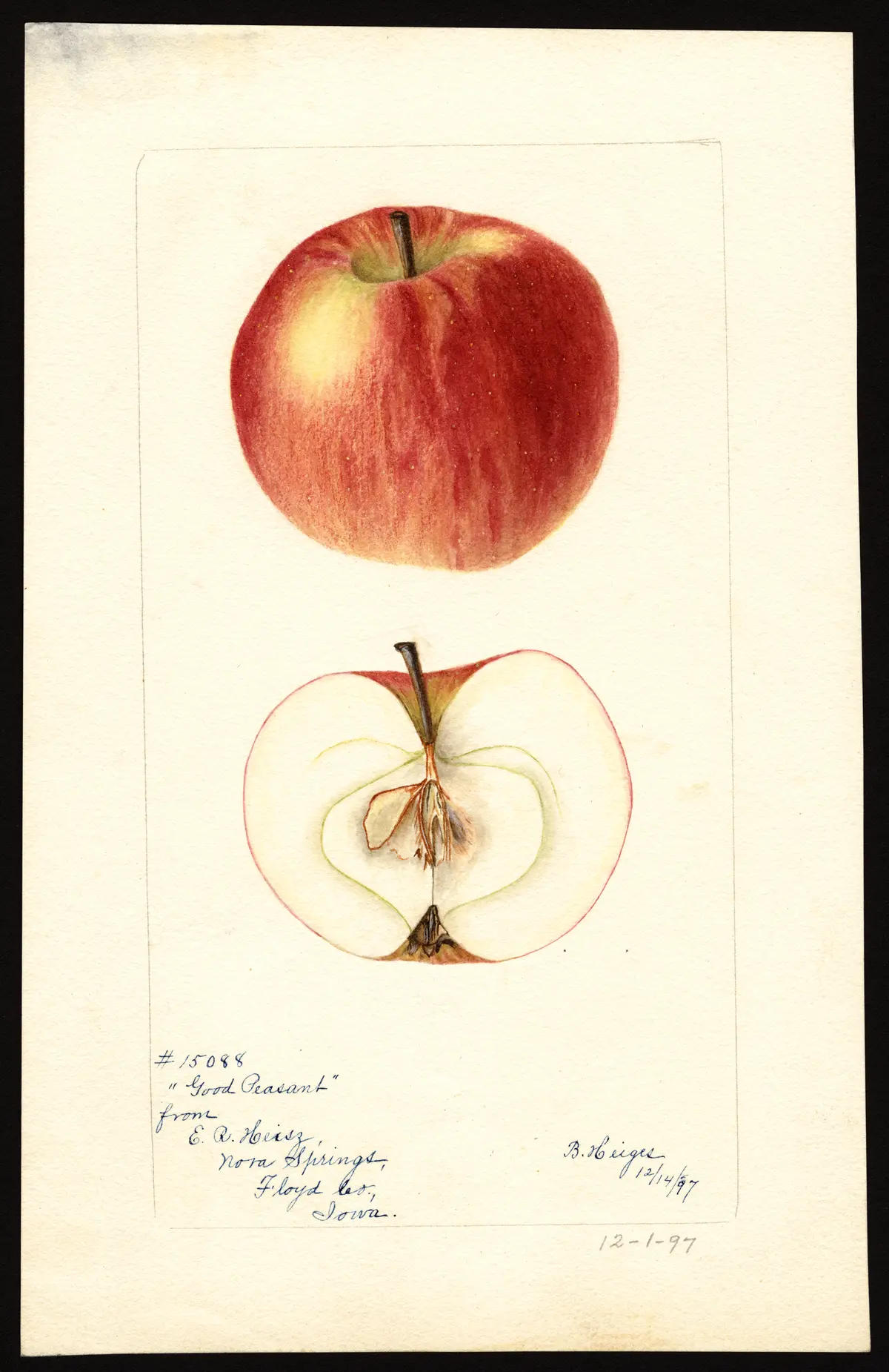
USDA Pomological Watercolor Collection
Good Peasant
Origin / History
Good Peasant is of Russian origin. N.E. Hansen (1902) observed it as fruited by A.F. Collman of Corning, Iowa, from trees received from Iowa Agricultural College, and noted that the fruit appears identical to the Longfield except that it is larger and much later in season. The Central Experimental Farm at Agassiz, British Columbia recorded trees planted in spring 1895 under test (Bulletin No. 3, 1900).
Tree
The Central Experimental Farm describes the tree as a strong grower. Hansen reports Good Peasant as a heavy annual bearer.
Fruit
Size
Hansen and Thomas both describe the fruit as medium. The Central Experimental Farm describes it as small — a conflict that may reflect differing growing conditions in British Columbia versus Iowa.
Form
Hansen describes the fruit as roundish, somewhat truncated, tapering to both ends, mostly unequal and irregular, with a decided swell on one side. The Central Experimental Farm describes it as oblong and conical — a notable conflict in form.
Stem
Hansen describes the stem as short. Thomas describes it as medium.
Cavity
Hansen describes the cavity as regular, narrow, and acute, with a little stellate russet, sometimes considerable russet. Thomas notes the cavity as russety.
Calyx
Hansen: closed, segments connivent. Not described by other sources.
Basin
Hansen describes the basin as small, narrow, shallow, and smooth. Thomas describes the basin as deep and wrinkled — a direct conflict on both depth and surface character.
Skin
Hansen: surface greenish yellow, with a dull red blush on the sunny side; dots distinct, few, white, and minute. Thomas: greenish yellow, splashed and striped red on the sunny side. The Central Experimental Farm describes the skin as green, nearly covered with red — considerably more red than the other two sources indicate.
Flesh / Flavor
Thomas describes the flesh as fine-grained, sub-acid, and very good. The Central Experimental Farm describes it as white, juicy, and sprightly, with a pleasant flavour and good quality.
Core / Seeds
Not described in sources.
Season
Hansen states the fruit keeps till February. Thomas gives the season as mid-winter. The Central Experimental Farm gives the season as October and November — a substantial conflict, with the British Columbia trees ripening several months earlier than Iowa specimens.
Uses
Not described in sources.
Subtypes / Variants
Not described in sources.
Other
Hansen observes a close resemblance to the Longfield, distinguishing Good Peasant by its larger size and considerably later season.
Book Sources
Described in 2 period pomological works
Nursery Catalog Sources
Found in 1 catalog (1900)
- Central Experimental Farm , Dominion Department of Agriculture, Agassiz, British Columbia (under test; Bulletin No. 3, Second Series) — 1900
View original book sources (3)
— N.E. Hansen, A Study of Northwestern Apples (1902)Good Peasant—Origin, Russia; as fruited by A. F. Collman, Corning, Iowa, from trees received from Iowa Agricultural College, the fruit appears identical with his Longfield except that it is larger and much later—Fruit medium, roundish, somewhat truncated, tapering to both ends, mostly unequal and irregular, with a decided swell on one side; surface greenish yellow, with dull red blush on sunny side; dots distinct, few, white, minute; cavity regular, narrow, acute, with a little stellate russet, sometimes considerable russet; stem short; basin small, narrow, shallow, smooth; calyx closed, segments connivent. Keeps till February. A heavy annual bearer.
— John J. Thomas, The American Fruit Culturist (1903)Good Peasant. Medium; greenish yellow, splashed and striped red on the sunny side; cavity russety; basin deep, wrinkled; stem medium; flesh fine-grained, sub-acid, very good; season, mid-winter. Russian.
— Central Experimental Farm, Central Experimental Farm, Agassiz BC — Catalogue of Fruit Trees under Test (Bulletin No. 3, 1900) (1900)Planted Spring 1895. Tree a strong grower. Fruit small, oblong, conical. Skin green, nearly covered with red. Flesh white, juicy, sprightly, with a pleasant flavour, quality good. Season October and November.