Haralson
Apple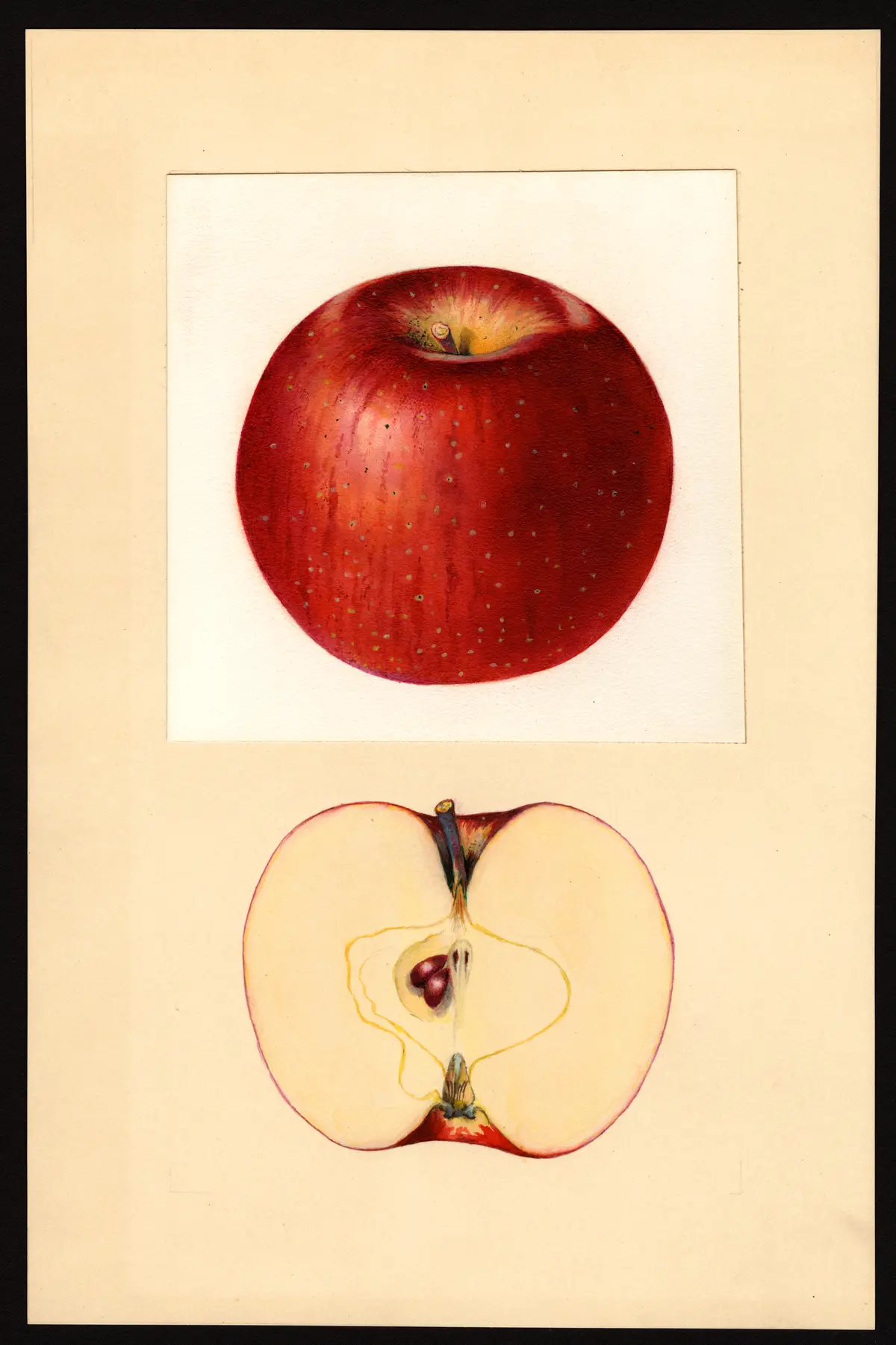
USDA Pomological Watercolor Collection
Haralson
Origin / History
Haralson was developed at the University of Minnesota Fruit Breeding Farm, where it is designated Minn. No. 90. It is a seedling of Malinda, open pollinated, and was introduced in 1922. Of all the apples introduced from the Minnesota Fruit Breeding Farm, it has become the most widely and extensively grown. A recent survey of commercial orchards in Minnesota showed it to be the leading variety in that state by acreage planted. Alderman, Wilcox, and Weir recorded these facts in Fruit Varieties Developed at the University of Minnesota Fruit Breeding Farm (1957).
Tree
The tree is hardy and vigorous but relatively small in size of head. The natural form is pyramidal, with a strongly developed central leader and wide-angled lateral branches. The tree is hardy and highly productive, with a marked tendency to biennial bearing. It sets fruit in clusters and overloads in alternate years, a habit that usually can be corrected by chemical thinning. Haralson is moderately susceptible to scab and only slightly susceptible to fire blight and cedar rust.
Fruit
Size: Medium.
Form: Round conic.
Stem: Medium.
Cavity: Medium-deep, rather narrow.
Calyx: Closed; tube conic.
Basin: Medium.
Skin: Medium-tough. Color a bright, attractive red. Under some conditions, the fruit tends to develop excessive russeting.
Dots: Large, greenish russet, moderately conspicuous.
Flesh and flavor: Nearly white, firm, medium-tender, crisp, juicy. Flavor pleasant, mildly acid. Quality fair to good for eating fresh, and very good for sauce, pies and baking.
Core and seeds: Not described in source.
Season
Haralson is a winter variety, with a season from October to March.
Uses
Haralson is an all-purpose apple. Its quality is fair to good for eating fresh and very good for sauce, pies, and baking.
Subtypes / Variants
Not described in source.
Other
Not described in source.
Book Sources
Described in 1 period pomological work
View original book sources (1)
— W.H. Alderman, A.N. Wilcox & T.S. Weir, Fruit Varieties Developed at the University of Minnesota Fruit Breeding Farm (1957)Haralson. Minn. No. 90. Malinda open pollinated. Introduced 1922.
Haralson is an all purpose, red winter variety which has become the most widely and extensively grown of all apples introduced from the Minnesota Fruit Breeding Farm. A recent survey of commercial orchards in Minnesota indicates that it is now the leading variety in this state from the standpoint of acreage planted.
Haralson is hardy and highly productive with a marked tendency to biennial bearing. The habit of setting fruit in clusters and overloading in alternate years usually can be corrected by chemical thinning. It is moderately susceptible to scab, but only slightly susceptible to fire blight and cedar rust. Under some conditions, the fruit tends to develop excessive russeting.
The tree is hardy and vigorous but relatively small in size of head; the natural form is pyramidal with a strongly developed central leader and wide angled lateral branches. The fruit is medium in size, round conic; color a bright, attractive red; dots large, greenish russet, moderately conspicuous; skin medium-tough; stem medium; cavity medium-deep, rather narrow; basin medium; calyx closed, tube conic; flesh nearly white, firm, medium-tender, crisp, juicy; flavor pleasant, mildly acid; quality fair to good for eating fresh, and very good for sauce, pies and baking; season October to March.