L'Orange d'Hyver
Pear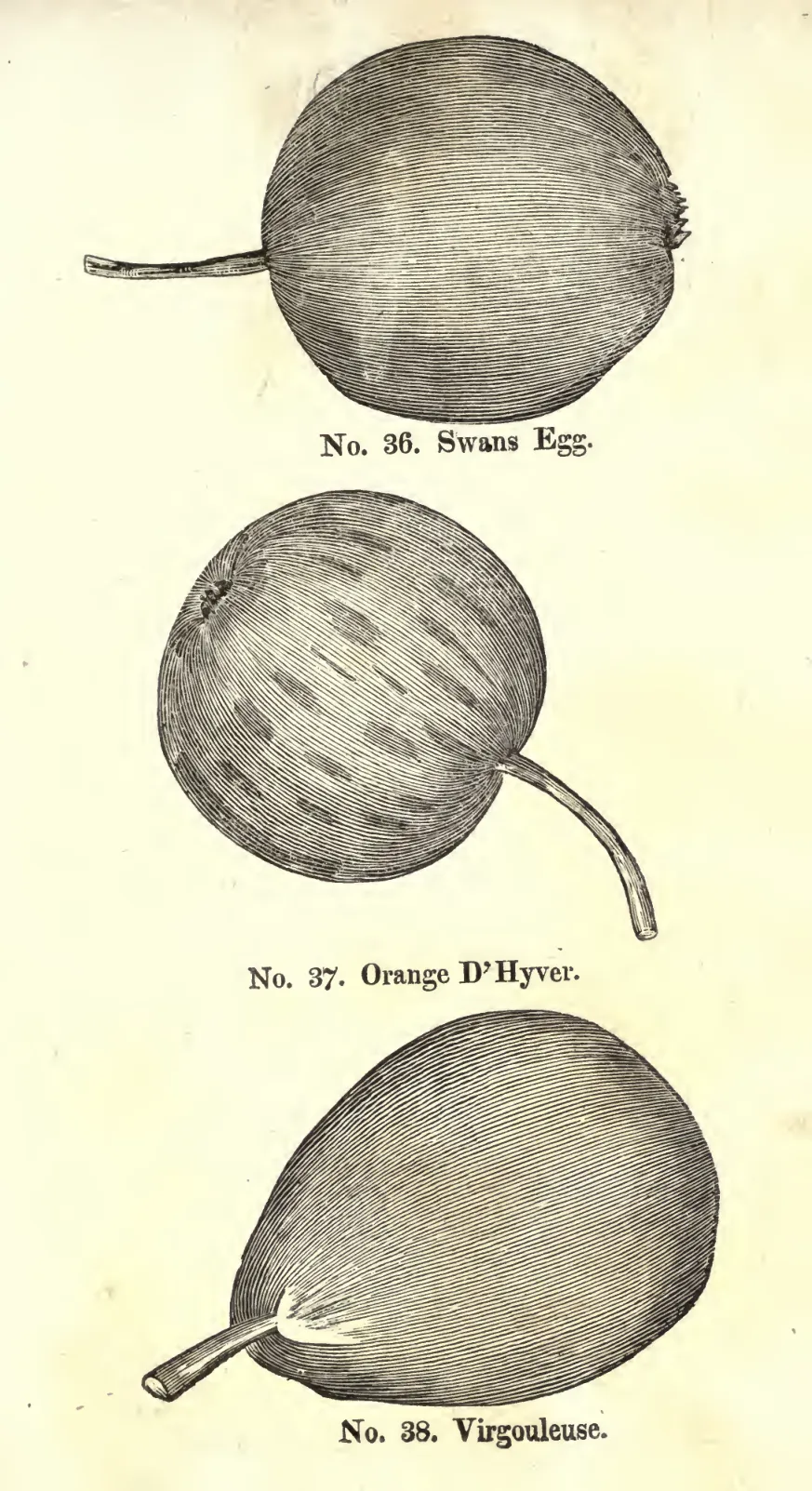
L'Orange d'Hyver
Origin / History
William Coxe gave the name L'Orange d'Hyver to a pear he imported from France under the name L'Echasserie, which he states is certainly incorrect. The variety bears a stronger resemblance to the Orange d'Hyver as delineated and described by the Abbé Rozier in the Cours d'Agriculture than to any other fruit. Coxe recorded the variety in A View of the Cultivation of Fruit Trees (1817), where it is numbered 37 and also listed under the heading "Orange D'Hyver." Coxe describes it as being of estimable character as a fine winter pear.
Tree
Not described in source.
Fruit
Size: Not larger than a small orange.
Form: Nearly round, a little flattened at each end.
Stem: Long.
Cavity: Not described in source.
Calyx: Not described in source.
Basin: Not described in source.
Skin: Dull yellowish green, rough, thick, and firm. Faint blotches of russet-colored dots are scattered over the surface.
Dots: Faint blotches of russet-colored dots.
Flesh and flavor: White, melting, and juicy, with a sprightly and finely flavored taste.
Core and seeds: Not described in source.
Season
Ripens in November. In favorable seasons it will keep until January.
Uses
Not described in source.
Subtypes / Variants
Not described in source.
Other
The entry appears in the volume as No. 37. Its heading in the volume's listing reads "Orange D'Hyver," found on pages 306–306.
Book Sources
Described in 1 period pomological work
View original book sources (1)
— William Coxe, A View of the Cultivation of Fruit Trees (1817)
- L'ORANGE D'HYVER.
This name I have given to a pear I imported from France under the name of L'Echasserie, which is certainly incorrect---it bears a stronger resemblance to the Orange d'Hyver as delineated and described by the Abbe Rozier in the Cours d'Agriculture, than any other fruit; it is of estimable character as a fine winter pear; the size is not larger than a small orange, nearly round, a little flattened at each end, the stem long, the skin a dull yellowish green, with faint blotches of russet coloured dots, rough, thick, and firm: the flesh white, melting, juicy, sprightly and finely flavoured---it ripens in November, and in favourable seasons will keep till January.
[Additional entry in this volume: "Orange D'Hyver", pp. 306–306]
No. 37. Orange D'Hyver.