No. 43. Newton Spitzemberg
Apple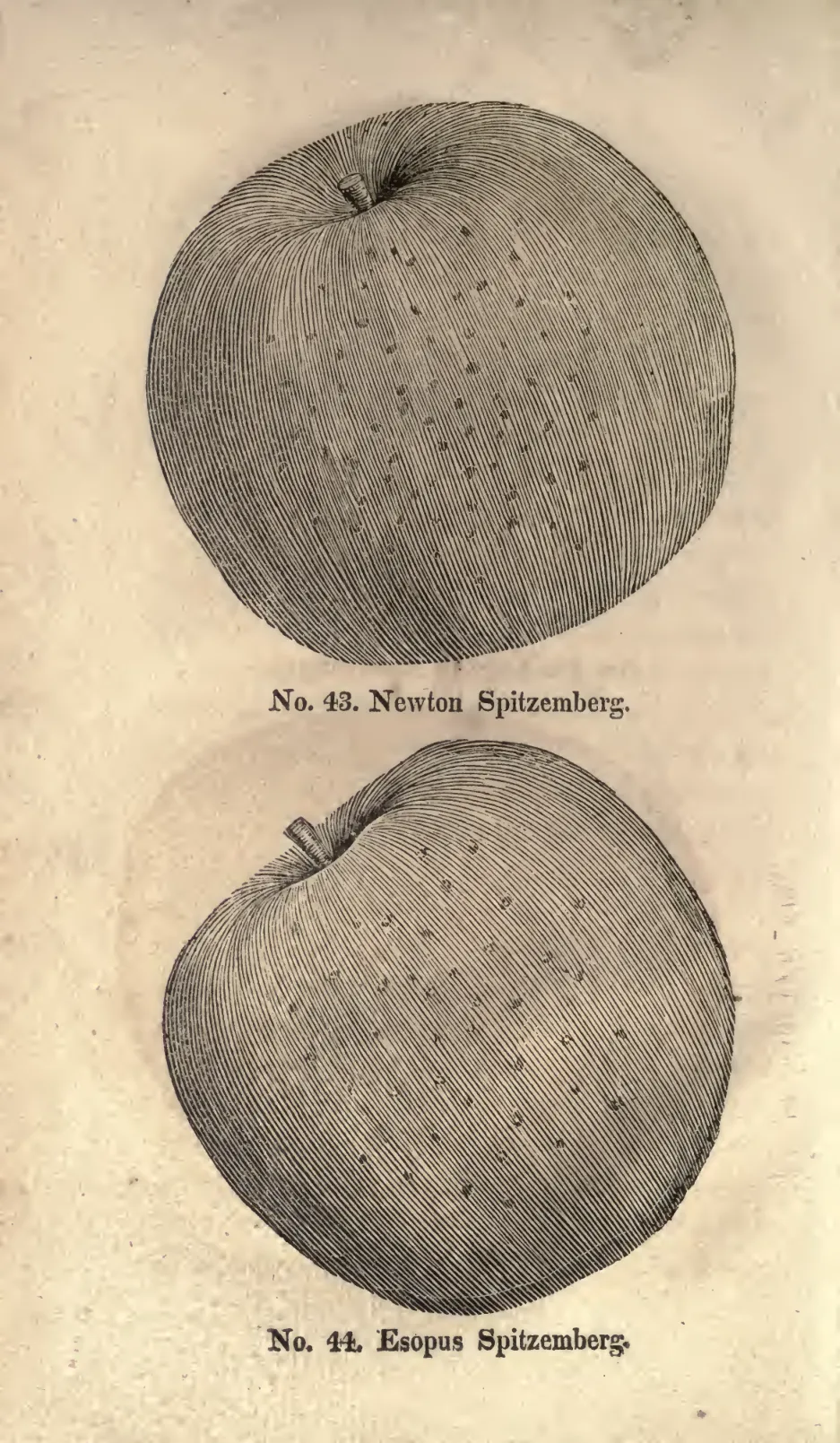
No. 43. Newton Spitzemberg
Origin / History
This variety was brought from Newton on Long-Island. In some parts of this State it is called the English, or Burlington Spitzemberg. It is described in William Coxe's A View of the Cultivation of Fruit Trees (1817), where it is listed as No. 43 under the name No. 43. Newton Spitzemberg.
Tree
The form of the tree is regular, handsome and spreading. The growth is vigorous, and the tree exhibits an appearance equal to any tree in our orchards for beauty.
Fruit
Size: Fruit large, described as a large fruit.
Form: Fruit large, round and fair.
Stem: Stalk short.
Cavity: Stalk grows in a deep hollow.
Calyx: Not described in source.
Basin: Crown deeply indented.
Skin: Skin a lively but deep red, streaked with darker shades of red towards the stalk.
Dots: Full of small yellow dots towards the crown.
Flesh and flavor: Flesh yellow, rich and highly flavored. It is admired both for its taste and beauty.
Core and seeds: Not described in source.
Season
It ripens in October, and falls from the tree; properly treated, it will last for several months.
Uses
Not described in source.
Subtypes / Variants
Not described in source.
Other
Not described in source.
Book Sources
Described in 1 period pomological work
View original book sources (1)
— William Coxe, A View of the Cultivation of Fruit Trees (1817)NO. 43. NEWTON SPITZEMBERG.
This apple is in some parts of this State called the English, or Burlington Spitzemberg: it was brought from Newton on Long-Island—it is a large round and fair fruit; the skin a lively but deep red, streaked with darker shades of red towards the stalk, and full of small yellow dots towards the crown; the stalk is short, and grows in a deep hollow, the crown is deeply indented—the flesh yellow, rich and highly flavoured: it is admired both for its taste and beauty: it ripens in October, and falls from the tree, but properly treated will last for several months. The form of the tree is regular, handsome and spreading; the growth vigorous, exhibiting an appearance equal to any tree in our orchards for beauty.