No. 71. Vandervere
Apple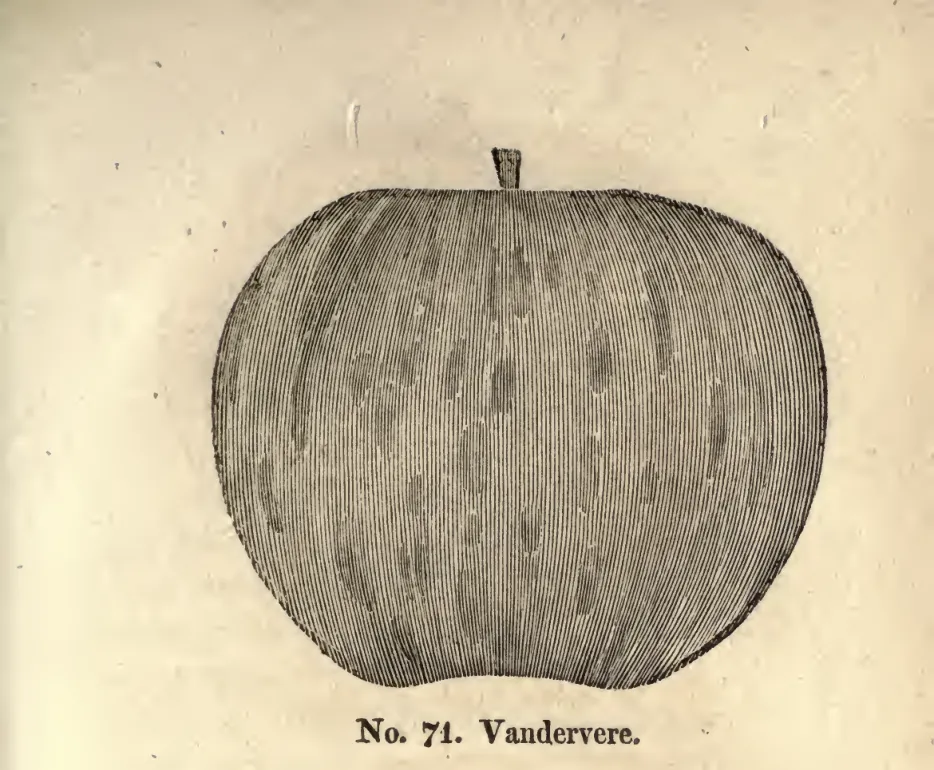
No. 71. Vandervere
Origin and History
No. 71. Vandervere is sometimes called "Staalcubs," a name derived from a family in Delaware State by whom it was cultivated.
Tree
The trees in good ground attain to a large size and are great bearers.
Fruit
Size: Moderate.
Form: Flat.
Skin: When ripe, pale red with rough yellowish spots and some clear yellow.
Flesh and Flavor: Rich, yellow, sprightly, and tender. The apple is a tolerable eating apple.
Season
Winter fruit. No. 71. Vandervere can be used for cooking very early, when quite green and not half grown.
Uses
When grown on highly cultivated light rich soil, No. 71. Vandervere is much admired for culinary purposes. When free from bitter rot, it makes good cider.
Other
No. 71. Vandervere is very liable to bitter rot; lime is said to be useful in destroying this disease. A pint of the juice weighs eleven penny-weights more than water.
Book Sources
Described in 1 period pomological work
View original book sources (1)
— William Coxe, A View of the Cultivation of Fruit Trees (1817)NO. 71. VANDERVERE
This apple is sometimes called the Staalcubs, from a family in Delaware State, by whom it was cultivated; it is of moderate size, and when growing on a highly cultivated light rich soil, is a much admired fruit for culinary purposes: it is a tolerable eating apple, and when free from the bitter rot, makes good cider—it is a winter fruit, but can be used for cooking very early, when quite green, and not half grown. The form is flat; when ripe, the skin is a pale red, with rough yellowish spots, and some clear yellow; the flesh is rich, yellow, sprightly, and tender—lime is said to be useful in destroying the bitter rot to which this apple is very liable—the trees in good ground attain to a large size, and are great bearers—a pint of the juice of this apple, weighs eleven penny-weights more than water.