Nonpareil
Pear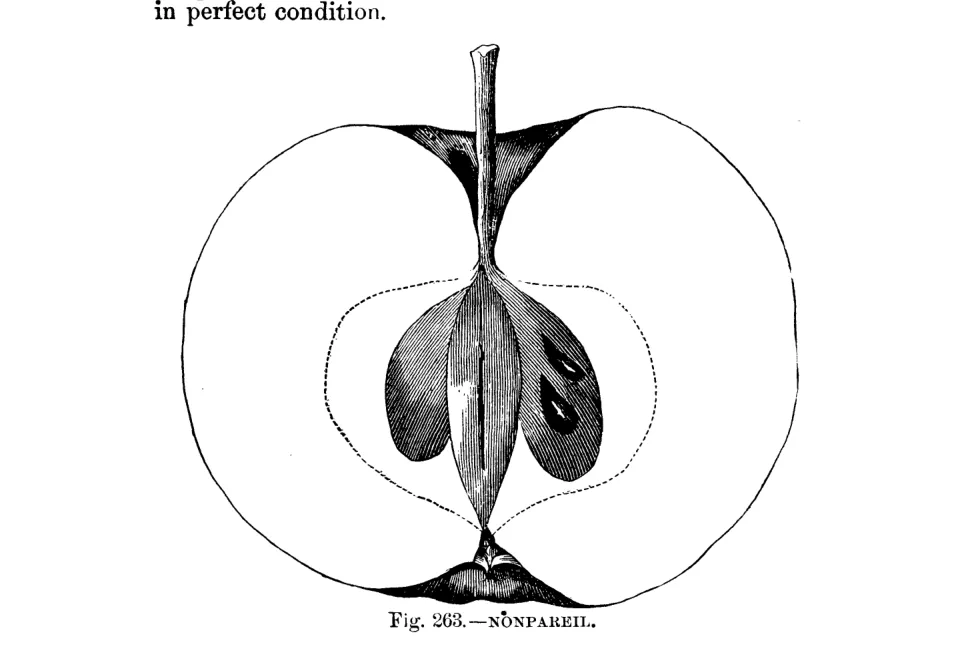
Nonpareil (Pear)
Origin/History
A seedling raised by Judge Livingston, of New York, originating from Western New York. Cited in Downing, Fruit Trees of America, p. 821 (1869).
Tree
Not described in source.
Fruit
Size: Small; Elliott notes it is too small for any but amateurs.
Form: Globular-oblate (Hedrick); roundish, flattened at apex (Elliott). These descriptions are broadly consistent.
Stem: Short (Elliott).
Cavity: Not described in source.
Calyx: Large (Elliott).
Basin: Not described in source.
Skin: Russety-yellow ground. In sun, mostly overspread and shaded with red (Hedrick); Elliott describes the red as red specks rather than a broad blush. In shade, bright fawn-russet (Hedrick).
Flesh/Flavor: Yellowish-white (Hedrick), melting, juicy. Sweet and perfumed (Hedrick); sugary and vinous (Elliott). Quality rated nearly "best" (Elliott).
Core/Seeds: Core large (Elliott). Seeds not described in source.
Season
November.
Uses
Suitable for amateurs rather than commercial or market use, owing to small size (Elliott).
Subtypes/Variants
Not described in source.
Other
Not described in source.
Book Sources
Described in 2 period pomological works
View original book sources (2)
— U.P. Hedrick, The Pears of New York (1921)Nonpareil.
- Downing Fr. Trees Am. 821. 1869.
A seedling raised by Judge Livingston, of New York. Fruit globular-oblate, russety-yellow, mostly overspread and shaded with red in sun, and bright fawn-russet in shade; flesh yellowish-white, melting, juicy, sweet, perfumed; Nov.
— F.R. Elliott, The Western Fruit Book (1865)Nonpareil.
American. A new variety from Western New York ; too small for any but amateurs. Fruit, small, roundish flattened at apex, russety yellow, with red specks ; stem, short ; calyx, large ; core, large ; flesh, fine, melting, juicy, sugary, vinous; nearly " best." November.