Petit-Hativeau
Pear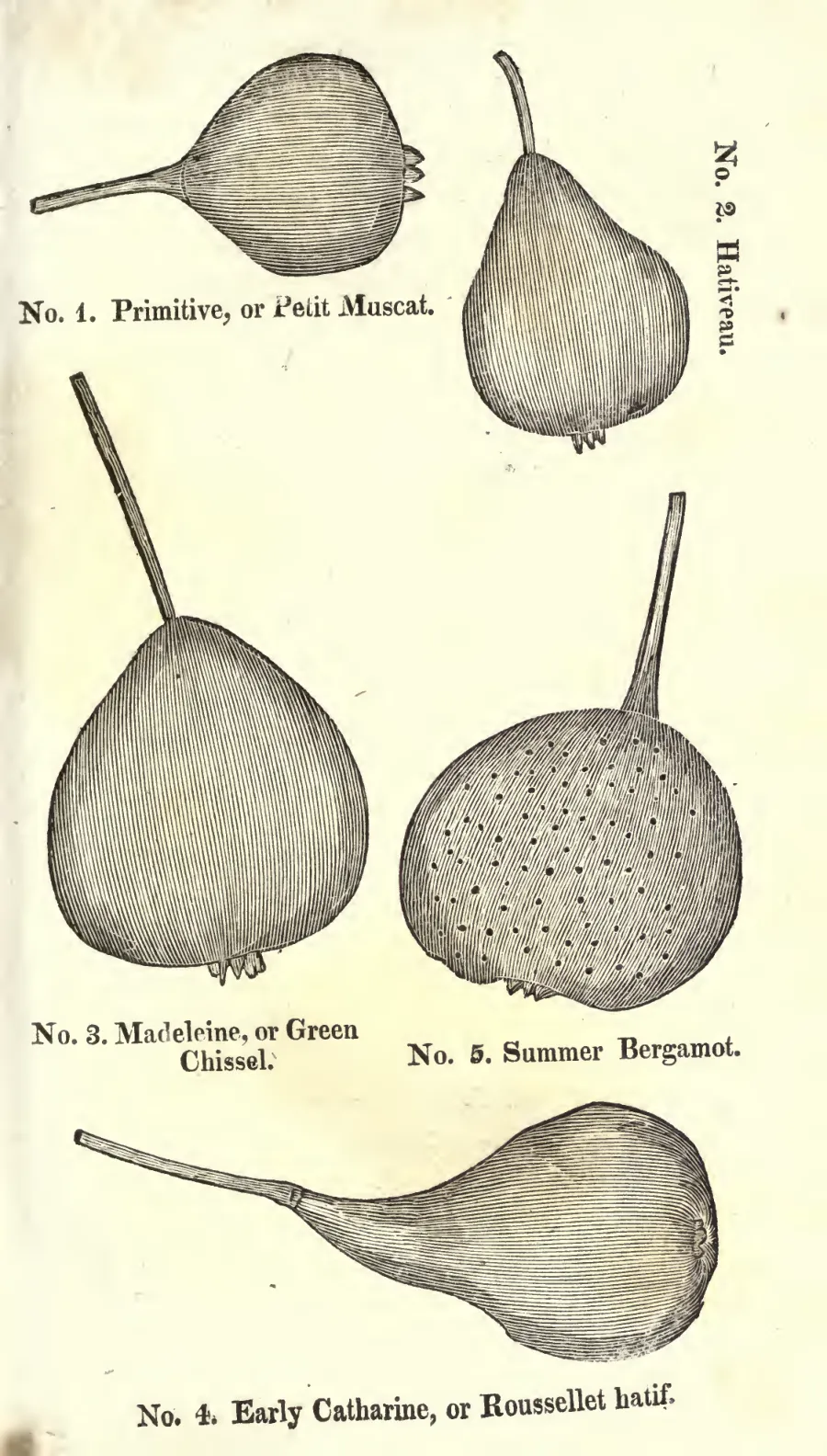
Petit-Hativeau
Origin / History
Of ancient and unknown origin, cultivated among a group of pears termed Hâtiveau for over the last five centuries (Hedrick, citing Leroy, Dictionnaire Pomologique 2:520, 1869). Called Petit-Hâtiveau by Claude Saint-Étienne in 1670 to distinguish it from the Gros-Hativeau. Described by Coxe (1817) under the name Hativeau.
Tree
A very great bearer (Coxe).
Fruit
Size: Small (Hedrick); very small (Coxe).
Form: Ovate, obtuse, more or less globular (Hedrick). Pointed towards the stem, the blossom end flat (Coxe).
Stem: Not described in source.
Cavity: Not described in source.
Calyx: Not described in source.
Basin: Not described in source.
Skin: Smooth and fine, lemon-yellow (Hedrick) or clear yellow (Coxe), more or less stained with gray-russet around the calyx and stem.
Dots: Exceedingly minute, greenish.
Flesh and flavor: Whitish (Hedrick) or of a yellowish cast (Coxe). Breaking, semi-fine, scented, juicy and gritty; juice sugary, acid, and slightly musky (Hedrick). Somewhat spicy, but without much juice or flavor (Coxe). Quality third (Hedrick).
Core and seeds: Not described in source.
Season
July; the middle to the end of July (Coxe).
Uses
Not described in source.
Subtypes / Variants
Not described in source.
Other
Not described in source.
Book Sources
Described in 2 period pomological works
View original book sources (2)
— William Coxe, A View of the Cultivation of Fruit Trees (1817)
- HATIVEAU.
Is a very small pear; pointed towards the stem, the blossom end flat; the skin is a clear yellow; the flesh is of a yellowish cast, somewhat spicy, but without much juice or flavour. It is a very great bearer; the time of ripening, from the middle to the end of July.
— U.P. Hedrick, The Pears of New York (1921)Petit-Hativeau.
- Leroy Diet. Pom. 2:520, fig. 1869.
A variety of ancient and unknown origin, but cultivated among a group of pears termed Hâtiveau for over the last five centuries. It was called by the name Petit-Hâtiveau by Claude Saint-Étienne in 1670 to distinguish it from the Gros-Hativeau. Fruit small, ovate, obtuse and more or less globular; skin smooth and fine, lemon-yellow, dotted with exceedingly minute greenish points and more or less stained with gray-russet around the calyx and stem; flesh whitish, breaking, semi-fine, scented, juicy and gritty, juice sugary, acid, and slightly musky; third; July.