Whorle Pippin
Apple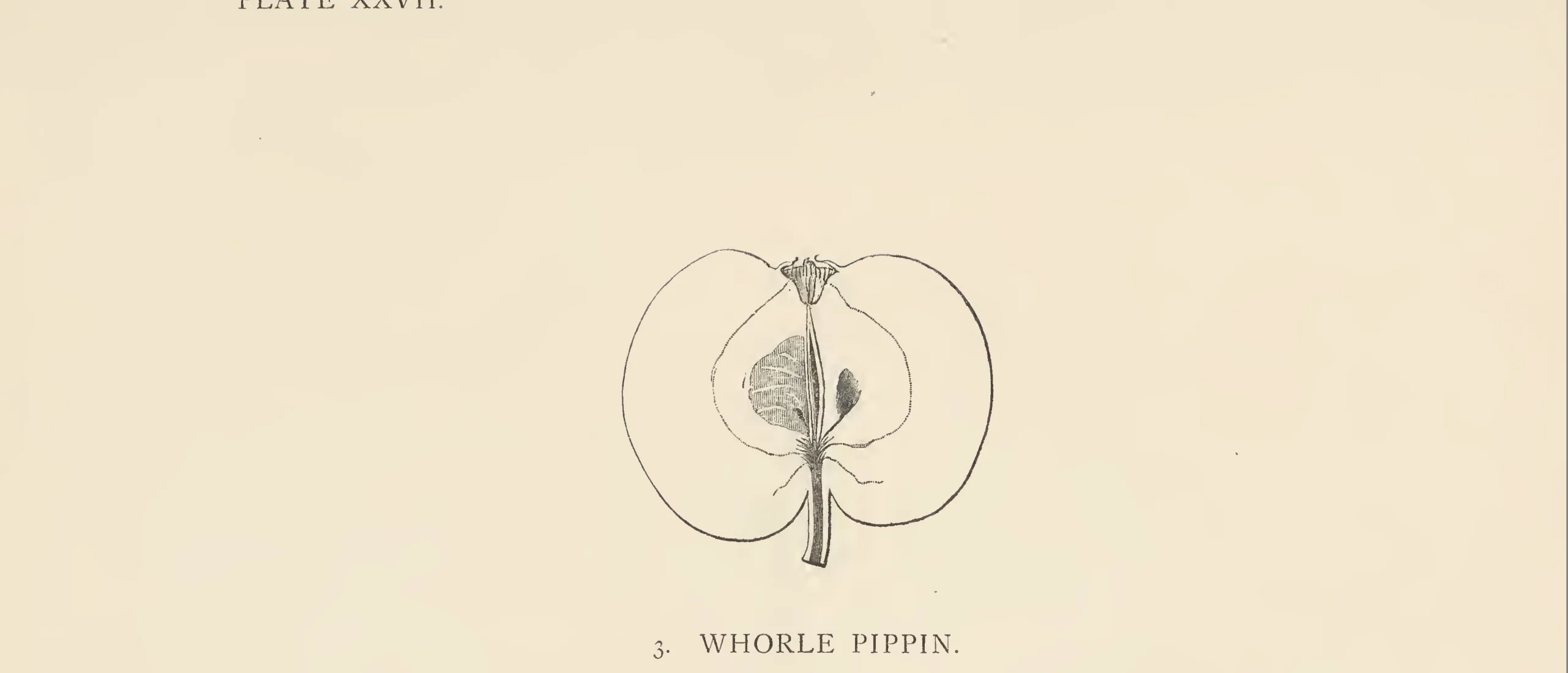
Whorle Pippin
Origin and History
The origin of this variety is not recorded in the standard pomological authorities. The name is traditionally supposed to derive from the "whorle," the weighted disc on a spinning spindle that provided the rotational impetus—a reference to the tool's importance in domestic textile work when spinning wheels were ubiquitous.
Fruit
Size and Form: Below medium size, measuring two inches and a quarter in width at the widest point and one inch and three quarters in height. Oblate in form, handsome and regularly formed.
Skin: Smooth, shining, and glossy. Almost entirely covered with fine bright crimson marked with broken streaks of darker crimson. Portions in shade display a fine clear yellow ground, lightly streaked with pale crimson.
Eye (Calyx): Scarcely depressed, large and half open, with broad and flat segments that frequently appear as if rent apart from one another by the over-swelling of the fruit. Set in a very shallow basin, which is often very russety and deeply and coarsely cracked.
Stalk: A quarter of an inch long, inserted in a wide cavity.
Flesh and Flavor: Yellowish white in color, firm, crisp, and very juicy. The flavor is brisk, refreshing, and pleasant.
Core and Seeds: Not described in source.
Tree
Grows freely and makes an excellent pyramid form. When heavily laden with fruit—its typical condition—the tree presents a very beautiful appearance.
Geographic Distribution: Common in Scotland and the North and East of England, where it is to be found in almost every garden and orchard. Little known in the South and West of England.
Season
Ripe in August.
Uses
A beautiful little summer dessert apple of excellent quality.
Subtypes and Variants
Not described in source.
Book Sources
Described in 1 period pomological work
Nursery Catalog Sources
Found in 1 catalog (1900) from England
- George Bunyard & Co. , Royal Nurseries, Maidstone, Kent , England — 1900
View original book sources (1)
— Woolhope Naturalists Field Club, The Herefordshire Pomona (1885)
- WHORLE PIPPIN.
[Syn : Lady Derby ; Thorle Pippin ; Summer Thorle ; Watson's New Nonsuch.]
The origin of this Apple is not given in any of the leading works of authority. Its name has been supposed to be derived from its resemblance to the "Whorle," which was the propelling power, or rather impetus of the spindle, when the distaff and spindle were so much in use.
Description.—Fruit : below medium size, two inches and a quarter wide at the middle, and an inch and three quarters high ; oblate, handsome and regularly formed. Skin : smooth, shining and glossy, almost entirely covered with fine bright crimson, which is marked with broken streaks of darker crimson, but on any portion shaded, it is a fine clear yellow, a little streaked with pale crimson. Eye : scarcely at all depressed, large, half open, with broad and flat segments, which frequently appear as if rent from each other by an over swelling of the fruit ; set in a very shallow basin, which is often very russety, deeply and coarsely cracked. Stalk : a quarter of an inch long, inserted in a wide cavity. Flesh : yellowish white, firm, crisp, and very juicy ; with a brisk, refreshing and pleasant flavour.
A beautiful little summer dessert apple of excellent quality. It is ripe in August, and when the tree is loaded with fruit, as it usually is, it presents a very beautiful object.
The tree grows freely and makes an excellent pyramid. In Scotland and the North and East of England, it is to be met with in almost every garden and orchard, but in the South and West it is but little known.