Winter Bergamot
Pear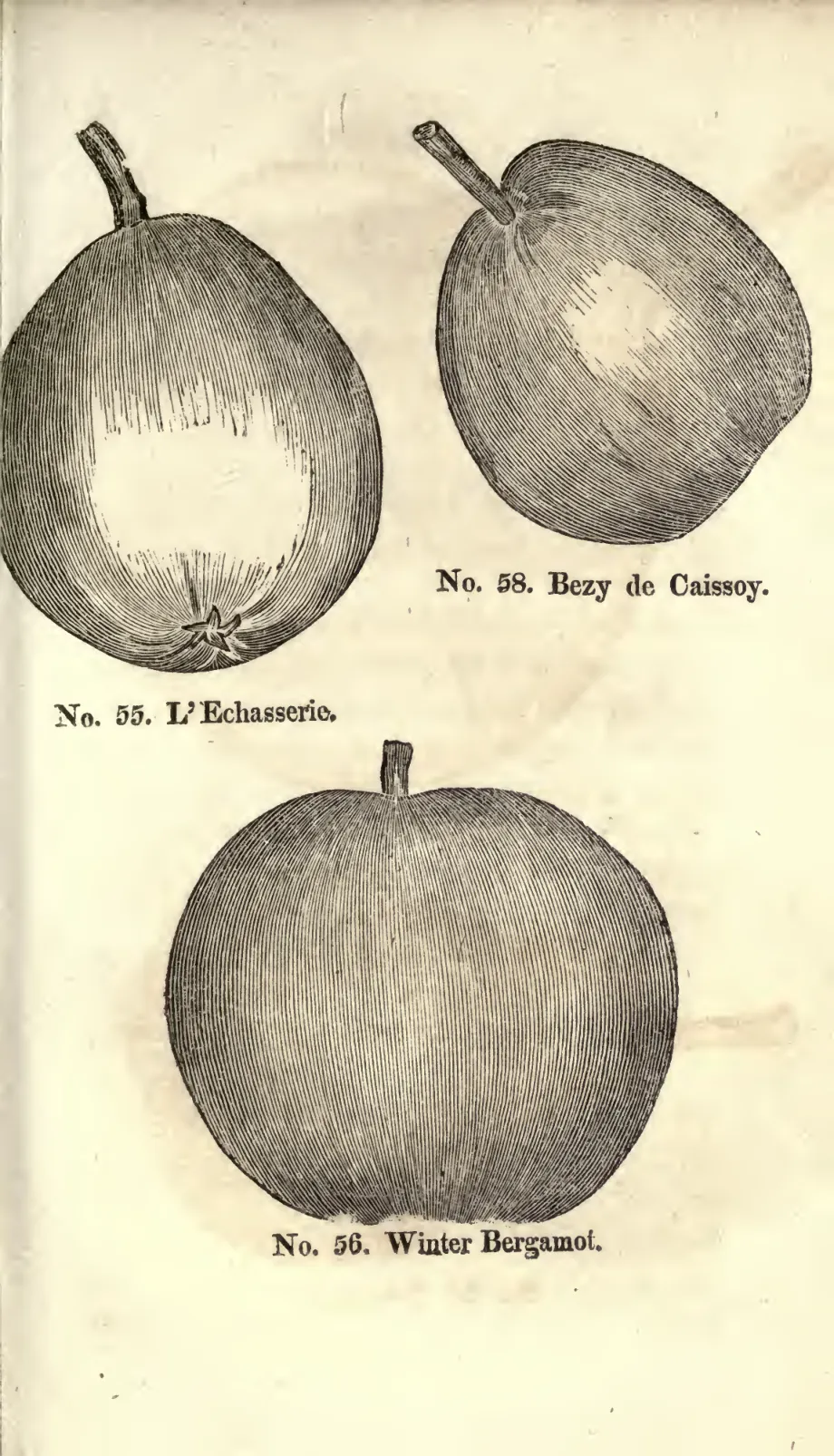
Winter Bergamot
Origin / History
Winter Bergamot was originally imported from England. William Coxe described it as No. 56 in A View of the Cultivation of Fruit Trees (1817). It is sometimes called the Townsend Bergamot, and the Cape May Bergamot.
Tree
An abundant bearer.
Fruit
Size: Moderate.
Form: Round, flatted at the ends, a little diminished towards the crown.
Stem: Not described in source.
Cavity: Not described in source.
Calyx: Not described in source.
Basin: Not described in source.
Skin: Rough, with russet and iron spots scattered over it.
Dots: Not described in source.
Flesh and flavor: Taste pleasant, but deficient in juiciness and sprightliness.
Core and seeds: Not described in source.
Season
Ripens in December.
Uses
Not described in source.
Subtypes / Variants
Not described in source.
Other
Not described in source.
Book Sources
Described in 1 period pomological work
View original book sources (1)
— William Coxe, A View of the Cultivation of Fruit Trees (1817)
- WINTER BERGAMOT.
Was originally imported from England; it is sometimes called the Townsend Bergamot, and the Cape May Bergamot; the size is moderate—the skin rough, with russet and iron spots scattered over it; the shape round, flatted at the ends, a little diminished towards the crown; the taste is pleasant, but it is deficient in juiciness and sprightliness: it ripens in December, and is an abundant bearer.