Beacon
Apple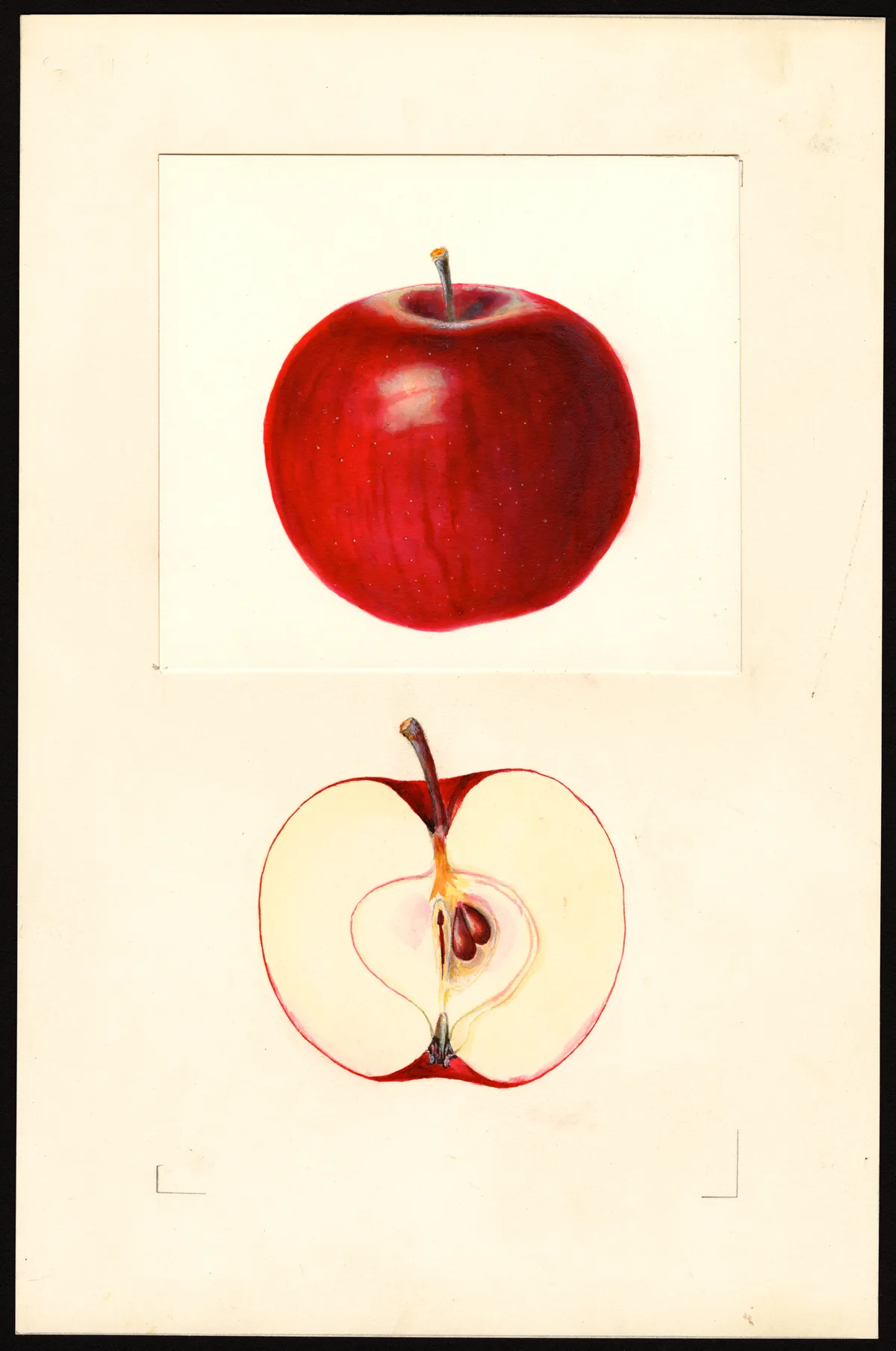
USDA Pomological Watercolor Collection
Beacon
Origin / History
Originated at the Minnesota Fruit Breeding Farm as Minn. No. 423, an open-pollinated seedling of Malinda. Introduced 1936. Alderman, Wilcox, and Weir call it an "attractive all-red, late summer variety" that "has aroused widespread interest since early plantings have come into production and the fruit has been selling at premium prices"; its importance for home and commercial planting is, they say, best indicated by comparison with Duchess. Zielinski calls it excellent for home use, with good commercial possibilities, and an excellent local-market variety, particularly because of its earliness, excellent quality, and handling characteristics.
Tree
Upright-spreading with round head; larger than Duchess. Equally hardy and productive as Duchess. Tends towards annual production (Alderman, Wilcox, and Weir); an annual bearer (Zielinski). Fruit evenly distributed throughout the tree, does not cluster. Similar to Duchess in susceptibility to fire blight and scab, much more susceptible to cedar rust. Fruit drops easily but responds to stop-drop sprays. Should be color picked about three times (Alderman, Wilcox, and Weir). Ripens and colors unevenly and should be spot-picked (Zielinski).
Fruit
Size: Medium; 2¼ to 2¾ inches (Zielinski).
Form: Round to slightly round-conic.
Stem: Medium.
Cavity: Medium-deep, flaring.
Calyx: Closed; tube funnel-form.
Basin: Medium, slightly wrinkled.
Skin: Thick, tough (moderately thick, Zielinski). Color attractive deep red, usually over entire fruit; an overall red blush.
Dots: Prominent.
Flesh and flavor: Yellowish, firm, medium-tough (Alderman, Wilcox, and Weir); yellowish white, crisp, juicy (Zielinski). Subacid; less acid than Duchess (Zielinski). Quality "good for fresh and culinary use" (Alderman, Wilcox, and Weir), with better dessert quality than Duchess; "excellent quality" (Zielinski).
Core and seeds: Not described in source.
Season
Late summer (Alderman, Wilcox, and Weir); early summer (Zielinski). Fruit ripens nearly as early as Duchess (Alderman, Wilcox, and Weir); 3 to 4 days after Duchess and about a week after Melba (Zielinski). Ripening period extends about 2 weeks at Corvallis. Keeps longer in good condition than Duchess (Alderman, Wilcox, and Weir); keeps about 4 weeks after harvest (Zielinski). Handles and stores much better than Melba but ripens more unevenly (Zielinski).
Uses
Fresh and culinary use; dessert. Home use; local market. Commercial fruit selling at premium prices.
Subtypes / Variants
Not described in source.
Other
Not described in source.
Book Sources
Described in 2 period pomological works
View original book sources (2)
— W.H. Alderman, A.N. Wilcox & T.S. Weir, Fruit Varieties Developed at the University of Minnesota Fruit Breeding Farm (1957)Beacon. Minn. No. 423. Malinda open pollinated. Introduced 1936.
This attractive all-red, late summer variety has aroused widespread interest since early plantings have come into production and the fruit has been selling at premium prices. Its importance for home and commercial planting is best indicated by the following comparison with Duchess.
Beacon is equally hardy and productive; the tree is larger; fruit ripens nearly as early; it is much better colored; drops easily but responds to stop-drop sprays; should be color picked about three times; has better dessert quality; and keeps longer in good condition. It is similar in susceptibility to fire blight and scab but much more susceptible to cedar rust.
The tree is upright-spreading with round head, tends towards annual production. Fruit is evenly distributed throughout the tree, does not cluster; size medium; form round to slightly round-conic; color attractive deep red, usually over entire fruit; dots prominent; stem medium; cavity medium-deep, flaring; basin medium, slightly wrinkled; calyx closed, tube funnel-form; flesh yellowish, firm, medium-tough; skin thick, tough; flavor subacid; quality good for fresh and culinary use.
— Quentin B. Zielinski, Apple Varieties for Oregon (1964)Beacon†
This early summer variety originated at the Minnesota Fruit Breeding Farm as an open-pollinated seedling of Malinda. It was introduced commercially in 1936. The fruit is of medium size—2¼ to 2¾ inches—and ripens 3 to 4 days after Duchess and about a week after Melba. Skin is moderately thick, tough, with an attractive, overall red blush. Flesh is yellowish white, crisp, juicy, subacid, but less acid than Duchess. Beacon is an annual bearer, excellent for home use, and has good commercial possibilities. This variety ripens and colors unevenly, and should be spot-picked. The ripening period extends about 2 weeks at Corvallis, and the fruit will keep about 4 weeks after harvest. Beacon handles and stores much better than Melba but ripens more unevenly. This is an excellent local-market variety, particularly because of its earliness, excellent quality, and handling characteristics.