Black Twig
Apple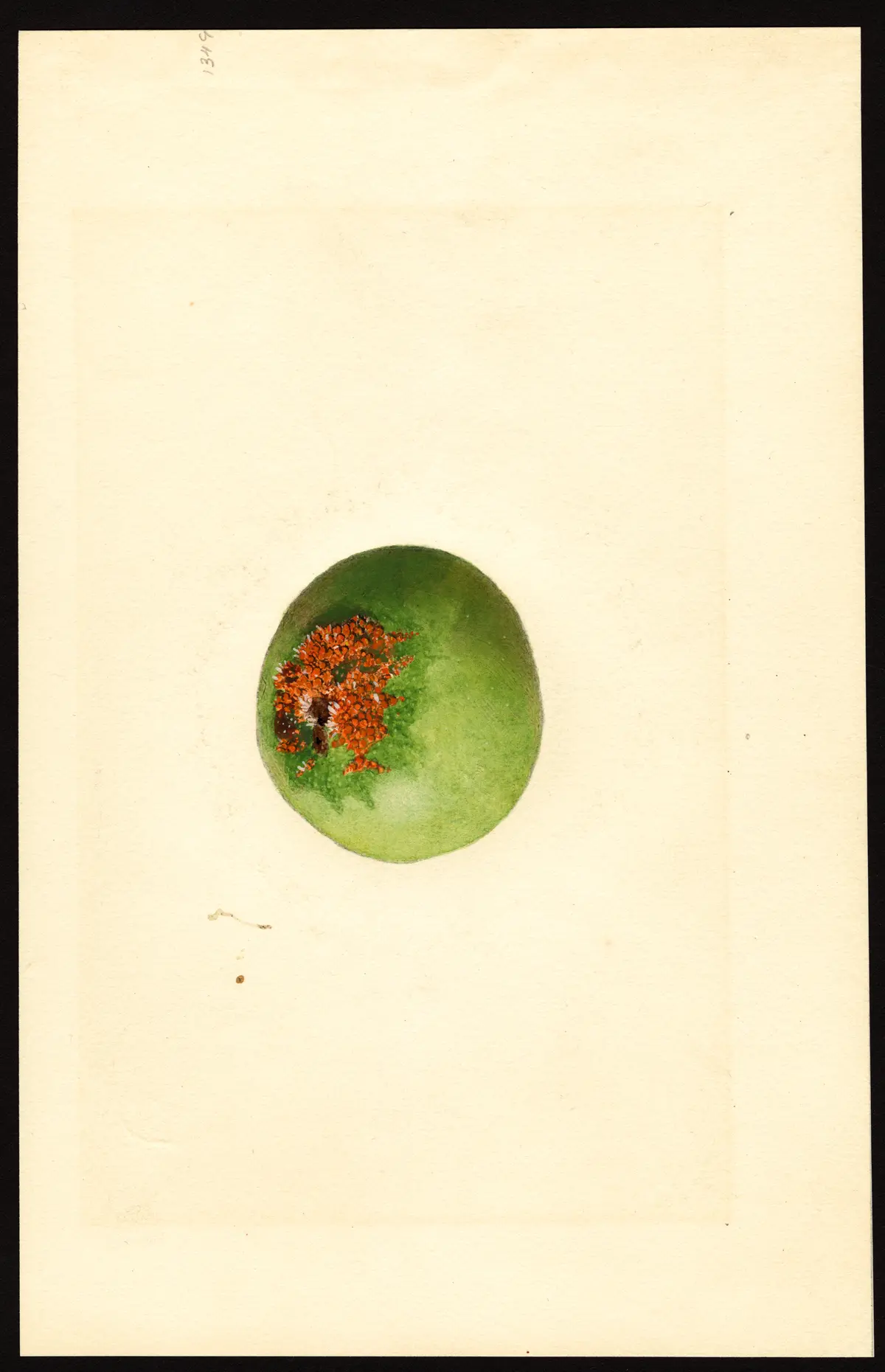
USDA Pomological Watercolor Collection
Black Twig
Origin/History
The exact origin of this apple is unknown, but it is supposed to originate in the northern portion of Lincoln County, Tennessee. It is said to be one of the most valuable and profitable apples grown in that section.
Tree
Very vigorous and spreading habit with a rather open head. Not an early bearer, but produces good regular crops annually.
Fruit
Form and Size: Medium, oblate, very little conical, slightly angular.
Skin: Bright yellow, shaded with light red (dark crimson in the sun), with some obscure stripes and splashes on the shaded side, and rather thickly sprinkled with yellowish and brown dots.
Stem: Short, rather stout.
Cavity: Medium, with slight russet.
Calyx: Closed.
Basin: Medium, roundish, regular.
Flesh and Flavor: Pale yellow, half fine, tender, juicy, mild subacid, rich. Quality rated as very good.
Core and Seeds: Rather small.
Season
October to February.
Uses
Not described in source.
Subtypes/Variants
Not described in source.
Book Sources
Described in 1 period pomological work
USDA Nomenclature (1905)
From W.H. Ragan, Nomenclature of the Apple, USDA Bulletin No. 56
May be Winesap.
This is doubtless Arkansas.
View original book sources (1)
— A.J. Downing, The Fruits and Fruit Trees of America (1900)Black Twig.
The exact origin of this apple is unknown, but supposed to be in the northern portion of Lincoln County, Tenn. It is said to be one of the most valuable and profitable apples grown in that section. Tree very vigorous, spreading, rather an open head, not an early bearer, but giving good regular crops annually.
Fruit medium, oblate, very little conical, slightly angular; skin bright yellow, shaded with light red (dark crimson in the sun), some obscure stripes and splashes on the shaded side, and rather thickly sprinkled with yellowish and brown dots; stalk short, rather stout; cavity medium, slight russet; calyx closed; basin medium, roundish, regular; flesh pale yellow, half fine, tender, juicy, mild subacid, rich; very good; core rather small. October to February.