Green Sweet
Apple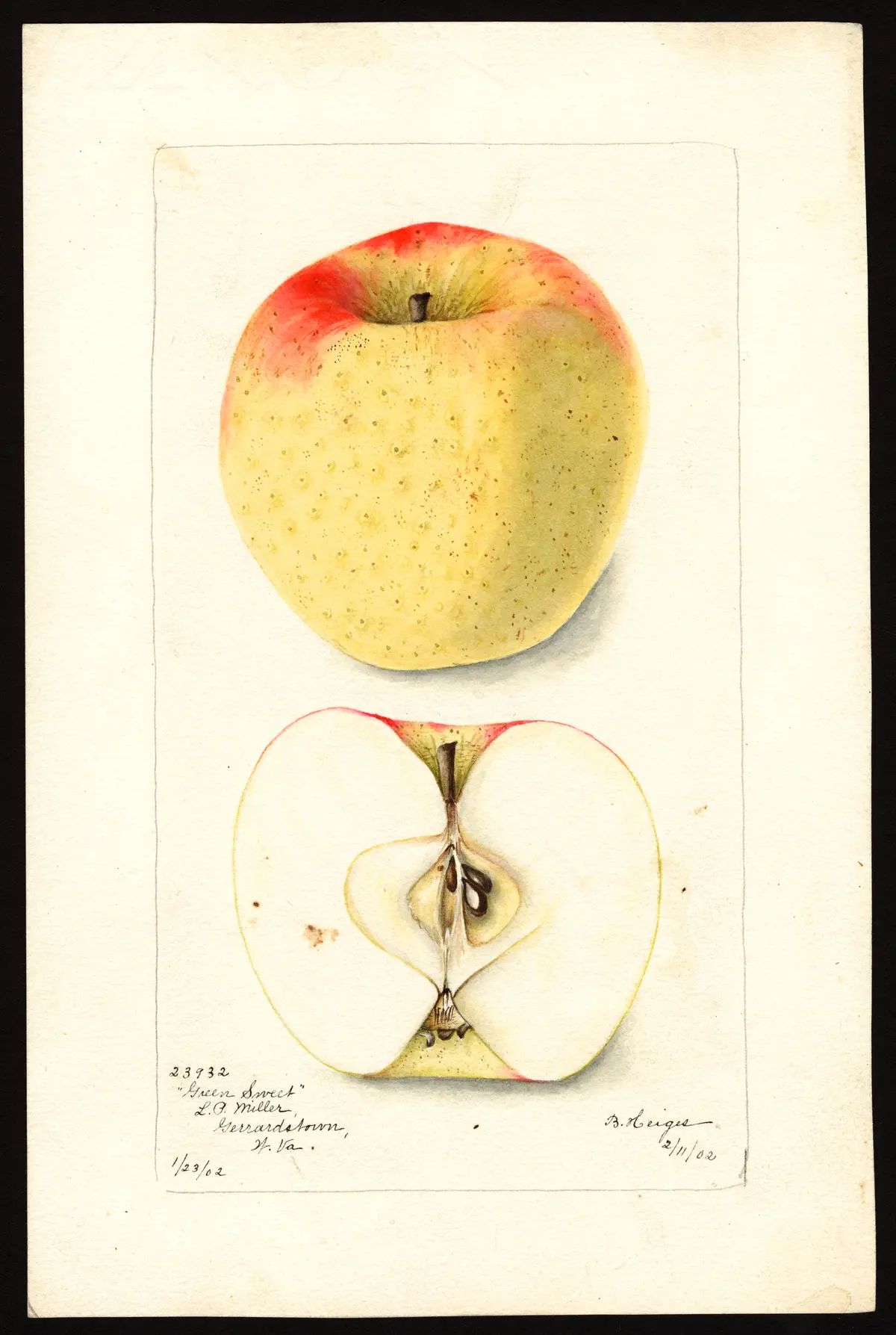
USDA Pomological Watercolor Collection
Editor's Note
Green Sweet
Origin / History
Green Sweet is of Russian origin. Specimens were sent by F. J. Peterson, of Waconia, and the variety was described by N. E. Hansen in A Study of Northwestern Apples (1902), where it is listed as Green Sweeting No. 169.
Tree
Peterson describes the tree as follows: "A good hardy tree, and rather low open top, and a very shy bearer." The top is low and open. The tree is hardy, and it is a very shy bearer.
Fruit
Size: Medium, very regular.
Form: Roundish conical.
Stem: Long.
Cavity: Regular, obtuse, with a trace of stellate russet.
Calyx: Half open or open, with segments flat and convergent. Tube funnel-shaped. Stamens median.
Basin: Very shallow (nearly flat), slightly wrinkled.
Skin: Surface greenish yellow, mostly thinly covered with dull red stripes and splashes.
Dots: Obscure, few, white.
Flesh and flavor: Flesh mild subacid, sweet.
Core and seeds: Core open, sessile. Cells nearly entire, abaxile, large, roomy. Seeds numerous, small, sharp, pointed.
Season
Fall.
Uses
Not described in source.
Subtypes / Variants
Not described in source.
Other
Not described in source.
Book Sources
Described in 1 period pomological work
View original book sources (1)
— N.E. Hansen, A Study of Northwestern Apples (1902)Green Sweet (Green Sweeting No. 169)-Origin, Russia. Specimens from F. J. Peterson, of Waconia, who writes: "A good hardy tree, and rather low open top, and a very shy bearer."-Fruit medium, very regular, roundish conical; surface greenish yellow, mostly thinly covered with dull red stripes and splashes; dots obscure, few, white; cavity regular, obtuse, trace of stellate russet; stem long; basin very shallow (nearly flat), slightly wrinkled; calyx half open or open, segments flat convergent. Core open, sessile; cells nearly entire, abaxile, large, roomy; tube funnel-shaped; stamens median; seeds numerous, small, sharp, pointed; flesh mild subacid, sweet. Fall.