Martin-Sec
Pear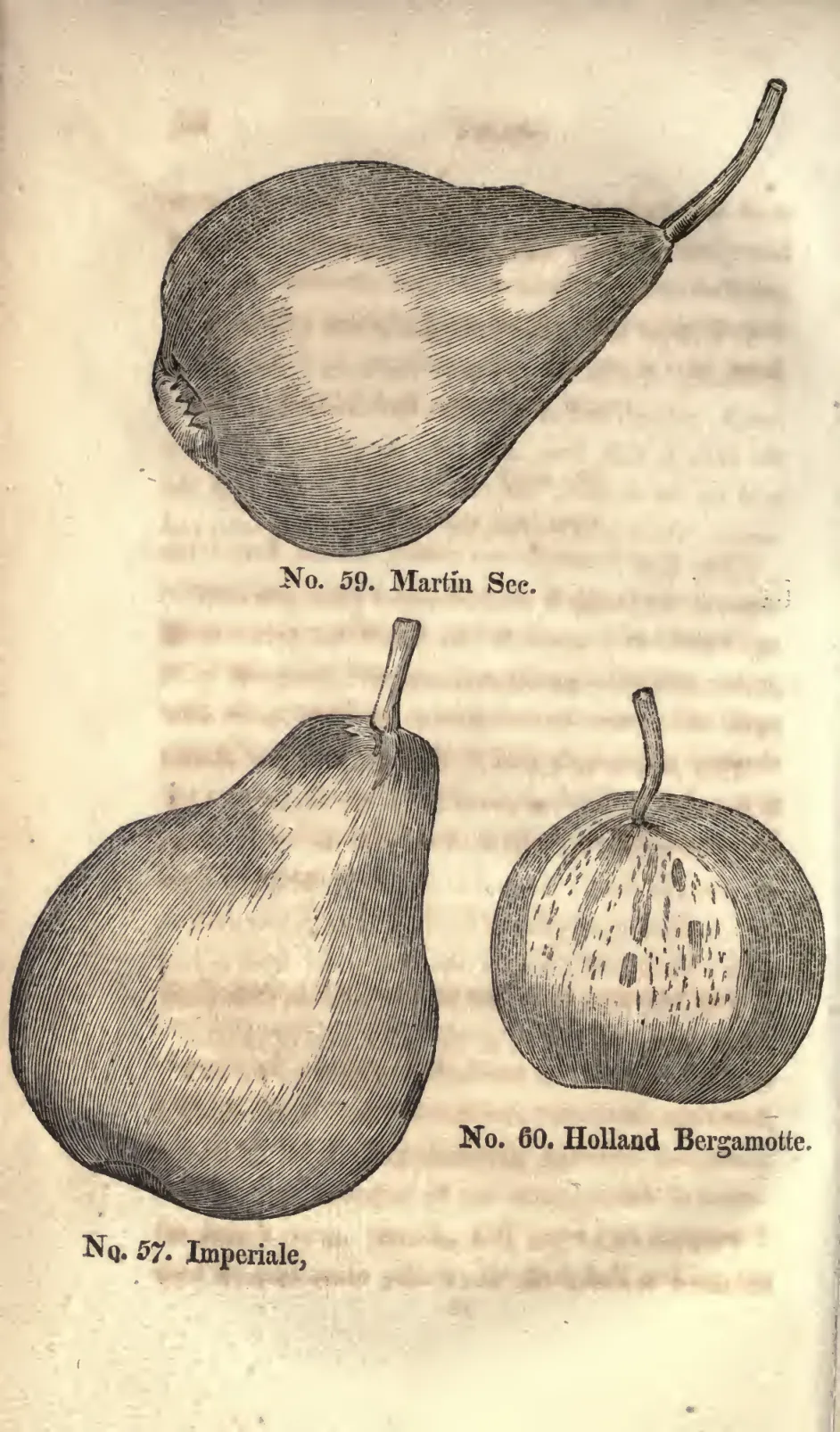
Origin & History
One of the earliest pear varieties known to have been grown in England; Hogg records that the Martin-Sec and the Martin Sire are mentioned among the fruits delivered into the Treasury by the fruiterer of Edward I in 1292. In 1530, Charles Estienne of Paris wrote of it as being cultivated in France and affirmed the Pears of Saint Martin were so named because their time of ripening coincided with the Festival of that Saint. Again, in 1675, Merlet in his Abrégé des bons fruits spoke of the Martin-Sec of Provins or of Champagne. Downing describes it simply as "an old variety, of which the origin is unknown."
Tree
Vigorous and very productive (Downing).
Fruit
Size: Sources vary. Coxe describes the fruit as "moderate size." Downing calls it "small." Hedrick says "medium or above." Elliott describes it as "medium, or below." Thomas calls it "small."
Form: Long pyramidal (Coxe). Ovate (Downing). Long-pyriform-obtuse, regular in form (Hedrick). Obovate angular (Elliott). Somewhat pyriform (Thomas).
Stem: Long and bent (Coxe). Long, slender (Elliott).
Cavity: Not described in source.
Calyx: The eye is small, but little sunk (Coxe). Set in an abrupt furrowed basin (Elliott).
Basin: But little sunk (Coxe). Abrupt and furrowed (Elliott).
Skin: Brown, with a clear red next the sun, dotted with small white points (Coxe). Yellow, shaded with crimson in the sun, some russet (Downing). Yellowish and russeted, dotted with gray points and extensively washed with carmine on the face exposed to the sun (Hedrick). Yellow, with small specks, bright red one side (Elliott). Deep yellow, russet and crimson (Thomas).
Flesh & Flavor: Breaking, sometimes a little stony, sugary, slightly perfumed, and of a pleasant taste (Coxe). Coarse, granular, juicy, half breaking, agreeable (Downing). Whitish, semi-fine, very breaking, rather dry, but sweet and perfumed, very gritty when grafted on quince (Hedrick). Yellowish, half melting, juicy; rated "good" (Elliott). Granular, half breaking, agreeable (Thomas).
Core & Seeds: Not described in source.
Season
Ripens in November and December (Coxe). Winter (Downing). Mid-November to February; rated third quality (Hedrick). December (Elliott, Thomas).
Uses
Chiefly valued for cooking (Downing, Thomas).
Subtypes & Variants
Not described in source.
Other
Hedrick cites: Leroy Dict. Pom. 2:408, fig. 1869; Hogg Fruit Man. 615, 1884; Loschnig Mosibirnen 216, fig. 1913.
Elliott identifies the variety as foreign in origin.
Book Sources
Described in 5 period pomological works
View original book sources (5)
— William Coxe, A View of the Cultivation of Fruit Trees (1817)
- MARTIN SEC,
This is a pear of moderate size, of a long pyramidal form, the colour brown, with a clear red next the Sun, dotted with small white points, the flesh is breaking, sometimes a little stony, sugary, slightly perfumed, and of a pleasant taste ; the stalk is long and bent, the eye small, but little sunk ; it ripens in November and December.
— A.J. Downing, The Fruits and Fruit Trees of America (1900)MARTIN SEC.
Rousselette d'Hiver. Martin Sec d'Hiver. Dry Martin. Trocken Martin. Winter Rousselette. Martin Sec de Champagne.
An old variety, of which the origin is unknown. Tree vigorous, very productive.
Fruit small, ovate, yellow, shaded with crimson in the sun, some russet. Flesh coarse, granular, juicy, half breaking, agreeable. Chiefly valued for cooking. Winter.
— U.P. Hedrick, The Pears of New York (1921)Martin-Sec.
- Leroy Dict. Pom. 2:408, fig. 1869. 2. Hogg Fruit Man. 615. 1884. Trockener Martin. 3. Loschnig Mosibirnen 216, fig. 1913.
Hogg tells us that this and the Martin Sire are among the earliest varieties known to have been grown in England, for they are mentioned among the fruits delivered into the Treasury by the fruiterer of Edward I in 1292. In 1530 Charles Estienne of Paris wrote of it as being cultivated in France and affirmed the Pears of Saint Martin were so named because their time of ripening coincided with the Festival of that Saint. Again, in 1675 Merlet in his Abrégé des bons fruits spoke of the Martin-Sec of Provins or of Champagne.
Fruit medium or above, long-pyriform-obtuse, regular in form, yellowish and russeted, dotted with gray points and extensively washed with carmine on the face exposed to the sun; flesh whitish, semi-fine, very breaking, rather dry, but sweet and perfumed, very gritty when grafted on quince; third; mid-Nov. to Feb.
— F.R. Elliott, The Western Fruit Book (1865)Martin Sec. Roussellet d'Hiver, Foreign. Fruit, medium, or below, obovate angular, yellow, with small specks, bright red one side ; stem, long, slender ; calyx, in an abrupt furrowed basin; flesh, yellowish, half melting, juicy; "good." December.
— John J. Thomas, The American Fruit Culturist (1903)Martin Sec. Small, somewhat pyriform, deep yellow, russet and crimson; granular, half breaking, agreeable—cooking. December.