Minjon
Apple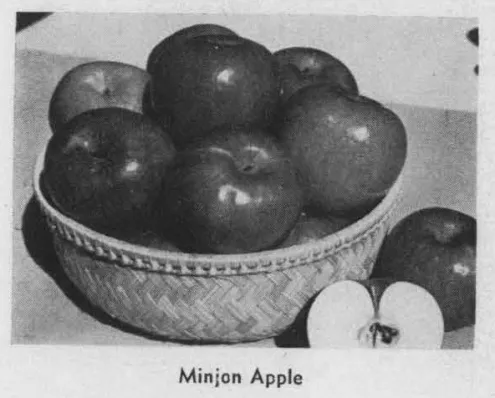
Minjon
Origin / History
Minn. No. 700, from the University of Minnesota Fruit Breeding Farm. Parentage unknown but probably Wealthy x Jonathan (Alderman, Wilcox & Weir); Zielinski calls it a seedling of Wealthy x Jonathan. Introduced 1942. The name suggests its likeness to Jonathan, which it resembles in many fruit and tree characters. On the market it offers successful local competition to the first Jonathans shipped in from southern and western orchards (Alderman, Wilcox & Weir). Zielinski calls it a "new variety from Minnesota" that may interest growers desiring a highly colored variety; further evaluation needed, but "worthy of limited planting for the early September market."
Tree
Young trees vigorous and rapid growers; mature tree only medium in size, with a round head and slightly drooping branches. Vigor medium, similar to Jonathan (Zielinski). Hardy and productive; only moderately susceptible to scab, fire blight and cedar rust. A fault is a natural tendency to set fruit in clusters and overload. It responds readily to chemical thinning sprays and the difficulty is easily corrected (Alderman, Wilcox & Weir); Zielinski reports the same response to thinning sprays and holds that a good fruit thinning program is essential to obtain well-sized fruit.
Fruit
Size: Medium to below medium. In size, color and form very similar to Jonathan.
Form: Roundish, slightly flattened at the ends; like Jonathan.
Stem: Medium, with good adherence.
Cavity: Narrow and deep.
Calyx: Not described in source.
Basin: Medium in size, abrupt, slightly furrowed.
Skin: Color solid bright, attractive dark red; excellent finish (Zielinski).
Dots: Not described in source.
Flesh and flavor: Yellowish, with a red stain varying from a mere tinge beneath the skin to a prominent coloration extending nearly to the core in some fruits at full maturity; the flesh usually stained with red to some degree. Zielinski calls it tinged with pink. Fruit firm; texture firm, medium-coarse, crisp and juicy. Flavor sprightly acid at the hard-ripe stage, soon changing to a pleasant tartness; "pleasantly tart" (Zielinski). Quality good for fresh use and very good for culinary purposes (Alderman, Wilcox & Weir); good for fresh use and very good for cooking (Zielinski).
Core and seeds: Not described in source.
Season
Season of use early September to January. Matures about 3 weeks earlier than Jonathan (Alderman, Wilcox & Weir); Zielinski says it colors and matures about 2 weeks earlier.
Uses
Good for fresh use and very good for cooking and culinary purposes. Local market apple competing with the first Jonathans shipped in from southern and western orchards (Alderman, Wilcox & Weir); suited to the early September market (Zielinski).
Subtypes / Variants
Not described in source.
Other
Not described in source.
Book Sources
Described in 2 period pomological works
View original book sources (2)
— W.H. Alderman, A.N. Wilcox & T.S. Weir, Fruit Varieties Developed at the University of Minnesota Fruit Breeding Farm (1957)Minjon. Minn. No. 700. Parentage unknown but probably Wealthy x Jonathan. Introduced 1942.
Minjon, as the name suggests, resembles the Jonathan in many fruit and tree characters. In size, color and form the fruits of these varieties are very similar. However, Minjon matures about 3 weeks earlier and the flesh usually is stained with red to some degree. On the market it offers successful local competition to the first Jonathans shipped in from southern and western orchards.
A fault of Minjon is a natural tendency to set fruit in clusters and overload, but fortunately it responds readily to chemical thinning sprays and the difficulty is easily corrected. The variety is hardy and productive and only moderately susceptible to scab, fire blight and cedar rust.
The young trees are vigorous and rapid growers but the mature tree is only medium in size with a round head and slightly drooping branches. The fruit, like the Jonathan, is medium to below in size, roundish, slightly flattened at the ends; color solid bright, attractive dark red; stem medium with good adherence; cavity narrow and deep; basin medium in size, abrupt and slightly furrowed; flesh yellowish with a red stain varying from a mere tinge beneath the skin to a prominent coloration extending nearly to the core in some fruits at full maturity; texture firm, medium-coarse, crisp and juicy; flavor sprightly acid at hard-ripe stage but soon changes to a pleasant tartness; quality good for fresh use and very good for culinary purposes; season of use from early September to January.
— Quentin B. Zielinski, Apple Varieties for Oregon (1964)Minjon†
This new variety from Minnesota, a seedling of Wealthy x Jonathan, may interest growers desiring a highly colored variety, resembling Jonathan but coloring and maturing about 2 weeks earlier. The fruit is firm, medium in size, roundish, slightly flattened at the ends, and with excellent finish. The flesh is juicy, firm, crisp, tinged with pink, and pleasantly tart. Quality is good for fresh use and very good for cooking. The trees are medium in vigor, similar to Jonathan. A fault is a tendency to set fruit in clusters and overload. A good fruit thinning program is essential to obtain well-sized fruit. Minjon is reported to respond readily to chemical thinning sprays. Further evaluation is needed, but this variety is worthy of limited planting for the early September market.