Soldat Laboureur d'Esperin
Pear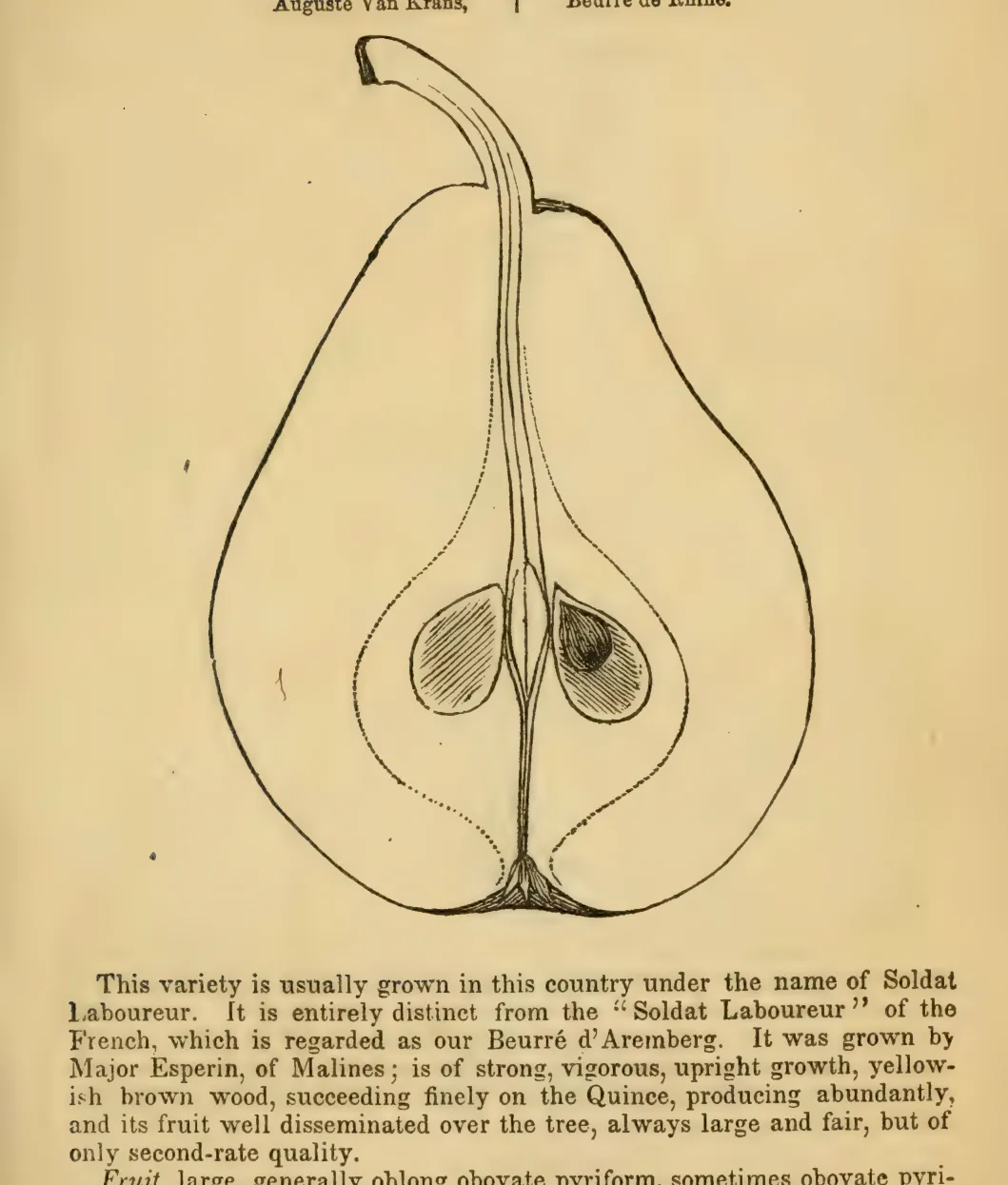
Soldat Laboureur d'Esperin
Origin and History
This variety was grown by Major Esperin of Malines. Also known as Auguste Van Krans and Beurré de Rhins. In this country (USA), it is commonly grown under the name "Soldat Laboureur," though it is entirely distinct from the French "Soldat Laboureur," which is regarded as the Beurré d'Aremberg.
Tree
Strong, vigorous, upright growth. Wood yellowish brown. Succeeds finely on Quince rootstock. Produces abundantly, with fruit well disseminated over the tree.
Fruit
Size and Form Large. Generally oblong obovate pyriform; sometimes obovate pyriform.
Color Greenish yellow, becoming yellow, with many patches, stripes, and dots of russet.
Stem Short, stout, curved. Set in a slight round depression, or rather a raised lip on one side.
Calyx Open. Sometimes round, regular, and without divisions; others have stout persistent segments with divisions.
Core Compact, with outer concentric lines.
Seeds Obovate.
Flesh and Flavor Rather coarse, juicy, melting, perfumed. Quality: "very good."
Season
December to February.
Uses
Not described in source.
Book Sources
Described in 1 period pomological work
View original book sources (1)
— F.R. Elliott, The Western Fruit Book (1865)SOLDAT LABOUREUR D'ESPERIN.
Auguste Van Krans, | Beurré de Rhins.
This variety is usually grown in this country under the name of Soldat Laboureur. It is entirely distinct from the "Soldat Laboureur" of the French, which is regarded as our Beurré d'Aremberg. It was grown by Major Esperin, of Malines; is of strong, vigorous, upright growth, yellowish brown wood, succeeding finely on the Quince, producing abundantly, and its fruit well disseminated over the tree, always large and fair, but of only second-rate quality.
Fruit, large, generally oblong obovate pyriform, sometimes obovate pyriform; color, greenish yellow, becoming yellow, with many patches, stripes and dots of russet; stem, short, stout, curved, in a slight round depression, or rather a raised lip one side; calyx, open, sometimes round, regular, and without divisions, others have stout persistent segments in divisions; core, compact, with outer concentric lines; seeds, obovate; flesh, rather coarse, juicy, melting, perfumed; "very good." December to February.