Winter Cheese
Apple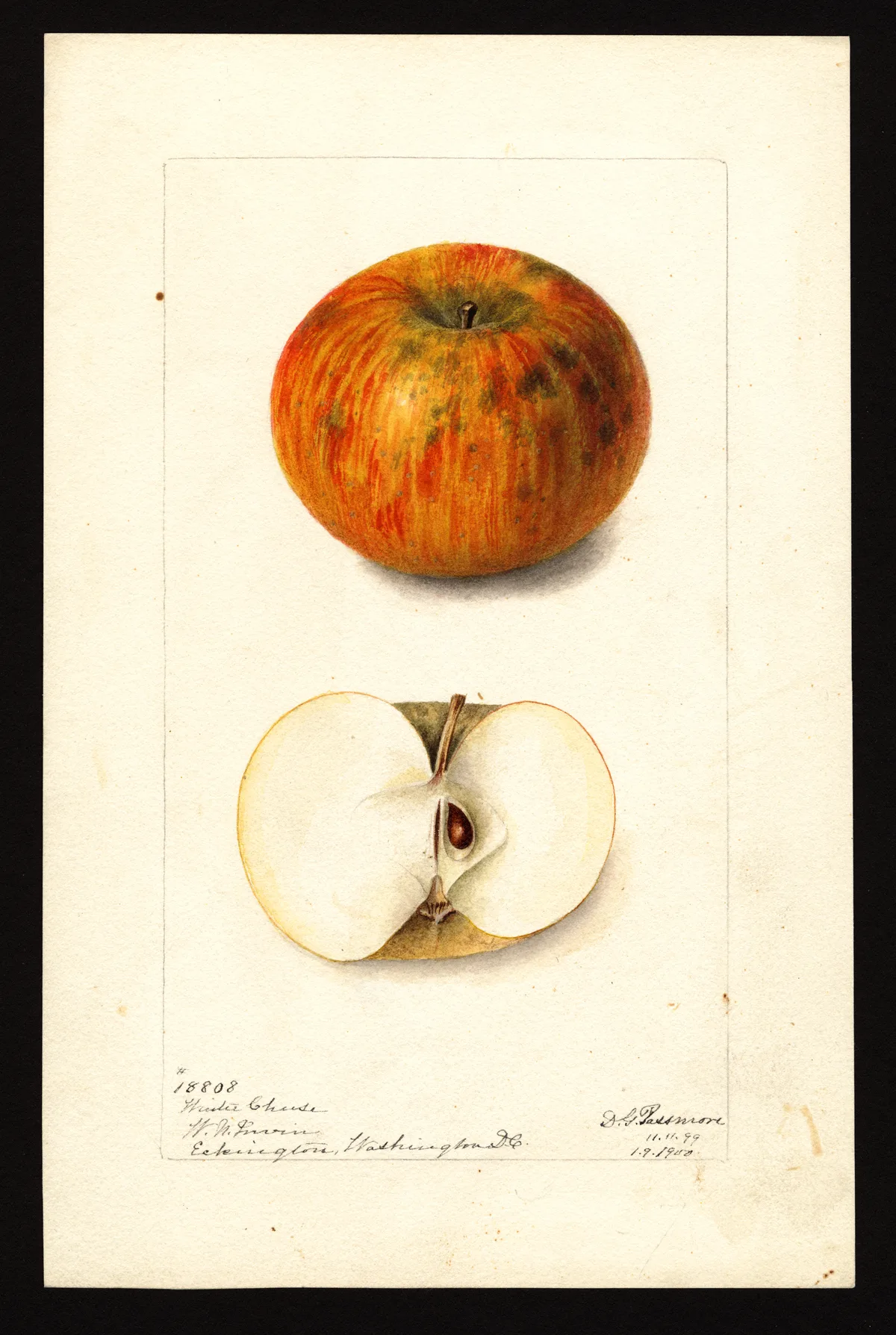
USDA Pomological Watercolor Collection
Winter Cheese
Origin/History
American variety. Noted as one of the most highly esteemed early winter apples of southern Virginia. Closely resembles the Fall Cheese variety, but is a longer keeper. Known in historical sources under the alternate name "Green Cheese" (Thomas, 1903).
Tree
Not described in source.
Fruit
Size
Medium in size.
Form
Oblate.
Stem
Not described in source.
Cavity
Not described in source.
Calyx
Not described in source.
Basin
Not described in source.
Skin
Green in the shade; red in the sun. Elliott (1865) describes the coloring more specifically as greenish, with stripes of dull brownish red on the sun-exposed side.
Flesh/Flavor
Thomas (1903) describes the flesh as very crisp, very tender and delicate, sprightly, and of a fine, pleasant flavor. Elliott (1865) describes the flesh as mealy and poor — however, both sources agree that the fruit becomes mealy and loses quality past its peak: Thomas notes it "becomes mealy and insipid after maturity," which aligns with Elliott's characterization and suggests Elliott's assessment may reflect overripe specimens rather than fruit taken at proper maturity.
Core/Seeds
Not described in source.
Season
December and January (Elliott, 1865). Classed as an early winter apple (Thomas, 1903). A longer keeper than the closely related Fall Cheese variety.
Uses
Not described in source.
Subtypes/Variants
Not described in source.
Other
Not described in source.
Book Sources
Described in 2 period pomological works
View original book sources (2)
— F.R. Elliott, The Western Fruit Book (1865)Winter Cheese. American. Medium, greenish, with stripes of dull brownish red in sun, mealy, poor. December, January.
— John J. Thomas, The American Fruit Culturist (1903)Winter Cheese. (Green Cheese.) Medium in size, oblate; green in the shade, red in the sun; flesh very crisp, very tender and delicate, sprightly, and of a fine, pleasant flavor. One of the most highly esteemed early winter apples of southern Virginia, closely resembling the Fall Cheese, but a longer keeper. Becomes mealy and insipid after maturity.