Rose
Apple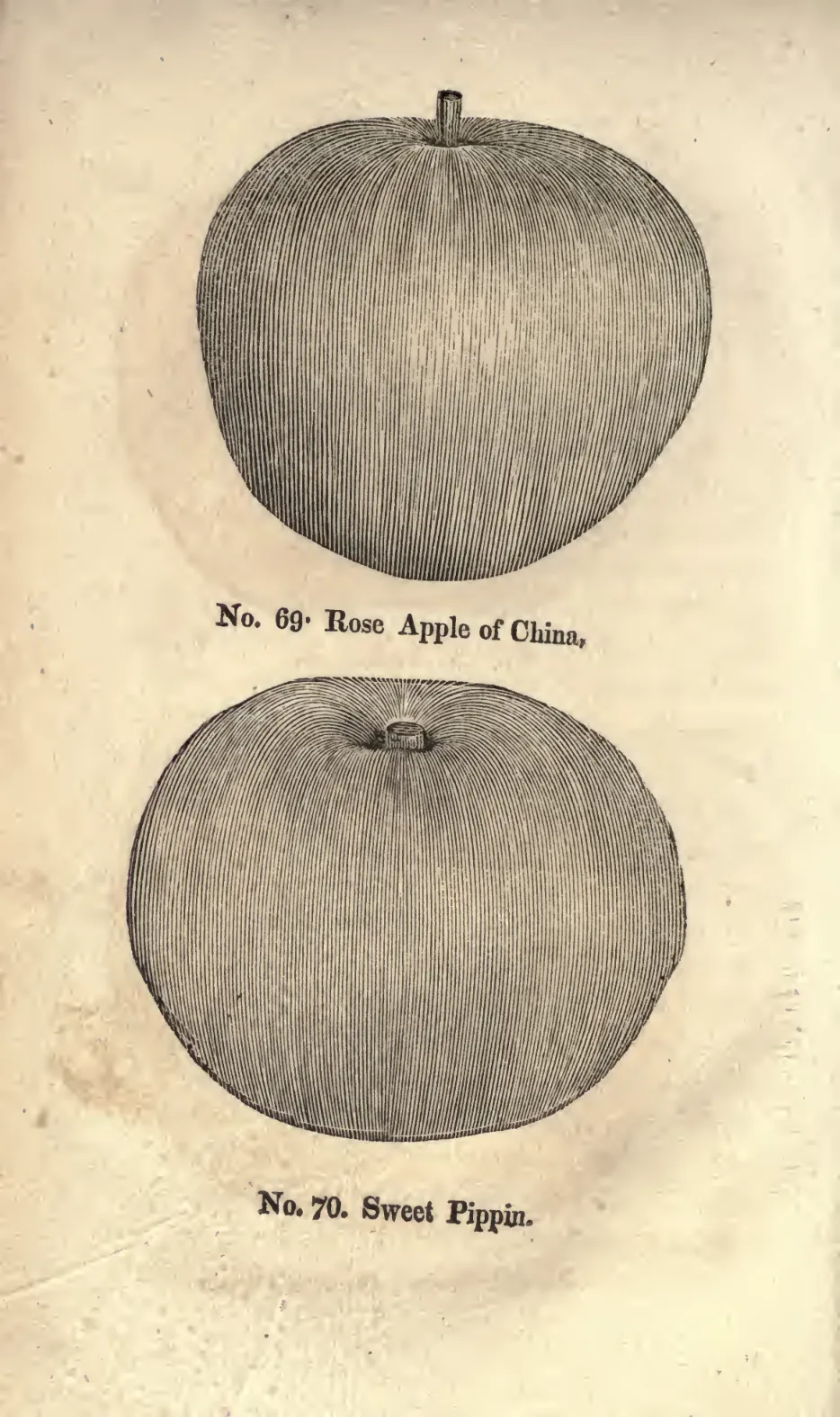
Rose
Origin / History
Coxe (1817) lists it as No. 69, the "Rose Apple of China," and says he imported it from England. Downing (1900) takes the name and the importation from Coxe.
Tree
Vigorous, growing in a handsome, upright form; bears abundantly.
Fruit
Size: Large; Coxe calls it a handsome apple.
Form: Rather oblong, somewhat diminished toward the crown.
Stem: Short and thick.
Cavity: Little hollowed (Coxe: "the ends but little hollowed").
Calyx: Not described in source.
Basin: Little hollowed (Coxe: "the ends but little hollowed").
Skin: Smooth, streaked or striped with red and green.
Dots: Not described in source.
Flesh and flavor: Pleasant and juicy; Coxe adds "without much flavour."
Core and seeds: Not described in source.
Season
October.
Uses
Table fruit (Coxe).
Subtypes / Variants
Not described in source.
Other
Not described in source.
Book Sources
Described in 2 period pomological works
- Downing, Fruits and Fruit Trees of America (1900)
- Coxe, A View of the Cultivation of Fruit Trees (1817) — listed as Rose Apple Of China
View original book sources (2)
— William Coxe, A View of the Cultivation of Fruit Trees (1817)NO. 69. ROSE APPLE OF CHINA.
Is a handsome large apple, of a form rather oblong, somewhat diminished towards the crown—the ends but little hollowed—the stalk is short and thick: the skin is smooth, streaked with red and green—it is a pleasant and juicy table fruit, without much flavour: the time of ripening is october; the tree grows vigorously, in a handsome and upright form, and bears abundantly. I imported this apple from England.
— A.J. Downing, The Fruits and Fruit Trees of America (1900)Rose.
Coxe calls this the Rose Apple of China, and says he imported it from England. Tree vigorous, upright, abundant bearer.
Fruit large, rather oblong, striped red and green. Flesh pleasant, juicy. October.