Fenouillet Jaune
Apple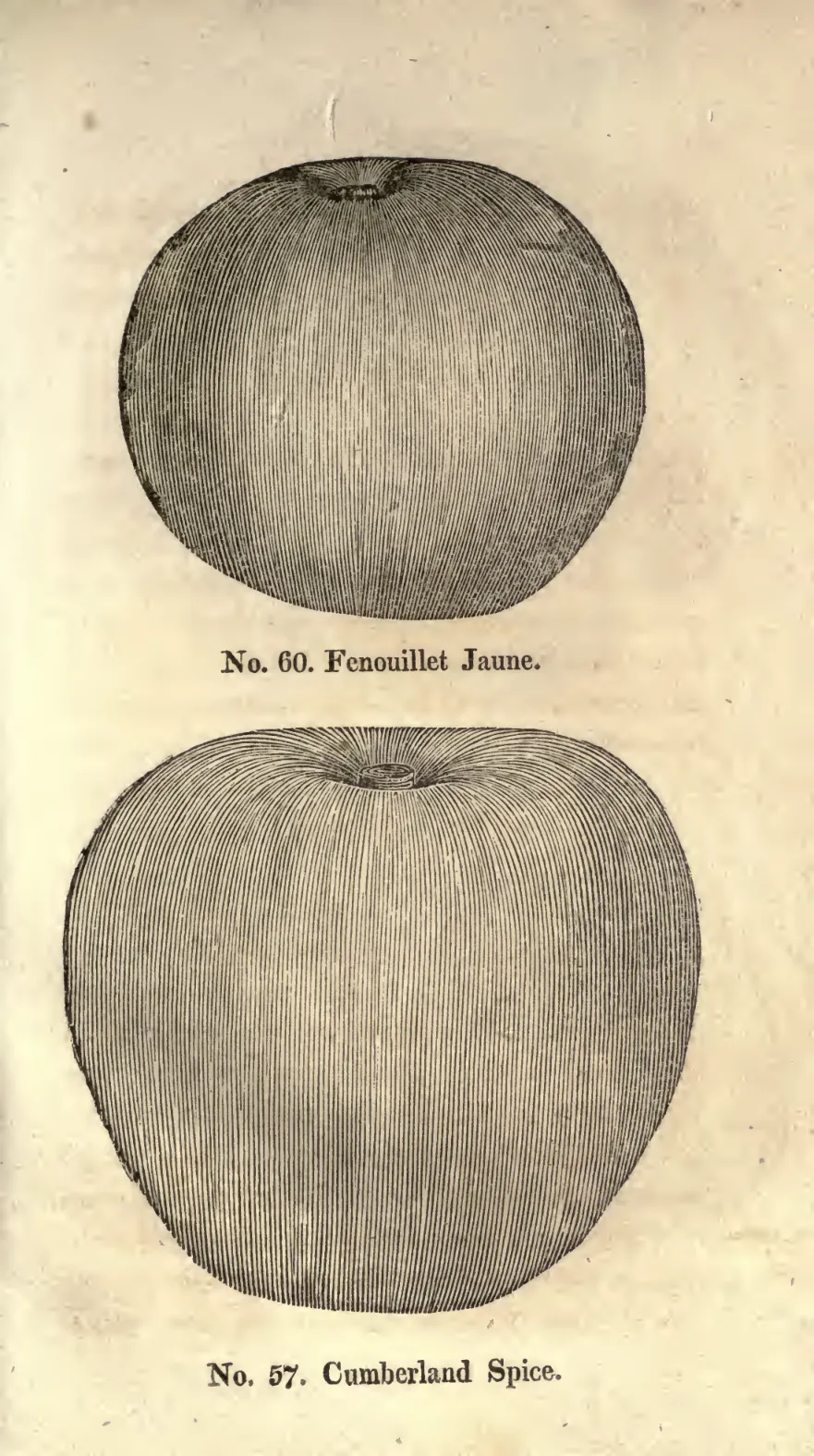
Fenouillet Jaune
Origin / History
A French fruit, according to Downing, who adds that it "has not proved of much value here." Coxe (1817) describes it as "Fenouillet Jaune, or Yellow Fenouillet."
Tree
Not described in source.
Fruit
Size: Small.
Form: Round, roundish; ends not much sunk (Coxe).
Stem: Short (Coxe).
Cavity: Not described in source.
Calyx: Not described in source.
Basin: Not described in source.
Skin: Rough, a yellowish fawn colored russet (Coxe); yellow, gray russet network (Downing).
Dots: Not described in source.
Flesh and flavor: Flesh of a yellow cast, tender, sprightly, and pleasant (Coxe); white, firm, of aromatic flavor (Downing). Downing rates the quality "Good."
Core and seeds: Not described in source.
Season
October to March. Coxe has it ripening in November and keeping well; Downing gives October to March.
Uses
Not described in source.
Subtypes / Variants
Not described in source.
Other
Not described in source.
Book Sources
Described in 2 period pomological works
- Downing, Fruits and Fruit Trees of America (1900)
- Coxe, A View of the Cultivation of Fruit Trees (1817) — listed as Fenouillet Jaune, Or Yellow Fenouillet
View original book sources (2)
— William Coxe, A View of the Cultivation of Fruit Trees (1817)NO. 60. FENOUILLET JAUNE, OR YELLOW FENOUILLET.
This is a small apple, the form is round, the stem short, the ends not much sunk—the skin is rough, a yellowish fawn coloured russet; the flesh of a yellow cast, tender, sprightly, and pleasant—it ripens in November and keeps well.
— A.J. Downing, The Fruits and Fruit Trees of America (1900)Fenouillet Jaune.
Embroidered Pippin. Drap d'Or. Pomme de Caractere.
A French fruit, which has not proved of much value here.
Fruit small, roundish, yellow gray russet network. Flesh white, firm, aromatic flavor. Good. October to March.