Styre
Apple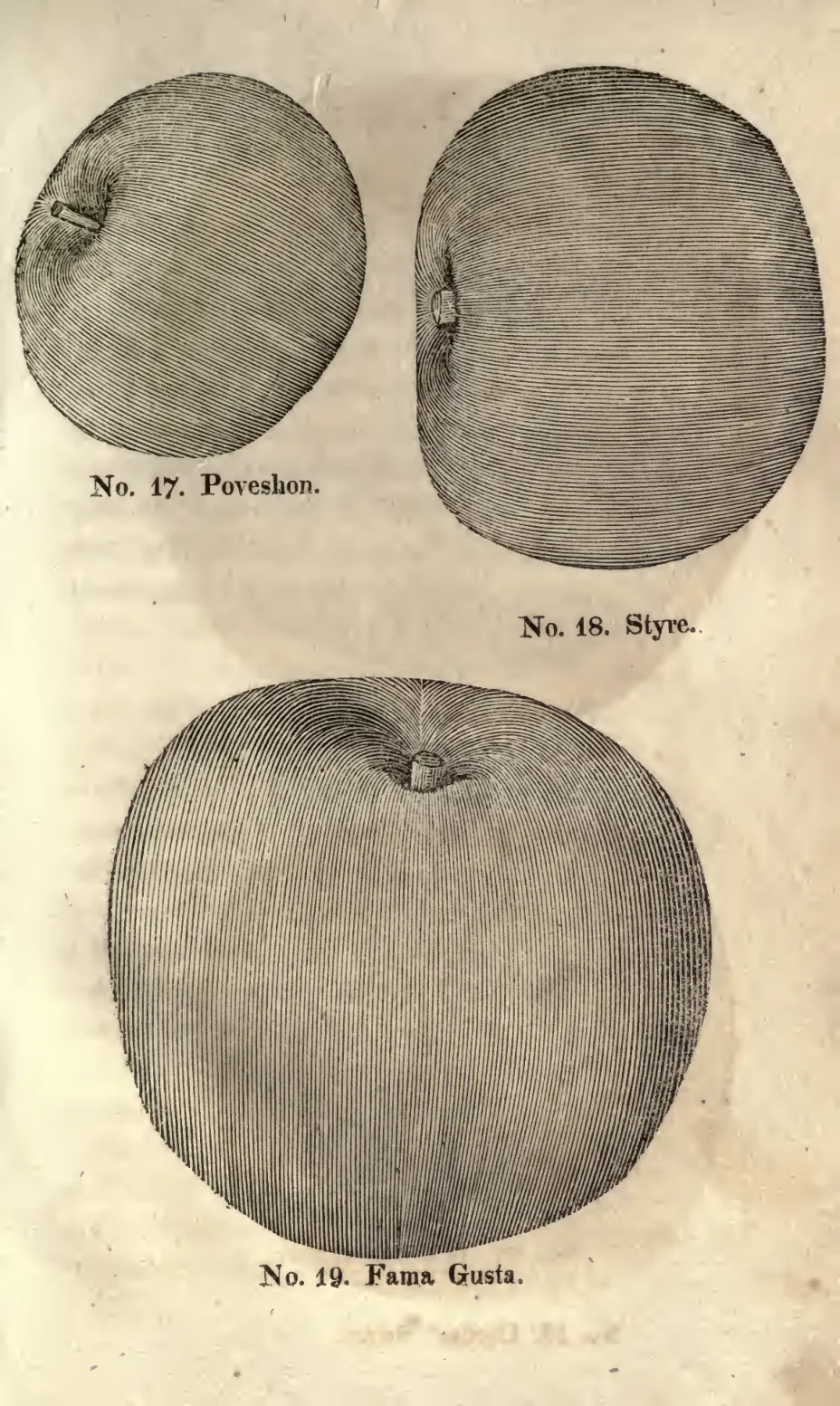
Styre
Origin/History
One of the most celebrated and extensively cultivated cider apples in England, with a long history as a premier cider-making variety. Coxe (1817) regards it as the foremost English cider apple, noting that cider produced from it on light rich soil commands a price frequently four-fold that of common sale cider. Downing (1900) lists the variety under the spelling "Styke," with "Forest Styre" given as a related name, and likewise describes it as a famous old English cider fruit.
By Knight's experiments reported by Coxe, the must of this variety outweighed all others in richness except that of a new variety produced by crossing the Lulham Green with the Siberian Crab. Marshall is cited by Coxe as stating that nearly one third more Styre apples are required to produce a barrel of cider compared with common apples — a reflection of the fruit's relatively low juice yield despite the extraordinary quality of that juice.
Tree
Coxe describes the tree as being of a singularly beautiful growth, remarkably "beesom-headed" (broom-shaped), throwing out numerous straight, luxuriant shoots growing upward from the crown in the form of a willow pollard. The tree runs much to wood, and in deep soils grows to a great size before it becomes fruitful. It is best suited to sandy ground. Coxe's own specimens grew as large as Newton Pippins and were remarkably fair in appearance.
Not described in Downing.
Fruit
Size: Coxe describes the size as above middling, comparing his orchard specimens favorably to Newton Pippins. Downing gives medium.
Form: Roundish (Downing). Not described by Coxe.
Skin/Color: Pale yellowish white (Coxe); pale yellow with an orange cheek (Downing). Coxe notes the fruit is pale-rinded, yet paradoxically produces a high-colored liquor.
Stem, Cavity, Calyx, Basin, Dots, Core, Seeds: Not described in either source.
Flesh/Flavor: Flesh firm; when fully ripe, of a fine flavor (Coxe). Downing likewise notes firm flesh. Coxe also describes it as a good eating apple in addition to its cider use.
Season
Ripe by the end of September in England; the middle of October is the common gathering time (Coxe). Downing gives October through January as the season range. Coxe reports keeping specimens free from rot through the latter end of January, on the basis of which he ventures to pronounce the variety highly estimable for late cider.
Uses
Primarily a premier cider apple; cider made from fruit grown on light, rich soil is described as rich, highly flavored, and of good body (Coxe). Also considered a good eating apple (Coxe). The fruit is pale-rinded but produces a high-colored liquor (Coxe; Downing concurs on the high-colored liquor).
Subtypes/Variants
Downing lists "Forest Styre" in connection with this variety (as a related or synonymous name under his "Styke" entry).
Other
Not described in source.
Book Sources
Described in 2 period pomological works
View original book sources (2)
— William Coxe, A View of the Cultivation of Fruit Trees (1817)NO. 18. STYRE.
This is the most celebrated and extensively cultivated cider apple in England; and is also a good eating apple: the size is above middling, the colour of a pale yellowish white; the flesh is firm, and when fully ripe, of a fine flavour: the cider when produced from a light rich soil, is rich, highly flavoured and of a good body; its price in England is frequently four fold that of common sale cider—the fruit is pale rinded, but produces a high coloured liquor. The tree is of a singularly beautiful growth, remarkably beesom-headed, throwing out numerous straight luxuriant shoots, growing upwards from the crown, in the form of a willow pollard, running much to wood, and in deep soils, growing to a great size before it becomes fruitful: it suits sandy ground: by the end of September it is ripe in England, generally the middle of October is in common years the time of gathering—by Mr. Knights experiments, the must outweighed all others except that of a new variety, produced by mixing the Lulham Green, and Siberian Crab: Marshall states, that nearly one third more of Styre apples are required to produce a barrel of cider, compared with common apples.
The Styres growing in my orchards, are as large as Newton Pippins, and remarkably fair; I have kept several of them free from rot to the latter end of January from this experiment, I should venture to pronounce them highly estimable for late cider.
— A.J. Downing, The Fruits and Fruit Trees of America (1900)Styke.
Forest Styre.
A famous old English cider fruit, of medium size, roundish, pale yellow, with an orange cheek. Flesh firm, and makes a high-colored liquor. October, January.